




The News
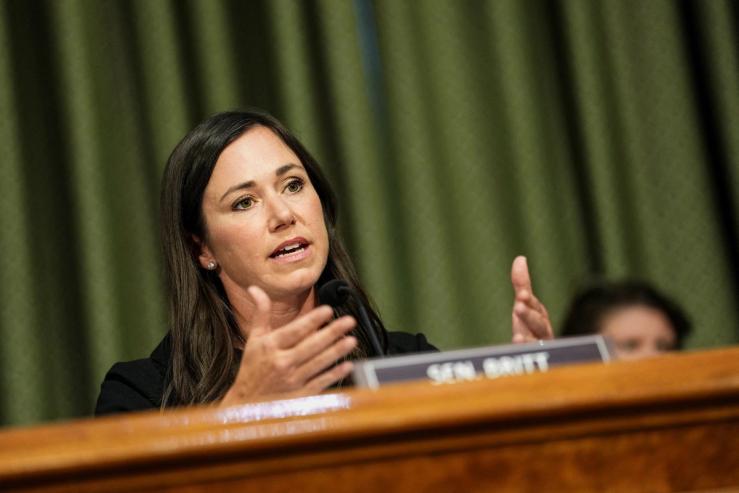
Congress should ultimately add teeth to President Donald Trump’s voluntary framework for data center developers to shield utility ratepayers from the cost of their power demand, Sen. Katie Britt told Semafor in an interview this week.
“I’d love to see” Trump’s Ratepayer Protection Pledge turned into law, the Alabama Republican said. Until Congress moves, she added, “I want to see people go ahead and do it on their own. As you know, they don’t call it an act of Congress for nothing.”
Britt has a bill with Sen. Ben Ray Luján, D-N.M., to encourage water recycling at data centers, part of a growing bipartisan push on Capitol Hill to manage the infrastructure burden of data centers’ explosive growth. She sounded warm on a proposal from vulnerable incumbent Sen. Jon Husted, R-Ohio, to codify Trump’s bid to manage data center energy use; the House has advanced its version with overwhelming bipartisan support. Sen. Tom Cotton, R-Ark., also has a bill addressing data centers’ power sources.
As a rising star in the party, a vice chair at the National Republican Senatorial Committee who’s known for her strong Democratic relationships, Britt is trying to help her party navigate the political challenge posed by data center growth.
She opposes national moratoriums but says localities should be free to choose to reject data centers. Data centers can create jobs and reduce poverty, she argued, as well as help the US stay ahead of China in AI advancement, as long as they’re welcomed on the ground.
Nuance is not easy to come by on the topic right now. Republican candidates are souring on data centers across the country as Democrats try to harness grassroots opposition to the projects against the GOP in the midterms.
“We’ve seen across the country that people are working to use this as a wedge issue, and unfortunately, if people continue to try to do that, ultimately I’m afraid we will pay a price here,” Britt said. “Because we want to make sure that we do it the right way — if in fact a community wants to do it — and so we can’t stifle the conversation.”

Know More
Trump savaged data center opponents this week, saying areas that don’t want them will become “backwards and poor.” Britt wouldn’t quite put it that way, though she said “the president is correct that we want to lead and we want to win this race when it comes to AI and data centers, and that we are without a doubt in that race against China.”
“Local communities are going to have to really do an assessment about what’s right for them. And I think data centers will be right in some spaces,” Britt added. “In others, I think we will see them maybe think that the opportunity cost is too high, and they’d like to leave room for other types of development.
In Texas, GOP Gov. Greg Abbott has frozen new data center approval until the state audits them. Rep. Tom Tiffany, R-Wis., is calling his Democratic gubernatorial opponent “Data Center David” Crowley. Incumbent Sen. Roger Marshall, R-Kan., says his constituents are “on fire” in opposition to data centers.
Britt said she understands why some of her fellow Republicans are shifting that way as Michigan Republican Senate candidate Mike Rogers and her home state’s Democratic gubernatorial nominee push state-level pauses in data center approvals.
“Everyone has their own perspective on this, and mine is that we do not need a national moratorium, and we do not need a data center on every corner,” she said. “There’s no doubt we’ve got to win this race, but we have to do it the right way, and so I think the approach has to be a thoughtful one.”