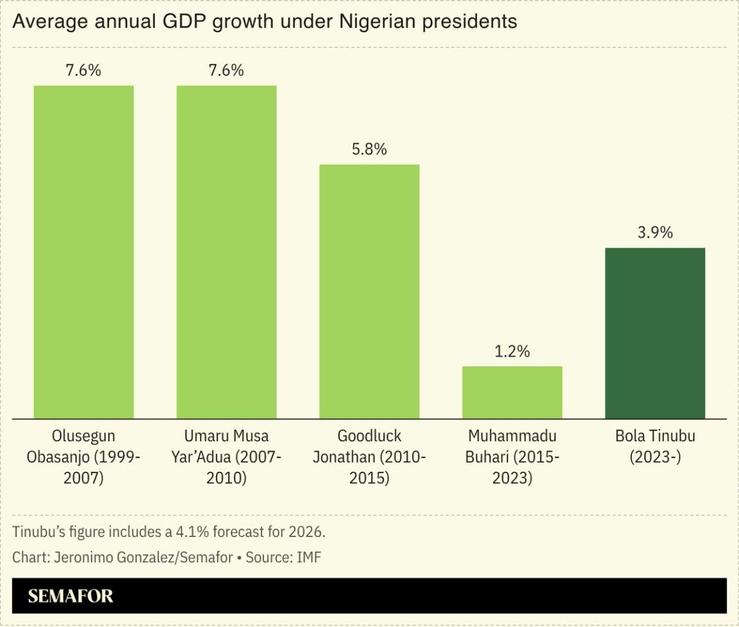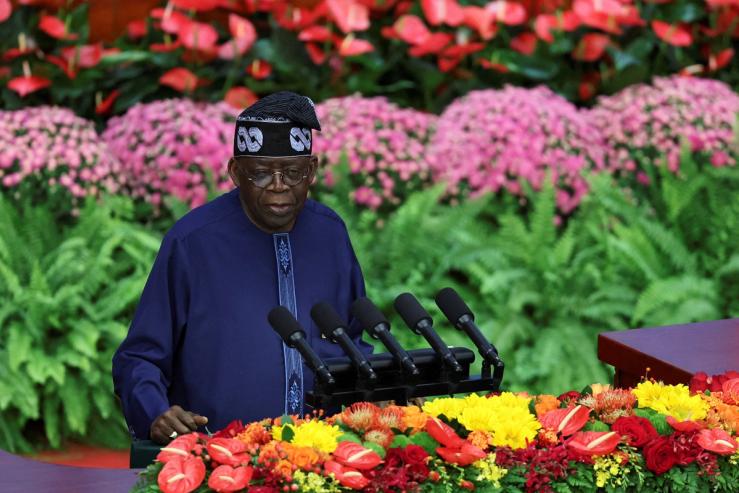
Nigeria’s GDP expanded at the fastest pace in five years, boosting President Bola Tinubu’s reelection pitch that his policies have stabilized a once-ailing economy. Though growth remains below official targets, Tinubu has nonetheless overseen a turnaround of the continent’s third-largest economy since coming to office in 2023.
The second quarter’s 4.43% growth was led by the manufacturing, agriculture and services sectors, as well as an oil sector that has benefited from higher crude prices sparked by the Iran war. Nigeria’s naira currency, which weakened sharply under Tinubu following devaluations, has appreciated 12% in the twelve months to June.
Nigeria’s net direct investment inflows have improved significantly under Tinubu and the oil industry is booming. However, insecurity remains a notable weak point, testing his reelection odds ahead of an election in January. Despite building security ties with the US, armed conflict and kidnappings remain rampant in much of Nigeria: The three months to June were the most violent in decades.