




David’s view
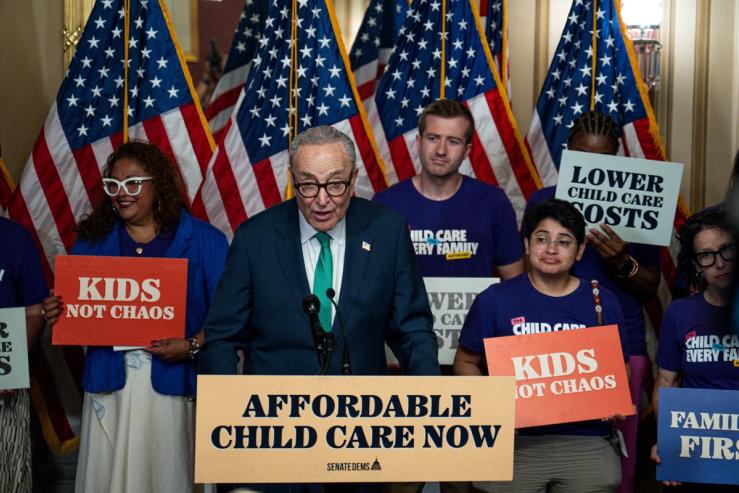
House Minority Leader Hakeem Jeffries shared good news with his caucus this week: His Democrats’ bid for a midterm campaign focused on “affordability” is cutting through the noise.
According to polling that Jeffries circulated this week, Democrats have fixed a mismatch that looked glaring five months ago. In April, voters had said that the “cost of living,” “the economy,” and “inflation” were their number one, two, and three issues, respectively — but that Democrats’ top issue was healthcare, with cost of living at No. 3 and the other topics barely registering.
Voters now thought that Democrats, like them, were most worried about the cost of living, then healthcare, then the economy. Jeffries then took to the cameras to explain how this agenda would play out next year, if he becomes speaker.
“We have to reverse the Medicaid cuts,” the New Yorker told reporters. “We should extend the Affordable Care Act tax credits. We should restore congressional authority, as it relates to tariffs, because the Trump tariffs are making life more expensive for the American people. And we should end, decisively, if it’s still going on, Donald Trump’s reckless and costly war in Iran.”
Online pundits promptly panned that plan as too narrow, reflecting a persistent nostalgia for the 1994 “Contract With America” and “Six for ’06″ Democratic platform shaped by Rahm Emanuel and Chuck Schumer. On social media, where nothing Jeffries does is credible, there’s a hunger for Democrats to identify a few specific, popular bills that every candidate can run on this fall.
And it won’t be satisfied. Democrats aren’t crafting the kind of bold-faced messaging that excites take-writers this year. Instead they’re promising voters who are paying more for groceries, fuel, vacations, and more that they can get relief by switching from red to blue.
This theory isn’t landing in Washington, where the frantic and ideologically charged discourse portrays the adrift Democrats as led around by their left wing. Turn on the TV in a swing seat, though, and you can see its power. The focus in competitive races is, still, on affordability.
In New Jersey’s 7th District, which backed Trump by 1 point in 2024, GOP Rep. Tom Kean is running ads about how he “protected Medicare and Medicaid.” In Virginia’s 2nd District, where Trump and Kamala Harris basically tied, GOP Rep. Jen Kiggans sums up the last two years of her party’s trifecta as “lowering prescription drug costs” and cutting taxes.
The schedule for next week’s Republican midterm convention — which Democrats think was a terrible idea that they might have accidentally trolled Trump into — shows that President Donald Trump’s party is trying to deliver its own take on an “affordability” message.
Republicans will tout their “working families tax cuts,” lower prescription drug prices, and crackdowns on fraud and immigration that haven’t yet made a dent in the national debt.
What they’ll also do next week in Dallas, of course, is fill in the blanks of Democrats’ still-broad agenda for a possible House majority. There’s a consensus that a Democratic H.R. 1 next year would focus on some mix of ideas to lower the cost of living — a clear change from the party’s last majority, which started with voting rights as part of its H.R. 1.
The five “affordability working groups” appointed by Jeffries, which teamed up more progressive and more moderate Democrats, will hash out the details. Yet in the meantime, Republicans insist that their opponents’ true agenda is being written by Democratic Socialists of America. In reality, there’s no chance that Jeffries would call votes on defunding law enforcement, transgender medical care, or other issues that the GOP warns about. And most Democrats I talked to this week think that his strategy makes sense.
After all, what was the GOP’s agenda in 2010 and 2014, the most consequential midterm elections of the conservative revival? Few people can tell you what was in the 2010 Pledge to America.
But if you read it now, you get a clear sense of the post-Bush, pre-Trump GOP’s identity, which centered on canceling the first two years of the Obama White House’s healthcare and financial policies – giving voters a pure deregulatory prescription for economic growth. There was a concord between GOP leadership and grassroots activists that’s not really possible for the Democrats of 2026.
So that’s why, in lieu of a point-by-point plan, Democrats just want to win the “affordability” argument and convince voters that Trump needs guardrails. Politically motivated redistricting is working against them, but their plan seems to be succeeding.
In this article:

Room for Disagreement
Left-wing Democrats are still fretting that party leaders won’t give voters concrete, populist policies.
They point out that the most popular applause line by Democrats angling for the next presidential nomination is that their party can’t simply reconstitute the pre-Trump era. But the Jeffries-backed affordability agenda is essentially a promise to wind the clock back to January 2025: fewer tariffs, no war, more healthcare tax credits.

Notable
- NBC News reporter Sahil Kapur, who asked Jeffries that big agenda question on Tuesday, writes more about the agenda, and left-wing frustration that it’s not bolder.
- In Axios, Andrew Solender covers the two-vote rebellion against Jeffries on the floor this week, and the fury at the rest of the caucus at Blue Dogs who gave Republicans a win.
- In Politico, Amelia Davidson and Kelsey Brugger cover the downside of Republicans running behind a strong party leader — Trump’s data center boosterism, which his candidates are finding polite ways to disagree with.