





The News
After warring with President Donald Trump for more than 20 months, Senate Democrats are considering a high-profile bipartisan deal with him that would reshape college sports.
Their party is in a tricky spot on the subject. The Democratic coalition is fractured over the legislation championed by Sens. Ted Cruz, R-Texas, and Maria Cantwell, D-Wash. — the AFL-CIO, NAACP, and Congressional Black Caucus oppose it, raising questions about its ability to clear the narrowly divided House even if it can pass the Senate.
But historically Black athletic conferences support the bill, as does the Thurgood Marshall College Fund, the United Negro College Fund, and college sports’ power conferences. If that’s enough to get the Senate Democratic votes needed to pass it, Republicans can claim a high-profile bipartisan victory just weeks before the midterms.
There’s a reason why bipartisanship tends to plummet before elections. Still, some Democrats believe they may never get a better deal than this one.
After whipping votes all August long and playing an integral role in shaping the legislation behind the scenes, Sen. Chris Coons, D-Del., told Semafor he thinks as many as half of the 47-member Democratic caucus could support the bill.
“The more folks actually dig into the details, reach out to their communities, and hear from their home state universities, the more [they] are getting on board,” Coons said.
“We’ve got four Democratic co-sponsors now. We have nine more who are firm yes-es and have either voted for it in committee or publicly committed themselves to support it. So that’s 13 Democrats right now,” he added. “As I’m calling through the caucus, we have another 10 who are either a strong yes or a lean yes.”
Senate Democrats expect to hold a conversation about the college sports bill sometime this month, a meeting that could be crucial to the bill’s prospects. Minority Leader Chuck Schumer has not taken a public position on the bill, but a spokesperson for him praised the work of Cantwell, the ranking member of the Commerce Committee.
“Leader Schumer knows Congress should act to bring clarity and certainty to [name, image, and likeness], appreciates Senator Cantwell’s leadership on the bill, and is continuing to talk to members as the bill moves toward the floor,” the spokesperson said.
The sweeping bill shepherded by Cantwell and Cruz would formalize so-called NIL rules, which govern student-athletes’ moneymaking abilities while enrolled; place some restrictions on overall spending on athlete salaries; restrict conference realignment; limit transfers for athletes; and allow pooled media rights. It’s the product of talks between Cruz, the Commerce panel chair; Cantwell; Coons; and Sen. Eric Schmitt, R-Mo.
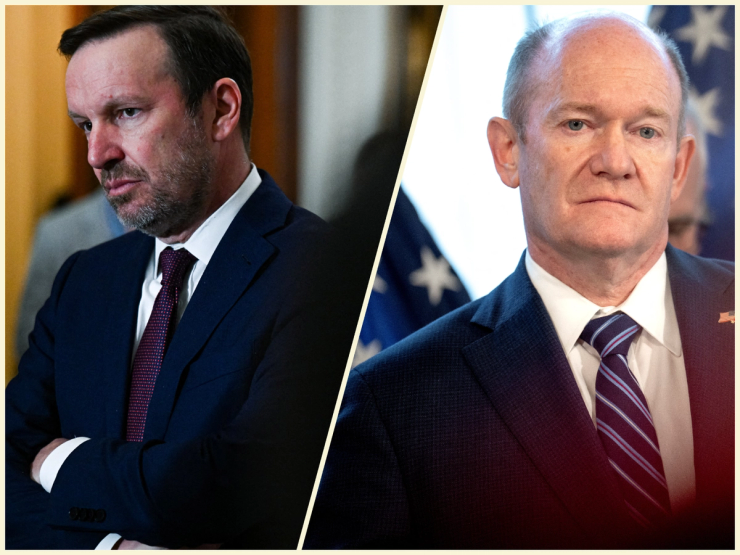
But three Democrats are pushing back, raising concerns about the bill to colleagues: Sens. Chris Murphy of Connecticut, Cory Booker of New Jersey, and Richard Blumenthal of Connecticut. Murphy told Semafor that “as people learn more about the bill, they have a lot more questions. And so it seems pretty uncertain as to whether it has the votes.”
“I acknowledge that there’s room for legislation. I don’t think this is it. I mean, this bill is exactly what the NCAA and the schools want, because it fundamentally constrains the ability of the highest-value athletes to to get adequately compensated,” Murphy said.
He said the bill should subject coaches to the same restrictions as athletes and not allow the NCAA to oversee student-athletes’ endorsement deals.
Failing that, Murphy said Congress should be making small, targeted changes, such as barring pros from playing college sports, rather than something “way too big” that threatens “to collapse under its immense weight.”
In this article:

Know More
Privately, some Democrats believe they could craft an even better college sports bill if they retake one or both chambers of Congress next year.
But Coons said Trump won’t sign a bill that allows athletes to organize — a major priority of labor groups and something Coons supports.
He warned that college athletics may descend into further chaos, with programs imploding under the current scattershot system, by the time the next president takes office.
“I’m not convinced that there is some magic moment just on the other side of the election, where we would secure dramatically better outcomes,” he said.
Other backers of the bill predicted that, without action by Congress, pro athletes would keep infiltrating the college ranks, courts would litigate athlete eligibility on an ad hoc basis that confuses fans, and schools would cut nonrevenue sports.
“Not doing something here, it’s just not sustainable,” Schmitt said in an interview. “Football’s the revenue generator. And then that subsidizes all the other sports. If you’re losing money … you’re just not going to be able to do that anymore.”
Some Democrats are wary about taking on civil rights groups and the AFL-CIO. The labor group has indicated to senators it would count the college sports bill on its scorecard, where most Democrats maintain a sterling record, according to a party aide working on the issue.
But several other Democratic aides said they are quietly confident the bill will pass the Senate. An NCAA spokesperson said, “We’re really happy with where the legislation is at this point.”
Critics aren’t buying it.
“Who is this chaos hurting? Not the fans. They still love the product. Women’s sports are expanding, not contracting,” Murphy said. “The changes that have happened in big-time college sports over the last decade have primarily hurt the white males that make billions, who now have their money threatened by the fact that Black athletes are getting paid.”

Room for Disagreement
Even if the bill passes the Senate, it still has to pass the House — where Republicans’ tiny majority has turned even routine legislation into a tough slog on the floor.
A separate college sports bill was yanked from the House schedule after the Black Caucus announced its opposition, citing the Supreme Court’s redistricting decision.
Rep. Pete Aguilar, D-Calif., who chairs the House Democratic Caucus, said he wasn’t sure there was time before the election to pass the bill. He said on Tuesday that “this isn’t in the top five issues of what House Democrats have been talking about.”

Burgess’s view
Democrats should not assume there will be another chance to address college sports next year and should weigh the bill on its merits. If the party’s senators block this bill, Republicans may not be in a mood to start from scratch in January should they lose the House or Senate.
But the political calculus is complicated: Trump doesn’t have many bipartisan accomplishments to brag about. He soured on the housing bill before it even became law. Given his love for sports and spectacle, I would imagine he would tout this bill loudly if it passes.
Democrats must decide whether that matters to them or whether Republicans would gain a real edge from the bill passing. Coons said he hears from constituents “about the price of gas and groceries, healthcare, and housing. And this has nothing to do with it.”