




The News
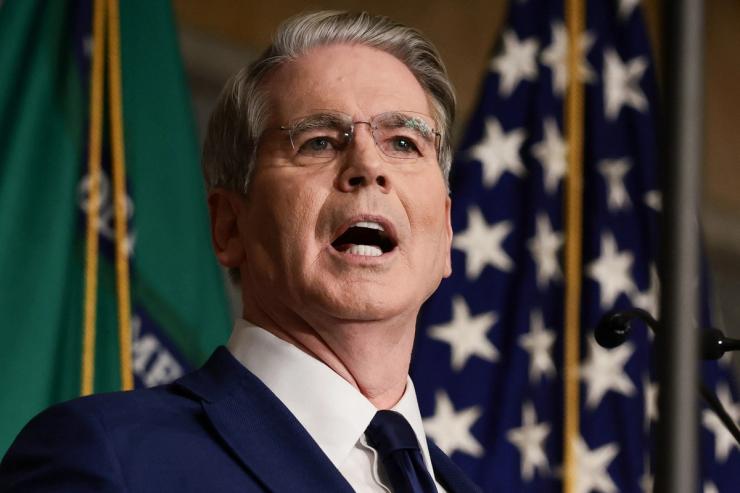
Treasury Secretary Scott Bessent on Monday threatened a wider range of secondary sanctions on countries that do business with Iran, stopping short of imposing them as the Trump administration continues its battle against inflation.
“We are giving everyone the opportunity to remedy that behavior,” Bessent told reporters at the Treasury Department. “Why would I want to blow up the global financial system? We believe that it’s important to level-set.”
President Donald Trump is calling foreign counterparts “with specific requests to cease their interaction with the regime,” Bessent said. Every country, he added, “has a defined timeline to shut down activities we have identified.”
Those activities span five Iranian sectors: digital assets, technology, gold, aviation, and shipping. Not cited: Chinese banks that help facilitate Iranian transactions, which would have rattled the US’ relationship with the country before Trump meets with Chinese leader Xi Jinping next month.
Echoing previous comments, Bessent declined to rule out targeting the banks in the future. He later teased “a major announcement of a financial institution being sanctioned by the end of this week.”

Know More
Also on Monday, officials moved to sanction nearly 60 entities, including “a network of brokers, companies, and shadow fleet vessels” across the United Arab Emirates, Hong Kong, Singapore, Switzerland, Europe, and China that helps Iran sell oil, according to a press release. And it suspended general licenses that had authorized things like remittance payments to Iran.
Monday’s announcement comes as Trump’s team intensifies its efforts to slow the climb of prices ahead of November, including by suspending tariffs on beef imports and ramping up buybacks of bonds. The latter has so far had little effect on borrowing costs, with yields climbing back up not long after last week’s announcement.
“It’s very difficult unless you’re really willing to do something like commit the entire Fed’s balance sheet to something,” Diane Swonk, chief economist at KPMG, told Semafor. “You’re moving around chairs on a deck — and I don’t want to say on the Titanic, because we’re not the Titanic yet, but this is a financial situation [where] you’re opening up the Treasury to more short-term risk.”
Asked about the efforts Monday, Bessent pointed out that the first buyback hasn’t happened yet: “The next time we have an operation is Sept. 9, so we will see on Sept. 9,” he said. Treasury could use its nearly $1 trillion general account to facilitate the purchase, officials told CNBC.

Notable
- Bessent outlined his thinking on Iran in an editorial in the Financial Times Sunday.