



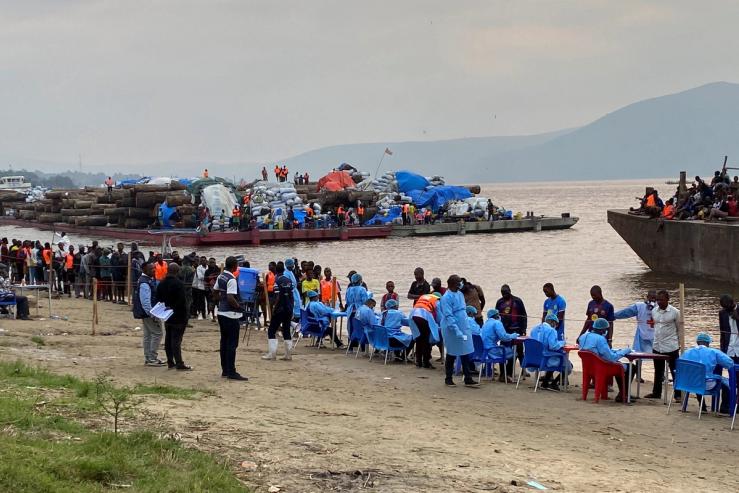
The State Department is warning of the “long and challenging” road ahead in addressing the Ebola crisis ravaging parts of Africa, after the epidemic became the deadliest in the Democratic Republic of the Congo’s history earlier this week.
The grim milestone has renewed scrutiny of the US response to the virus, which critics say has been hampered by the Trump administration’s cuts to global health aid.
A State Department spokesperson told Semafor the US has contributed more than $500 million to the response, including funds for border screening, contact tracing, and specialized treatment facilities, and that officials remain “deeply concerned” about the situation.
“The rising death toll is a confirmation that the response does not yet have this outbreak fully in hand,” said Stephanie Psaki, a senior fellow at the Council on Foreign Relations and former White House global health security coordinator, adding that continued deaths outside health facilities are a sign of undetected transmission chains.
She argued for a stepped-up global response. “Getting this outbreak under control is going to require a much larger investment from outside sources, whether the US or others. We can make that investment now, in hopes of turning the tide sooner. Or we can make that investment in six months, when the outbreak has spread,” she said.
The State Department has refuted arguments that funding cuts contributed to a slower response to the virus.
“The Department responded faster to this Ebola outbreak than USAID did in responses to similar previous outbreaks in 2014 and 2018,” a State Department official said.
“There was no specific person or program associated with USAID in this region that would have detected this or contributed to a detection framework for this outbreak differently or faster than how State has responded,” the official added, arguing instead that the World Health Organization and security concerns contributed to a delayed response to the virus.
It’s been a different story in Uganda, where officials already declared an end to the outbreak. However, transmission has moved toward South Sudan, where humanitarian group Mercy Corps warns “the risk of cross-border spread is growing.”
This story has been updated to reflect additional comment from a State Department official.