



A big hiccup is moving through the global oil trade that’s likely to cause another surge in prices, especially in Asia, over the next few weeks.
With tanker traffic out of the Persian Gulf constricted over the past six months, higher exports from other countries, especially the US, have helped close the gap and keep prices relatively in check. There was also the extra burst of shipments out of the Gulf during the short-lived ceasefire in June. Now the tankers that sprang out at that moment, including those from Iran, are reaching ports in Asia.
But a number of other factors are conspiring to drive down the volume of crude “on water” — that is, in a tanker — faster over the past two weeks than any point during the war, according to new data from the market intelligence firm Vortexa. So despite the US Navy’s efforts to push oil out along the Omani coast, “Hormuz is currently not really the problem,” David Wech, Vortexa’s chief economist, told me.
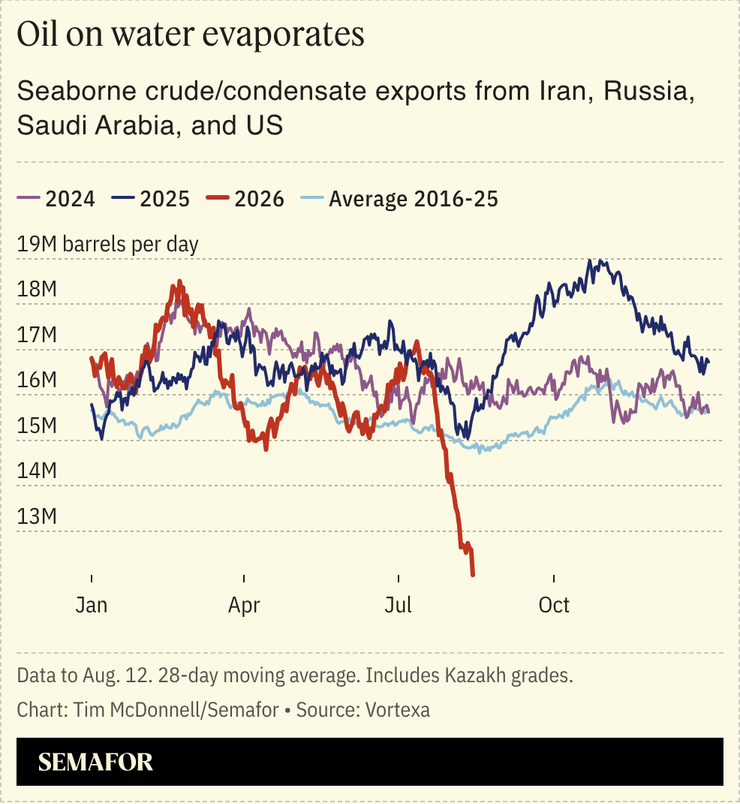
Exports from a handful of key suppliers have plummeted: Russia’s because of Ukrainian drone attacks, Iran’s because of the US blockade, and Saudi Arabia’s because of Houthi attacks in the Red Sea. For the US, the essential wartime swing supplier, the problem is politics and economics. The previously authorized Strategic Petroleum Reserve release has run out, with little appetite in the Trump administration for another. Record-breaking profit margins for fuel refineries have also acted like a magnet to keep crude at home — a trend that will be exacerbated by the administration’s push this week for even higher refinery runs.
The upshot is that the global market is still undersupplied by at least 4 million barrels per day, Wech said. At the same moment refineries in China are ramping up, very little seaborne oil is moving toward Asia. That means even more will need to be drawn out of storage next month, and the sight of depleted storage tanks is a surefire price driver.
Just like at the beginning of the war, consumers in Asia will feel the pinch first and worst. But it comes around to everyone sooner or later. “We are in a very different market now,” Wech said, “and not everybody has realized that yet.”