




The News
As populist pushback builds against the AI industry and data centers that power it, Republicans who have cheered the AI boom are scrambling to find a new identity as middle-ground pragmatists.
Instead of a moratorium on building new facilities, a growing number of GOP candidates have called for “guardrails” to protect skeptical communities from unchecked AI growth, as well as the rollback of industry tax breaks. These Republicans’ rebrand also involves a bid for the high ground by attacking Democrats with more nuanced positions on data centers.
They’re aligned with President Donald Trump’s White House, which tried to blunt anti-AI activists’ momentum with a voluntary “ratepayer protection pledge,” released in March with industry promises to foot the bill for the power demand from new data centers.
Data centers “could use a little public relations help,” Trump said on Wednesday.
Democrats have a simple response on an issue where progressives have dominated: Remind voters that the industry prefers the other guy for a reason.
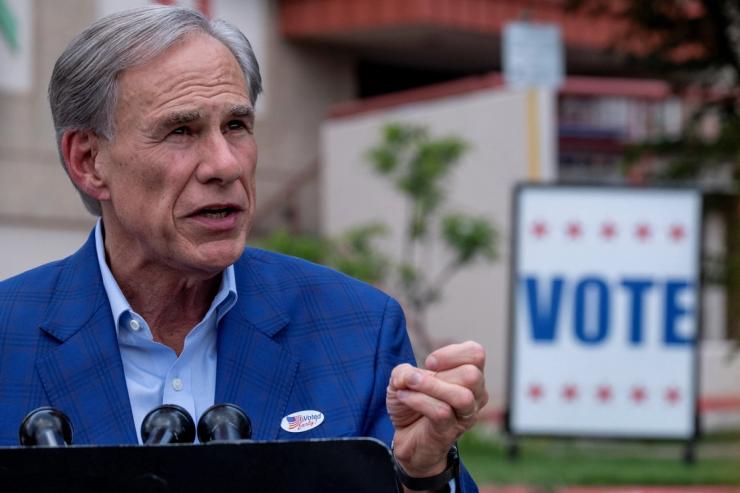
In Texas, where GOP Gov. Greg Abbott is seeking a fourth term, Democrats are condemning a tax break for data centers that’s been in place since he took office. Abbott suddenly directed the state to audit tech companies’ use of the electric grid recently, vowing “to work with the legislature next session” to repeal their tax breaks.
“Everything out of Greg Abbott’s mouth is the opposite of what he does,” said Texas state Rep. Gina Hinojosa, Abbott’s Democratic challenger. On Tuesday, she began running ads that link Texas data center construction to the governor’s support from tech companies.
“We all know that Greg Abbott is going to change his position the day after the election,” Hinojosa added. “If he was serious about it, he would call a special session and allow us to pass laws to protect Texans and do away with those tax breaks.”
Republicans on the ballot this fall are starting to follow Abbott’s lead — abandoning their deregulatory mood under Trump, treating the rush to build data centers as ripe for government management and taxation. In Florida, newly minted gubernatorial nominee Rep. Byron Donalds positioned himself as an AI realist against candidates who favored hard limits or an outright ban on data centers.
“You don’t want to have happen here what happened in northern Virginia, where you basically had a data center across from someone’s front door,” Donalds told a college audience in February.
Donalds, who’ll succeed Gov. Ron DeSantis if he wins in November, took heat for his donations from tech companies before adopting the governor’s positions. In May, DeSantis signed legislation to allow communities to “reject data center development” and stop “data center costs from being passed on to consumers.”
In Ohio, GOP gubernatorial nominee Vivek Ramaswamy said last year that he wanted a friendlier regulatory environment for building “an AI data center or Bitcoin mining firm or whatever.”
But he shifted after the May primary, starting to talk more about how he’d make tech companies work for the state and promising an executive order that would halt new construction of the centers unless communities got tax breaks and environmental protections.

Know More
The Republican shift is underway in Michigan, too. But it’s most intense in Wisconsin, where Democrats surprised Rep. Tom Tiffany by nominating Milwaukee County Executive David Crowley for governor — rather than Francesca Hong, the democratic socialist Tiffany expected to run against.
Hong had supported a moratorium on new data centers; Crowley hadn’t, instead calling for a more moderate approach. Tiffany’s campaign quickly branded the Democrat as “Data Center David,” citing a 2025 clip of his support for making Wisconsin an “AI and data hub.”
And Republicans had a friendly audience for the attack. Tiffany’s social media posts that clipped Crowley’s answers to data center questions were reshared and condemned by many progressives who had supported Hong.
That obscured what are in fact minor policy differences between the candidates: Tiffany wanted community input and for data centers to pay for their electricity, and so did Crowley. Like Texas, Wisconsin has passed bipartisan tax breaks to entice companies to do business there and were losing out on revenue when the profits blew away their projections.
“If there is a community that has a manufacturing plant that was shuttered 20 years ago, and a data center is coming to them and saying, ‘Hey, we are interested in building here,’ and that local community is willing to come to the table and is welcoming that — we, as a state, should not be preempting that,” Crowley told Semafor before the primary.

David’s view
If you’re one of the last remaining No Labels people, this may be good news: There is a bipartisan consensus forming that states should roll back tax breaks that tech companies don’t need anymore and make data centers provide their own energy.
But it’s not clear whether this alignment will evaporate after November. The politics of data centers have become utterly scrambled, with both parties turning populist only in states where they’re looking to take power back, not states they already control.
It’s a problem for the GOP that the president is unreservedly pro-AI, because polling shows that the data center backlash is supercharged by voter angst about that industry, specifically.
The president’s strategy of getting tech companies what they want if they agree to his terms — in this case, paying for new energy infrastructure — has worked for Trump before but may have run out of juice.

Room for Disagreement
The cynical reality is that Republicans don’t even need to turn down tech company donations to campaign on their newly pragmatic identities.
Mark Zuckerberg just announced a “future is for everyone” fund to help communities where Meta builds its chip farms. The GOP alliance with Elon Musk started with the both-arms embrace of his companies in Texas, where his foundation throws money back into the community. No Republican has felt a backlash over that.

Notable
- On X, OpenAi’s Drew Pusateri vented about the public backlash to data centers, and urged companies to make more investments in the communities that host them, “regardless of whether those changes are met with accolades or scorn.”
- In HeatMap, Robinson Meyer looked at how complicated the debate has become in campaigns and how Republicans don’t want green energy built to fund data centers. “Crowley, of course, wants data centers to use 100% renewable electricity and cover their full grid and infrastructure upgrade costs.”
- In Axios, Alex Isenstadt published a memo from the National Republican Senatorial Committee warning that anti-data center attacks have been effective for Ohio Democrats.

The View From The White House
Republican governors and candidates who have begun to criticize data centers sound nothing like the pro-AI president. In a recent interview with Punchbowl News and again on Wednesday, Trump suggested that anti-AI activism was hurting the country for no great reason.
“If I were the mayor of a town or the governor of a state, and I had a chance to get a big data center, I would absolutely want it,” Trump told reporters. “If I were a governor, I would want data centers so badly. I’ll cut taxes. I mean, taxes are going to go way down!”
But his White House has also tried to help Republican candidates by finessing the issue with its nonbinding “ratepayer protection pledge,” which has been signed by hundreds of companies that promise to lower energy bills. Abbott is one of 23 governors, all Republicans, to sign it.
No Democrats have signed, in part, because they weren’t asked to.
Spokespeople for Govs. Tony Evers of Wisconsin and Josh Shapiro of Pennsylvania, who announced new AI guardrails this week after welcoming the industry, said that they had never been in contact with the White House about the pledge.