




Tim’s view
Many factors have helped offset the dropoff in crude tankers exiting the Persian Gulf since the Iran war began in February. Gulf exporters ramped up alternative routes, China slashed imports, the US and Europe drew on strategic reserves, and higher prices cut into demand. But it’s becoming clear that another vital, if relatively modest, boost came from increased production in a handful of Western-hemisphere countries outside the top tier of global petrostates.
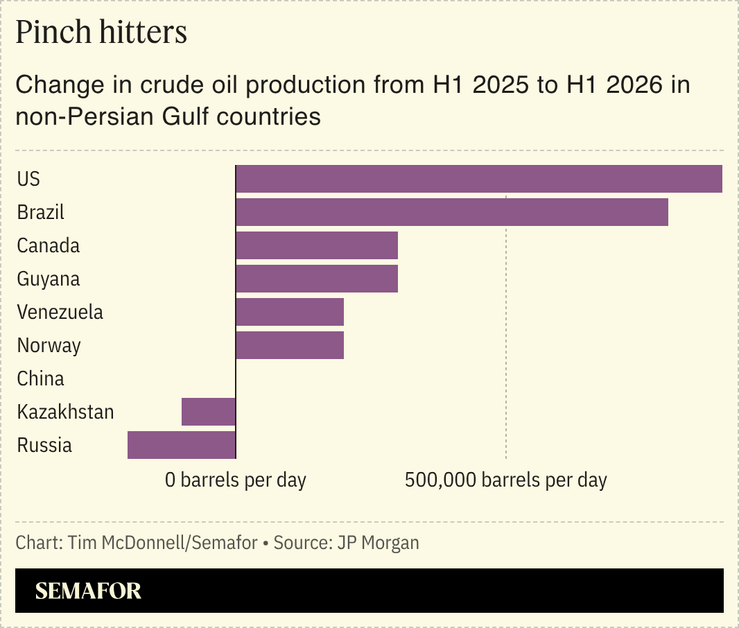
Brazil, Guyana, Venezuela, and Argentina all posted production gains in the first half of this year that outpaced analysts’ prewar forecasts, underscoring how the ongoing blockage of the Strait of Hormuz is proving a moment to shine for smaller oil-producing countries that are capitalizing on being far away from active warzones.
The price bumps of the past few months have “triggered a surge in production that far exceeded the levels embedded in our models,” JP Morgan’s head of global commodities research, Natasha Kaneva, wrote on Friday. In total, production growth this year in non-OPEC countries — about 2.5 million barrels per day — was the highest in at least a decade, she said.
To be clear, the US remains the leader on that list: This week, the country’s oil rig count is the highest since May 2025. But the others are gaining strategic significance in a post-Hormuz world.
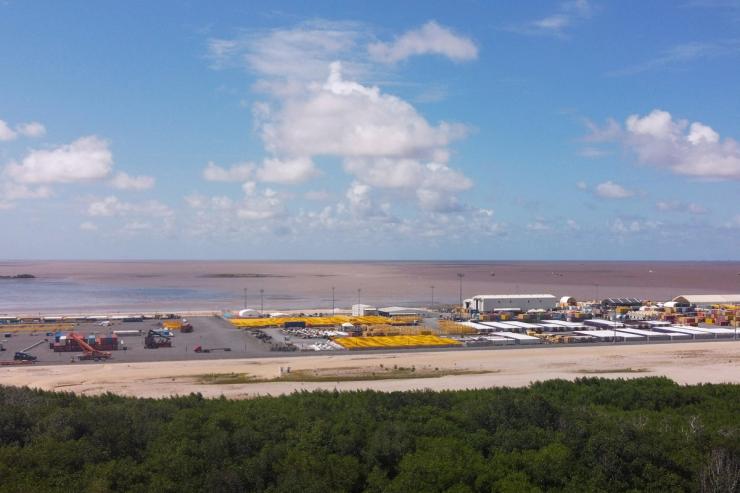
Take Guyana, where US Deputy Secretary of State Christopher Landau will today meet with President Irfaan Ali for talks about “enhancing collaboration in strategic sectors, including energy and critical minerals,” a spokesperson said. Production there is expected to surge this year thanks to a new offshore drilling rig from ExxonMobil, which has essentially become the country’s anchor tenant. Other US oil companies are also knocking on the door, said Samantha Carl-Yoder, a former State Department energy official and co-chair of critical minerals at the consulting firm Brownstein. President Ali has a warm relationship with Trump, and the country is a useful ally for US interests across Latin America and the Caribbean, said Carl-Yoder, who visited Guyana last week. Guyana’s crude has also proven useful to refineries in Europe, its leading importer, in replacing Russian barrels.
Historically one of Latin America’s poorest countries, Guyana will need more support to build out its grid and port infrastructure if it’s going to capture its massive oil potential. It’ll also need a stronger plan for how to manage oil revenue effectively and transparently. Neighboring Venezuela has already found that, even with a deluge of interest from drillers since former leader Nicolás Maduro was arrested, tangible deals have been held up by earthquakes, an overwhelmed local oil bureaucracy, and Trump administration turf wars.
Still, China is already benefitting from Latin America’s oil boom: It bought nearly half of Brazil’s exports in the past few months and about 8% of Guyana’s, according to data firm Vortexa. The new cohort of LatAm petrostates is emerging as an OPEC counterweight the US can’t afford to neglect, especially since its barrels don’t have to move through any dangerous straits.
“It’s very important to bring this oil online,” Carl-Yoder said, “and provide a foil to the Middle East.”

Notable
- As well as production, new shipping routes are emerging to avoid Gulf chokepoints: The Arctic is emerging as a promising transit route for Chinese vessels, the Financial Times reported, particularly as melting ice caps have shortened the journey between Europe and Asia.