




Andy’s view
In the run-up to next month’s US-China presidential summit, another tit-for-tat trade spat is brewing.
This time, the US has added advanced robotics — humanoid robots, quadruped robots (spindly-legged “robot dogs”) and robot lawn mowers — to an already long list of banned tech products dominated by China, and is reportedly preparing to block connected power inverters used in solar energy. Simmering in the background is a rancorous debate on whether to restrict Chinese AI models.
Beijing has vowed retaliation, condemning the bans as “discriminatory and suppressive.”
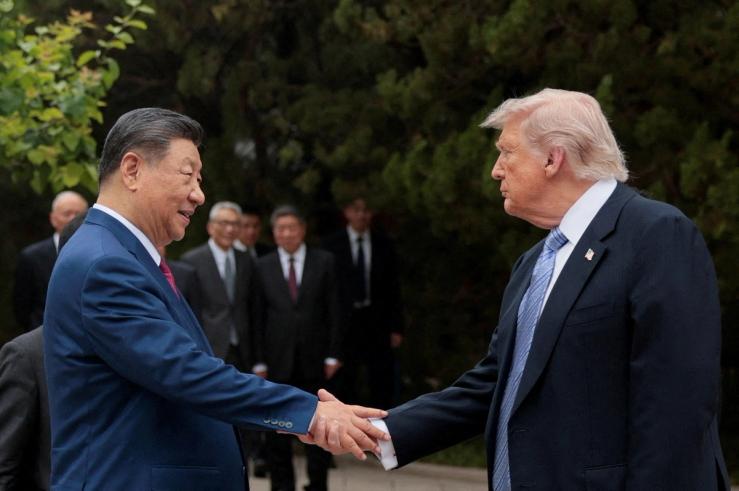
None of this is serious enough to derail the high stakes meeting in Washington, DC between US President Donald Trump and Chinese leader Xi Jinping. The two worked out a truce after the last round of hostilities — Trump lowered sky-high tariffs; Xi agreed to resume rare earth shipments that threatened to turn US factories dark — and it’s possible that, as before, the latest measures get wound back. Scott Bessent, the US Treasury Secretary who’s handling many of the preparations for the summit, calls the playbook “escalate to de-escalate.”
The deeper story here is growing domestic insecurity — inside both China and the US — that’s shaping diplomatic efforts and pulling both countries deeper into their own corners.
Since the last summit in Beijing in May, the Trump administration has been digging in on fears over China’s advanced technology eclipsing the US. They were shocked, once again, by the launch of a Chinese AI model — Kimi K3 — that in some ways is as good as frontier US ones, and at a fraction of the price. US business executives, fascinated but fearful of China’s manufacturing prowess, have been flying to China in droves on “tech tours,” taking in spots like Xiaomi’s EV “Super Factory” in Beijing that turns out one luxury sedan every 76 seconds. Investor Steven Rattner wrote a glowing account of his recent trip under a headline that warned: “I Just Returned From China. We Are Not Winning.”
Washington has a history of exaggerating the competitive threat from rivals, whether that was the Soviet Union or Japan. Ryan Hass, a former China adviser in the Obama administration, thinks the US is making the same mistake again. A tendency to see China as “10-feet-tall,” he argues, has led to wild pendulum swings in US policy — Trump has flipped from hawkish in his first term to accommodating in his second — but also a growing sense of fatalism.
Indeed, that is Beijing’s objective: By projecting an image of invincibility it hopes the West will simply hand its advanced manufacturing to China, absorb Beijing’s massive exports, and accept deindustrialization on an accelerated timetable.
“They have two messages they want to sell everybody,” Rush Doshi, a former Biden administration official, told The New Yorker. “One is ‘We are inevitable.’ And the other one is “Don’t worry.’”
Heading into the summit, though, Xi is presiding over an economy in deep distress, still struggling to contain the fallout from an epic real estate implosion. China’s tech advances are real enough, but it’s unclear whether the economic returns can justify the massive investment costs. China’s debt is exploding, and has now reached more than 300% of GDP.
Logan Wright, the author of Broken China, guesses that growth is now running at no more than 1% — and may even be zero. In fact, Logan told Semafor that the economy is exhibiting all the signs of having crashed: Deflationary pressures, an impaired financial system, and falling currency — all accompanied by chaotic scenes of angry real estate investors demanding their money back from failing developers. “You’ve had bank runs,” he said. “They just weren’t at banks.”
Beijing all but admits the statistical deception. When data sets contradict the official rosy outlook, authorities simply abandon them (they long ago stopped publishing spiraling youth unemployment figures) — and skeptics are silenced. In recent days, speculation has swirled over the political fate of former finance minister Lou Jiwei, a rare outspoken voice within the system who once complained that “there is not enough data showing the negative side.”
The summit next month will most likely end with Xi and Trump agreeing to extend a fragile trade truce, with a few modest commercial deals and some incremental progress on AI safety. But behind the pomp and ceremony of official Washington, the meeting will reveal two wary superpowers projecting their doubts and apprehensions onto the other.

Notable
- “The summit’s fate ultimately hinges on whether both sides can hold back their most aggressive options for the next two months,” a Eurasia Group analyst told South China Morning Post.