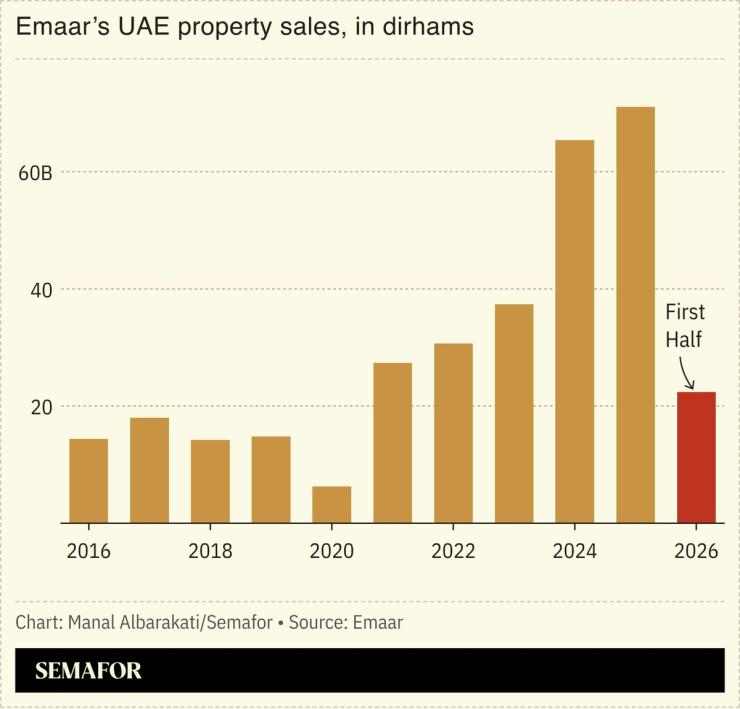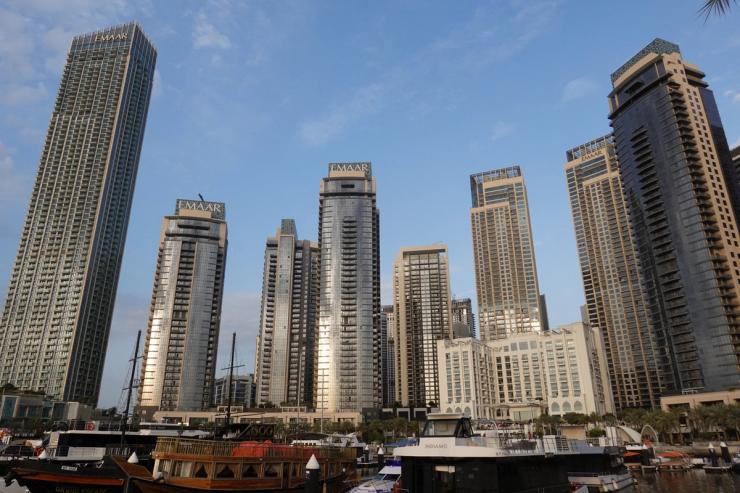
Emaar, whose buildings dot the Dubai skyline, booked a 21% rise in revenue in the first half of the year, despite a slump in new property sales. The developer attributed the 42% dip in new sales to fewer launches compared to last year. Data from the wider market tells a similar story: Sales across Dubai fell by about a third in the second quarter, according to land registry figures, while prices, up almost 70% in the five years before the war, have barely moved, with sellers holding out rather than cutting.
Dubai’s property market has broken before: Prices halved after the 2008 crash and fell again from 2014 to 2020. Five months into the US-Iran war, activity has slowed, but prices have remained more stable. Still, the pressure on real estate developers is not just a matter of trying to convince wary buyers. Arada, co-founded by a son of Saudi billionaire Prince Alwaleed bin Talal, blamed wartime delays to building material deliveries for a 29% drop in earnings.