




The News
The US has made permanent a pilot program requiring citizens of 50 countries — 30 of them African — to post bonds to obtain US tourist and business visas.
Launched 12 months ago, the program instructed consular officers to set a bond of $5,000, $10,000, or $15,000, “based upon the applicant’s circumstances.” Citizens from Ethiopia, Nigeria, Senegal, and Zambia were among those affected. In making the pilot permanent, the State Department also raised the maximum bond to $20,000 from $15,000 and scrapped the $5,000 tier.
“Based on its extraordinary success in slashing overstays from bonded countries to near zero, the State Department has made the Visa Bond Program permanent,” a State Department spokesperson told Semafor.
Critics say the bonds impose a harsh financial burden on travelers. The crackdown coincides with a pressure campaign urging African governments to accept deportees from other nations. Nigeria was one of the countries that publicly refused to accept non-nationals.

Know More
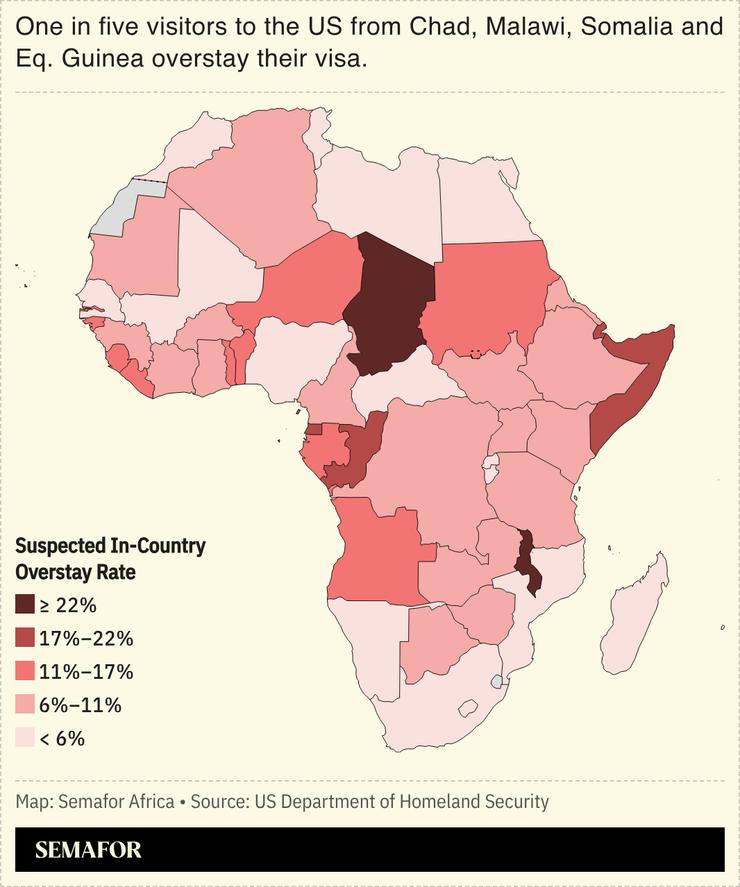
The visa bond program expansion comes as Washington has recalled career diplomats — leaving more than 40 African nations without confirmed ambassadors — and ended visa-processing at several US missions across the continent.
The number of business and tourist visas issued from nations on the list has fallen by 83% since the pilot program was launched, according to the State Department.
It expanded from only Malawi and Zambia to 50 countries as US President Donald Trump’s administration seeks to deliver on its anti-migration rhetoric both domestically, with expulsions by ICE patrols, and at the borders.
US-Africa policy analysts caution that the visa restrictions, paired with the shuttering of USAID, sends a mixed signal to the same African governments that Washington is courting for critical minerals partnerships meant to counter China’s influence in the region.