


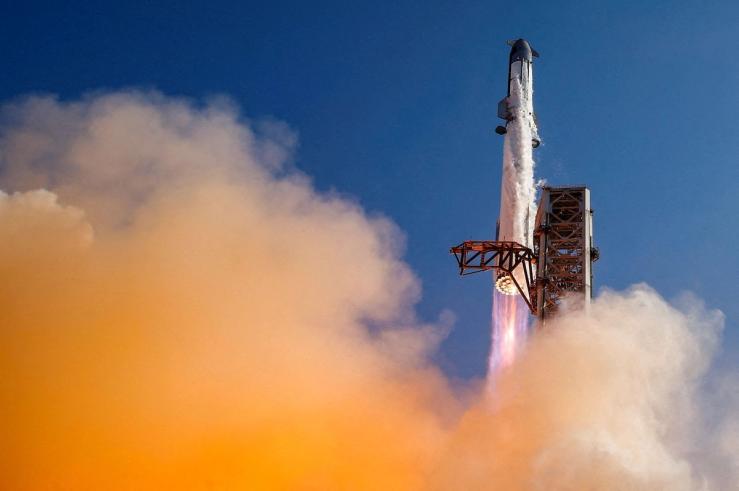
Following SpaceX’s first-ever earnings report Tuesday, shares dropped 8% in postmarket trading largely due to concerns over capital spending on AI infrastructure — just like nearly every other company that Wall Street and investors have been grilling over their tech spending.
SpaceX spent $18.4 billion in the second quarter up from $2.8 billion a year ago, but executives were blasé about the increase, telling investors to expect the same or more going forward. The company said its capital spending becomes revenue quickly — even within a year, in the case of its spending on AI. SpaceX’s revenue jumped 92% from a year ago, and Musk doubled down on expectations, moving up his estimate that the company will generate $1 trillion in revenue to 2030, from 2031.
President and Chief Operating Officer Gwynne Shotwell said SpaceX’s Starlink mobile business would soon be better than “the big three” and available for consumers at the end of next year. (Shares of AT&T, Verizon and T-Mobile sank in after-hours trading.)
And while Musk veered into space-speak, telling investors and analysts toward the end of the call about how soon robots will be on the moon to build manufacturing plants, another possible reason shares slipped is very earthbound: Investors are preparing for the company’s IPO lock-up to lift Thursday, which will allow early investors and employees to sell as much as 912 million shares. “Beware the SpaceX short squeeze,” Semafor’s Liz Hoffman wrote Tuesday, warning bears against overestimating how many of the locked-up shares will actually hit the market, forcing a scramble to cover their positions.