




The News
The Democratic establishment couldn’t get some of its candidates over the line. The party’s rising left wing couldn’t win some key races. Republicans in two red states couldn’t convince voters to change election rules to make their party stronger.
Tuesday’s primaries refused to settle into one of the storylines written in the weeks after Colorado’s primaries, where insurgents in both parties wildly overperformed.

Know More
The left hasn’t taken over the Democratic Party yet.
Sunrise Movement co-founder Will Lawrence won his race in Michigan’s 7th District handily, over two vote-splitting center-left candidates. That was the only early, decisive win for a movement that just nearly unseated a senator in Colorado.
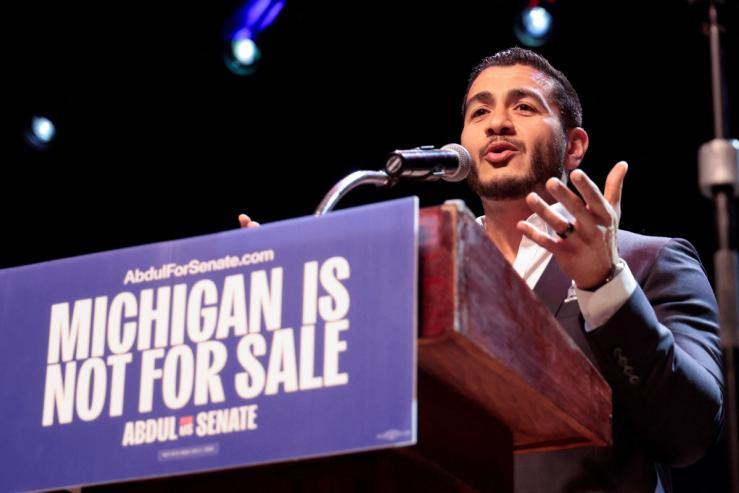
In Missouri, former Rep. Cori Bush didn’t even come close to beating Rep. Wesley Bell, the Democrat who unseated her with heavy AIPAC support two years ago and didn’t need as much this time. Michigan state Rep. Donavan McKinney, the strongest challenger Shri Thanedar has faced in three House races, was leading by single digits. So was Abdul El-Sayed, whose Michigan Senate campaign radiated confidence in the final weeks, as public and private polling showed him besting Rep. Haley Stevens by close to 20 points.
The left is still on the verge of historic wins in Michigan (though Kyle Blomquist, the Democratic Socialists of America’s candidate, flopped in the mostly rural 1st District, where Republicans are favored to win in November). But there were two stories in the state, of years of progressive organizing paying off and a historic amount of PAC money flowing in to stop it.
That money wasn’t really there in Colorado, and it came late in New York. In Washington, Rep. Marie Gluesenkamp Perez faced a progressive challenger who channeled the anger of local activists at her votes with Republicans — and posed no threat whatsoever.
None of this means the left has already peaked. It does suggest that Democrats who want to rally primary voters against left-wing candidates can do that, with enough time and money. That’s going to get noticed by Democrats in Wisconsin and Minnesota, who are trying to convince late-deciding primary voters to reject progressives like Francesca Hong and Peggy Flanagan.“Tomorrow we begin to mend fences,” El-Sayed told his supporters in Detroit. “If your instinct is to be like, ‘I told you’ — no!” That was a less triumphant, hubristic tone than his supporters were taking, up to 8 pm on Tuesday.
But party leaders can’t control everything.
Late interventions by Michigan’s most popular Democrats might not have delivered for their endorsees. Michigan Gov. Gretchen Whitmer clearly helped Stevens consolidate votes in the race’s final week, but progressives were pretty ready to message against her; El-Sayed pointedly spent one of his final pre-primary days rallying at the data center site she’d visited with Sam Altman, siding with activists who opposed it.
Lawrence’s win in the 7th District was a miss for Sen. Elissa Slotkin, who has drawn a lot of Democratic attention with speeches and roundtables across the Midwest, carrying her story of being able to “win in the middle” and asking how other Democrats can do the same. She endorsed Matt Maasdam in her old seat, cut an ad with VoteVets, and still couldn’t push him out of third place — while annoying supporters of Bridget Brink, the former Ukraine ambassador backed by EMILY’s List. We’ve written a lot about left-wing Democrats campaigning against data centers; that immediate, understandable issue was simply more captivating in mid-Michigan than an elite message about whose service was most impressive and who was most electable.
Campaign polling needs a harder look.
Specifically, the new way that political observers see campaign polling — through strategic scoops and online posts that get in front of influencers and fuel betting markets. The most egregious example of this on Tuesday was a since-deleted X post by a founder of VoteHub, suggesting that a Stevens pollster had told her the candidate had no path to victory, and offered a very specific number (14 points) as her polling deficit.There wasn’t a massive polling failure on Tuesday, though public and private polls were all wrong in the same direction: a double-digit El-Sayed lead over Stevens. There was a narrative failure — partly in mainstream coverage of the race, and partly in the new progressive media sphere, which had predicted a landslide that would humiliate, not just beat, the establishment.
What did the polling miss? Turnout was record-breaking in Michigan’s Democratic primary, and Stevens banked mail-in votes and won with rural Democrats who were skeptical of El-Sayed. Had Democrats ditched the idea of “electability” to follow their passions? No; “electability” wasn’t a question in Denver and New York, but it was in Michigan, and Stevens and her allies (and their allied PACs) did convince some late-deciding Democrats that El-Sayed was risky.
Red states didn’t love pro-GOP ballot measures.
Missouri Republicans tried and badly failed to convince voters to make it harder to get amendments on the ballot — a process that’s been mostly helpful to Democrats locked out of power in Jefferson City. Kansas Republicans asked voters to put state Supreme Court elections on the ballot, which would take judicial appointments out of any Democratic governor’s hands.
That failed, too, despite healthy Republican turnout in both states. Abortion rights has faded as an issue in national elections, but it’s active in state races, where Republican trifectas can ban it. That was a factor in both states; the “no” campaign in Kansas called itself a “Vote No (Again),” linking itself to prior GOP ballot measures deciding whether the state could ban abortion.
Kansas voters didn’t see a need to elect judges, who would almost always be conservatives; they’ve been willing to elect Democratic governors as bulwarks against the GOP legislature. And Missouri conservatives didn’t see a good reason to limit the initiative power, when Republican legislators can undermine voter-passed amendments anyway.