




The News
Greenpeace Africa said it is mulling options, including a potential legal challenge, to stop the issuance of approvals for the construction of a multibillion-dollar Dangote Refinery on the Kenyan coast, a project the government hopes will create jobs and boost the region’s energy autonomy.
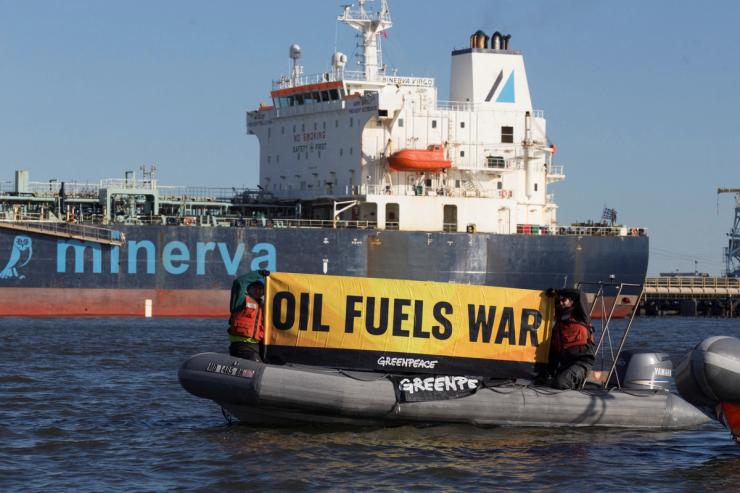
The project will produce 700,000 barrels-per-day when finished, a target that has become more urgent with disruptions in the Strait of Hormuz that have badly squeezed fuel-importing economies across Africa. But it has also drawn ire from activists. Greenpeace argues that the Kenyan government made political and financial commitments before undertaking an Environmental and Social Impact Assessment or extensive public participation around the proposed site in Lamu.
Sherelee Odayar, an oil and gas campaigner at Greenpeace Africa, told Semafor that “all options remain available, including advocacy” when asked if the organization would pursue a legal challenge. She added that Greenpeace would scrutinize the environmental assessment once released, with their immediate request being full transparency regarding the project by its developers, government, and regulators.
Kenyan President William Ruto said the refinery would create 60,000 jobs, which Greenpeace argued could be temporary. Odayar said they wanted specific details of the jobs to be created, including temporary construction jobs and indirect economic activity.
The $17 billion plan is a major investment for Kenya, and comes with political weight. Sources close to Lamu Governor Issa Timamy told Semafor that with national elections coming in August 2027, the administration is keen on the project’s success. The piece of land expected to host the project has already been designated, and Lamu expects to approve various operational licenses required for construction to begin. According to Ruto, construction will begin this year.
“Activists are jumping the gun,” a source in the Lamu county government told Semafor. “The kind of international financing this project requires cannot be unlocked without an ESIA,” added the source, who was not authorized to speak publicly on the project.

Know More
Soil testing, design, and early engineering works are already underway, according to Devakumar Edwin, vice president for oil and gas at Dangote Industries. President Ruto has said that construction will begin this year.
Following a high-level meeting with key government officials this week to review progress of the project, Kenya’s deputy president Kithure Kindiki said the government would create the “legal, administrative and regulatory framework” needed to support it.
Kindiki said the facility would create jobs and cushion the region’s economy from “shocks caused by sharp rises in oil prices, such as those recently witnessed following the closure of the Strait of Hormuz.” He added that the government was “engaging regional partners for consensus on the facility.”
The refinery is designed to reduce the region’s near-total dependence on imported fuel and will serve several countries, including Kenya, Uganda, Tanzania, South Sudan, and other neighboring markets. It is also seen as a major boost to regional transport links as it could support Lamu’s position as an anchor for the Lamu Port-South Sudan-Ethiopia (LAPSSET) transport corridor.
Construction will be financed through internally generated cash, bond issues, and proceeds from a planned IPO. Kenya has committed a $165 million seed investment in the refinery, with other East African economies mulling similar investments.

Step Back
Several local MPs and some residents have voiced support for the refinery project. They have, however, also raised concerns on community involvement, fearing a repeat of the construction of Lamu Port, part of the much-delayed LAPSSET project. Following a lengthy legal battle, Kenya’s government paid more than $10 million to some 4,600 fishermen from Lamu after a court ruled that the multi-billion dollar project violated public participation laws, damaged local marine ecosystems, and threatened traditional fishing and cultural rights. The government was also compelled to conduct a fresh cultural and environmental impact assessment as well as public participation.
Fauz Talib, a Lamu-based community organizer, told Semafor that while many local residents supported the refinery project, the lack of information around it was concerning. Several locals who spoke to Semafor said their biggest expectation was to secure jobs at the facility.
“The Lamu port project (LAPSSET) affected a lot of people who depended on fishing, so it’s important that this time the developers and government involve the community in the whole process,” Talib said.

Notable
- Some experts fear Dangote’s stipulation that any East African refinery project would require anti-dumping protections to prevent cheaper imported fuels from undercutting local refining operations could backfire in Kenya, DW reports.