




Tim’s view
With the number of drones and missiles flying toward energy infrastructure in the Gulf these days, it might seem like a strange time to pour capital into that sector, in that region. But a gold rush is shaping up to profit from new workarounds to the Strait of Hormuz.
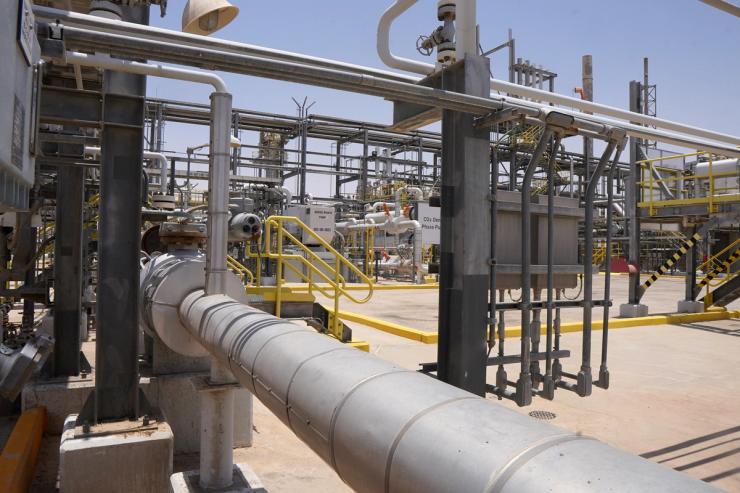
A group of US and Saudi investors said Wednesday they’re closing in on a site for a $5 billion oil refining complex. It will be somewhere in the Gulf region, but outside the Strait, the project’s organizers told me. With the aim to process up to 200,000 barrels of crude oil daily, it would be smaller than the major Gulf refineries. But the idea is to set up a port-connected “energy corridor” for producing and exporting not just staples like gasoline but also plastics, fertilizers, and just about anything else one can squeeze out of a hydrocarbon.
The idea was born before the war broke out, Mark Gunderson, a Texas oil developer whose MWG Enterprises is a partner in the project, told me. But now its logic is especially clear: Given the security and infrastructure limits on how much crude can flow out of the region, turning the oil into something else first can make it accessible to a broader range of traders and export vessels. “What can you do to make the oil move faster?” he said. “It doesn’t necessarily have to be different or bigger pipes. It has to be technical solutions, and products that flow easier.”
The project, whose other backers include the Patel Family Office and Saudi’s AHQ Group, is part of a larger tide of capital flowing into Gulf oil infrastructure. Chevron is doubling down in Iraq. The UAE is building new pipelines and ports. On Monday, private equity giants Brookfield, Blackstone, and KKR signed a $16 billion lease on Kuwait’s national pipeline network. “Security risks may be encouraging investment in more resilient infrastructure, rather than deterring it,” said Salih Yilmaz, senior oil analyst at Bloomberg Intelligence.
The refinery project has plenty of hurdles ahead. But as refinery construction stalls out in the US and Europe, and a wider variety of crudes from Africa and elsewhere flow into the Gulf, now is a good time to take the risk, Lakshmi Narayanan, Patel’s vice-chair, told me: “Pre-conflict and post-conflict, Gulf countries have always been open [for energy investment], but now the market’s sentiments are different.”

Notable
- A suspected drone attack in Egypt, a first for the most recent Middle East war, was designed to show how much further global shipping and energy supplies could be disrupted, two Iranians told The New York Times.