




The Scoop
Tobin Tang didn’t mince words. “This is fake money,” the Polymarket marketing employee explains in a one-minute, how-to video obtained by Semafor. “I mean real money, obviously,” quips Tobin, cracking a faint smirk in the corner of the screen, where he appears in a black t-shirt and blue over-ear headphones.
The previously unreported presentation, titled “Getting Started with Fakecharts: Setup and Deposits” was shared on a Discord account Polymarket used to communicate with dozens of social media creators. They were paid by the company to drive users to its site and make it look like they were winning big without ever placing a real bet — a playbook now under investigation for allegations of deceptive marketing by US regulators.
Tang was at University of Waterloo in Ontario when the undergraduate student left to work for Polymarket Chief Marketing Officer Matthew Modabber, who Politico reported sent at least $350,000 to influencers via PayPal for these kinds of videos.
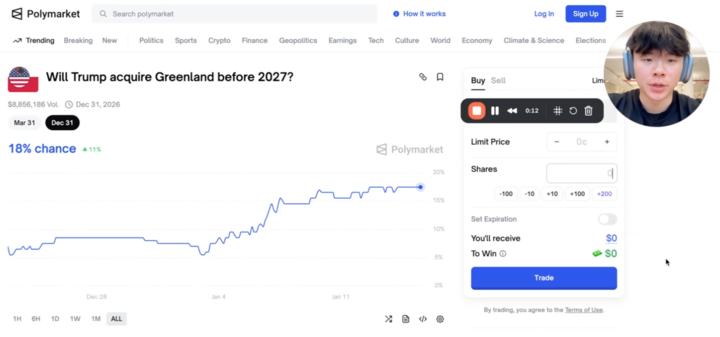
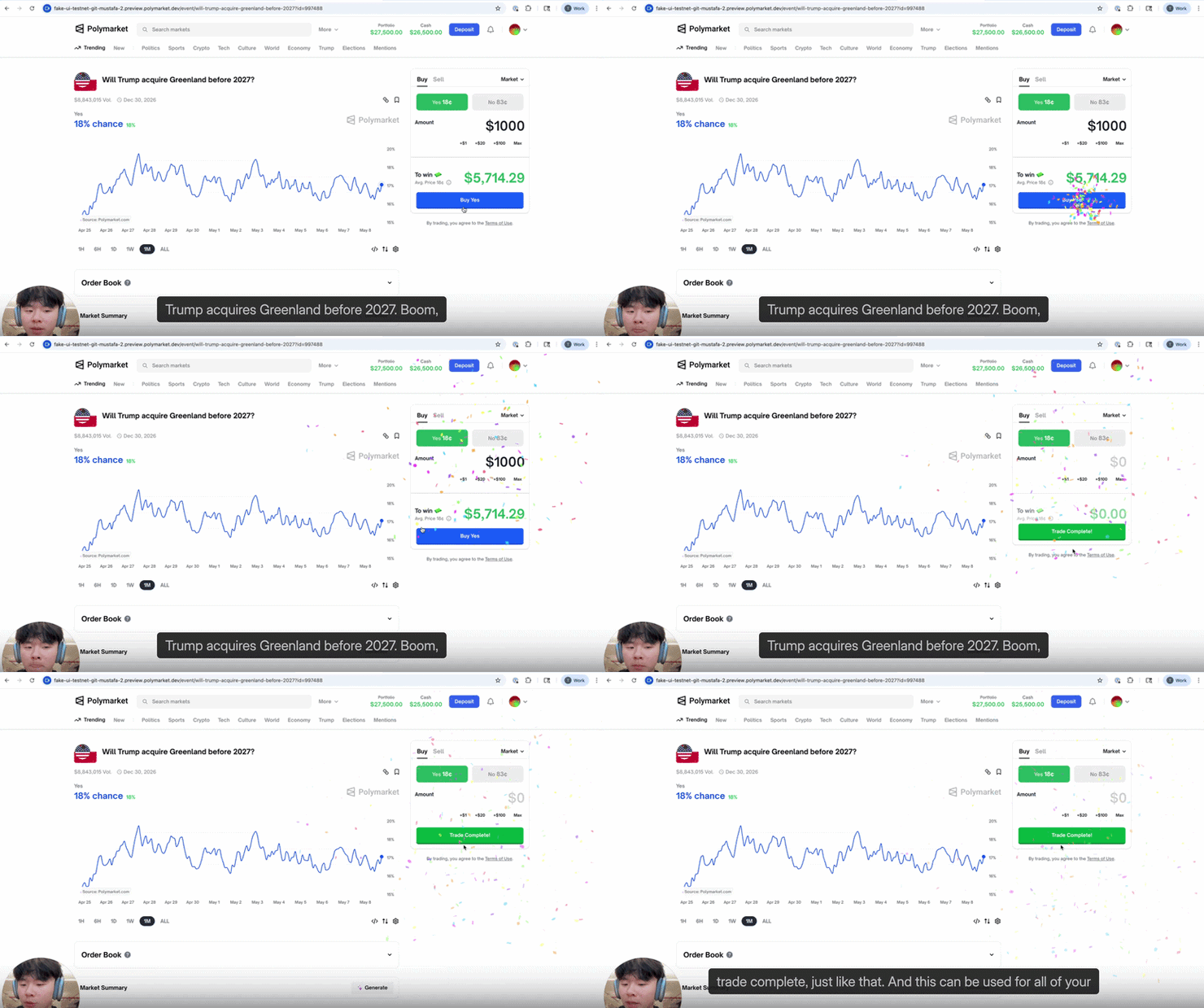
As Tang takes creators through Polymarket’s “fakecharts platform,” he demonstrates how to deposit fake money to wager on whether President Donald Trump would acquire Greenland before 2027, inputting $1,000 into a field and clicking a button labeled “Buy Yes.” “Boom, trade complete, just like that.”
The instructional videos, as well as interviews with current and former Polymarket employees and creators, show just how far Polymarket employees were willing to go to amass users — and legitimacy — and provides a deeper look into the mechanics of training what The Wall Street Journal called a “social media army” assembled to stage fake bets on a copycat website created to look just like Polymarket’s.
Tang didn’t respond to requests for comment. A Polymarket spokesperson told Semafor that the company is “conducting a comprehensive audit of active promotional content.”

Know More
Polymarket, which has been trying to bring its site onshore since it was banned from the US in 2022, often paid influencers based on the number of views per video, according to a person familiar with the matter. One creator told Semafor they were paid $10 per 1,000 views.
Some creators were also handed a list of banned terms for their videos, such as “betting” or “gambling,” the person said, suggesting Polymarket’s marketing staff knew they were at risk of crossing a line.
Following a series of media reports outlining the marketing strategy, a bipartisan group of lawmakers called for a federal probe into whether the company used deceptive marketing practices — a claim the company said it was investigating but hasn’t provided further detail on.
The company is also facing a decision by France to block access to the company’s website in the country, which Polymarket said this week it plans to challenge, and additional threats of restrictions by US states. This week, for example, the Wisconsin Election Commission warned that ballot betting could violate the state’s voting law. A Polymarket spokesperson said the company would address the claims “through the appropriate legal process.”

Notable
- The Wall Street Journal first reported on the company’s fake bets marketing campaign, analyzing more than 1,100 videos from Polymarket creators that revealed none of the featured bets, worth $1.9 million in total, were real.
- Polymarket creators were paid via PayPal by the company’s CMO, Matthew Modabber, according to a Politico investigation. Modabber sent at least $350,000 to influencers via PayPal, the report found.