


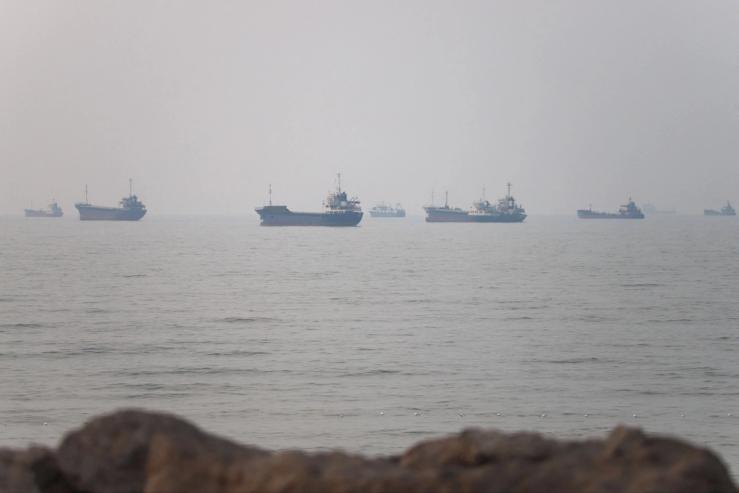
The latest round of attacks in the Strait of Hormuz showed the risk faced by the Greek shipowners who are among the few still chasing outsized profits by sending their tankers into the world’s most dangerous waters.
On Monday, projectiles launched by Iran struck two vessels owned by the Greek firm Dynacom as they passed through the strait, part of an escalation of reciprocal strikes that has reduced tanker traffic to a trickle after a brief resurgence in the past month. Dynacom and its billionaire owner, George Prokopiou, have been instrumental during the war in ferrying oil out of the Persian Gulf and into larger export tankers — at windfall prices that have at times reached $500,000 per vessel. As tanker traffic pulls back and crude prices rise, “the premium now from just being able to sell cargoes can’t be overstated,” said Ian Ralby, senior security fellow at the Center for Maritime Strategy, a think tank. That premium still has runway ahead: In a note Monday, Rapidan Group analysts extended their timeline for Gulf oil production to return to prewar levels by a year, into the end of 2027.
But for shippers, the risks are also rising: A third Dynacom tanker was struck on Monday by a Ukrainian drone in the Black Sea as it loaded oil from a Russian port. And new threats by Houthi militias in Yemen to attack tankers exiting the Red Sea could open another hostile front. “This is going to become dicey, and a lot of shipowners will sit on their hands,” Ralby said.