




The News
The Trump administration is replacing the gutted American foreign aid apparatus with, in part, a push to export more US propane.
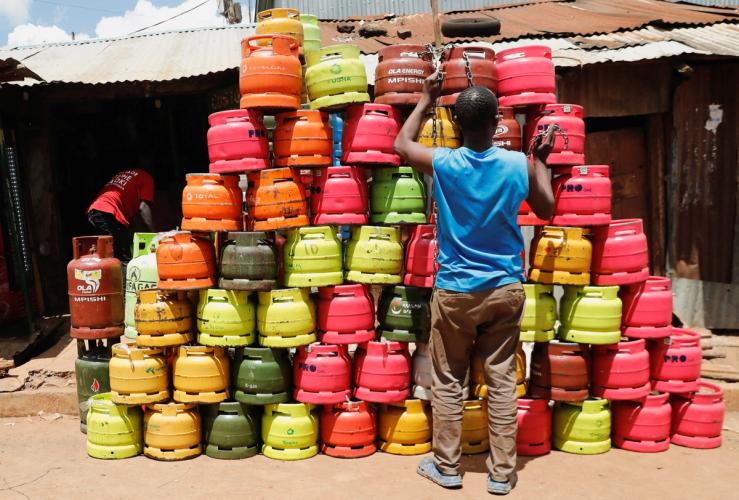
US Energy Secretary Chris Wright made a digital appearance last week at an International Energy Agency summit focused on replacing African households’ use of charcoal and other indoor cooking fuels that are harmful to health and the environment with cleaner alternatives, especially propane and other petroleum-derived gases. “Access to clean cooking is one of the most impactful, yet overlooked, challenges of our time,” Wright told attendees, who included Kenyan president William Ruto and African Union energy commissioner Lerato Mataboge. “By expanding access to affordable and reliable propane gas, we can transform human lives across the globe.”
The summit attracted $900 million in new government commitments in support of clean cooking, according to the IEA. A DOE spokesperson declined to specify how much of that sum, if any, came from the US, but said that more details of “commercial commitments, including from US companies” would be made public soon.
“Secretary Wright’s support for LPG [liquid petroleum gases, which includes propane] reflects the Trump administration’s broader approach to energy-related foreign assistance, which is centered on trade, not aid,” the DOE spokesperson told Semafor. “This approach views LPG and clean cooking as commercial markets to be developed, rather than humanitarian needs. With global demand for LPG projected to continue growing, helping meet that demand advances both expanded energy access abroad and US economic interests.”
In this article:

Tim’s view
Clean cooking is a worthy humanitarian goal: Fewer than 20% of households in sub-Saharan Africa have consistent access to clean cooking fuels, and indoor air pollution is responsible for 815,000 premature deaths on the continent every year. Renewable-energy-based alternatives exist, but are more expensive than LPG, a critical barrier to adoption for a problem concentrated in the lowest-income households. And amid the Trump administration’s broad pullback on humanitarian initiatives, the clean cooking problem also happens to dovetail nicely with another problem currently facing the US: too much propane. And although Wright’s affinity for propane is nothing new — he has called it his “favorite hydrocarbon” since before taking office — the effort to push more of it into Africa has emerged as a transactional centerpiece of US energy policy toward the continent.
Propane — a byproduct of natural gas production and oil refining — is a fuel used in heating, cooking, petrochemical production, and farming, among other things. US production has skyrocketed in the past decade, in tandem with a gas drilling boom. Propane is the world’s most widely used cooking fuel, but inside the US, where it’s relatively niche, consumption is fairly flat. That has pushed exports to a record high equal to almost two-thirds of total production, according to federal data. Exports are set to grow more in the coming years as new terminals come online. The war in Iran underscored the need for new sources; 30% of the global LPG supply has been cut by disruptions in the Strait of Hormuz, according to the IEA.
These factors — combined with the administration’s disdain for renewables, the dismantling of USAID and its lauded energy program for Africa, and the diminishment of the State Department’s energy diplomacy office — created conditions ripe for the DOE to push propane as a choice Trump administration offering to emerging-market governments, with a genuine humanitarian sheen. But that’s come at the expense of what had been a broader portfolio of energy-related aid and diplomacy, Katie Auth, deputy executive director of the Energy for Growth Hub think tank and a former senior USAID official, told Semafor: The “DOE’s focus when it comes to African energy has essentially been boiled down to clean cooking.”

Room for Disagreement
Still, across the administration, other forms of overseas energy aid are still going strong, Auth said, including the Development Finance Corporation’s work on critical minerals and grid upgrade projects backed by the Millenium Challenge Corporation.
And for the US to focus its efforts in developing countries around selling access to American energy products is not new to Trump, said Geoff Pyatt, a senior State Department energy official in the Biden administration: “Our policy reflected an ‘all of the above approach,’ including close partnerships with oil and gas sector companies like Chevron, Exxon, GE Vernova, and Baker Hughes, as well as close coordination around initiatives in electrification, solar and grid construction.”

Notable
- High borrowing costs have become the major barrier to electrification in Africa, Mohamed Adow argues in Climate Home News. The poor condition of many African countries’ grids is also not improving fast enough.