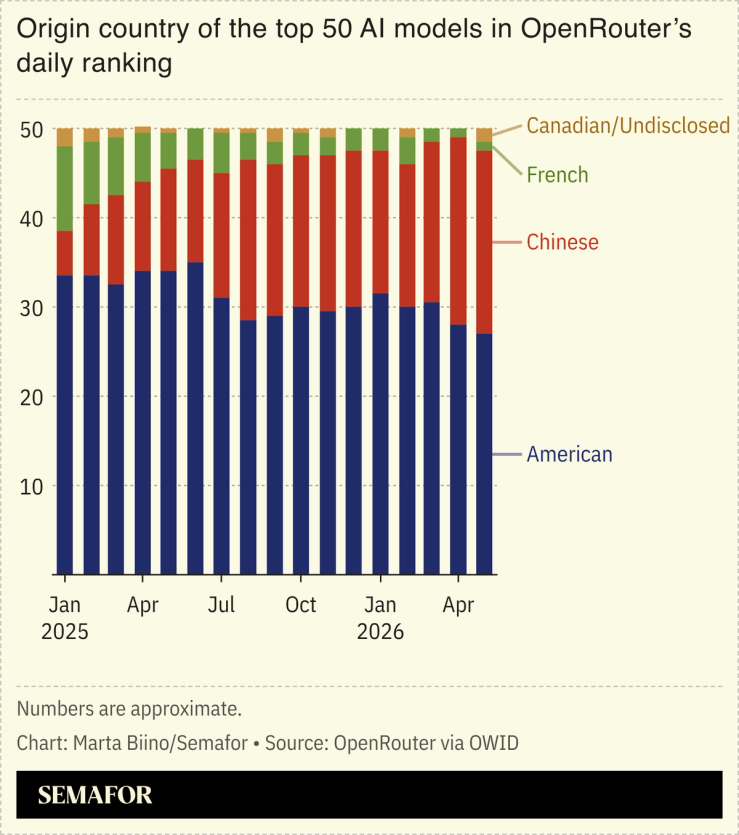
The AI world is going nuts over the Kimi K3 AI model, the latest open-weight offering from Chinese startup Moonshot. While the new model is a big deal, the concern is somewhat misguided. For instance, Nvidia’s stock (and American markets broadly) took a hit over fears that China is closing the gap with the US. But if you’re an Nvidia shareholder, the excitement over K3 is pretty good news. In order to run the most capable version of Kimi K3, a 2.8-trillion-parameter model, you need a cluster of Nvidia GPUs that would total several million dollars. Frontier labs like Anthropic and OpenAI have a bit more to worry about, because the Kimi models perform at or near the frontier.
There’s now an established pattern: American frontier labs come out with state-of-the-art AI models. Chinese firms allegedly “distill” those models — they use them to extract a form of training data, which is then used to train new open-source models for anyone in the world to download.
This is not sustainable for the frontier labs. One view is that American models simply need to move faster, staying far enough ahead of the Chinese firms.
But AI models are now so powerful that the US government is requesting to keep them off the market for a month while it vets them for national security concerns, slowing US firms down.
Instead of building powerful AI models and then releasing them to the public, frontier labs could keep them locked up, and use them to build their own software businesses. Eventually, they’d become like holding companies.
Keeping the models secret could solve two problems at once: Chinese firms would be prevented from distillation, and the security concerns would go away. But it would also turn frontier-model companies into powerful conglomerates with a massive advantage over essentially every business in the world, ushering in the future that open-source advocates and critics of big tech companies fear.