




The Scoop
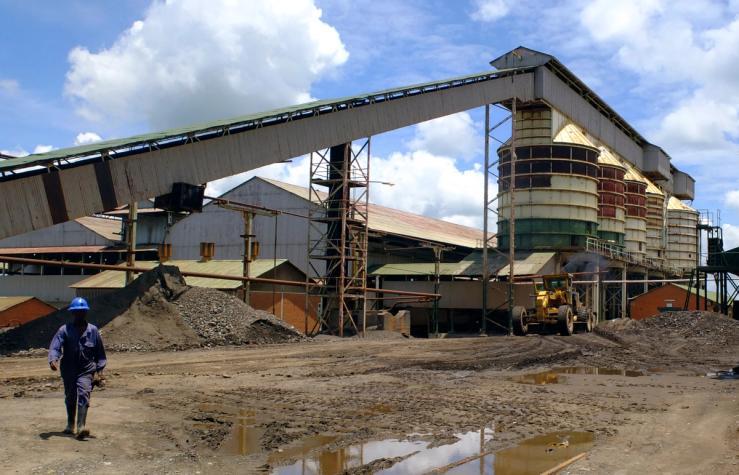
DR Congo’s finance minister ordered the tax authority to remove seals placed on Glencore’s Kamoto Copper Company offices, as talks continue over a multibillion-dollar tax dispute, a government spokesman told Semafor.
The move comes days after President Félix Tshisekedi warned that heavy-handed measures by tax officials threatened to undermine investor confidence in the mining sector at a time when the country hopes to increase state revenues from its vast mineral wealth.
Congo’s tax authority alleges KCC owes the state billions of dollars, a claim disputed by the Swiss commodities giant, which is one of DR Congo’s largest copper and cobalt producers. Last week, Congolese tax officials sealed off KCC’s offices, in the southeastern Lualaba province, as part of the dispute.
“The finance ministry instructed the tax authority, known by its French acronym DGI, to lift the seals because discussions have reopened and are continuing between Glencore and the government,” government spokesman Patrick Muyaya said. Glencore spokesman Charles Watenpul confirmed the news. “Seals have been lifted. We continue to engage with the authorities,” he told Semafor.
Tshisekedi last week ordered the finance, economy and mines ministries, along with revenue agencies, to ensure coercive measures remain exceptional, legally justified, and proportionate. The president also stressed the need to prioritize dialogue and conciliation. He cited repeated bank-account seizures, the sealing of company premises, and unpredictable tax demands as factors driving up miners’ operating costs and hurting DR Congo’s investment climate.
Muyaya told Semafor the president’s comments were in line with the government’s view that mining companies should be treated as partners, even when disputes arise. “Seizure is not always the route that should be taken, because it is an extreme measure,” he said.

Know More
Glencore’s KCC and Mutanda mines, in DR Congo’s southeastern copperbelt, are at the center of the most significant announced US-backed mining investment in the country so far. The Washington-backed Orion Critical Mineral Consortium is seeking to acquire 40% of Glencore’s interests in the two assets, valued at $9 billion.
As mineral investments heat up across Africa, resource-rich governments are trying to raise more tax revenue from mining without driving away the foreign investors that finance the sector. The stakes are especially high in DR Congo, which accounted for an estimated 73% of global cobalt mine output last year and was the world’s second-largest copper producer. Its mining industry includes some of the world’s biggest groups, including CMOC, Zijin, Huayou Cobalt, and Glencore.
“This is not the first time we have had a dispute with Glencore,” Muyaya said. In recent years, Kinshasa has intensified scrutiny of mining companies. An October 2025 state audit found that firms underreported $16.8 billion in revenue between 2018 and 2023, including Glencore’s KCC, CMOC’s Tenke Fungurume, and Ivanhoe Mines’ Kamoa-Kakula. The Court of Auditors said the discrepancies deprived local development funds of $50.4 million and recommended tougher enforcement, including suspensions and prosecutions. Glencore disputed the audit’s findings at the time, saying KCC had met its obligations under the mining code.
A minerals deal signed with the US in December commits DR Congo to legal and regulatory reforms within 12 months and grants preferential fiscal and tax treatment to qualifying US-backed projects. Conflict, contested licences, slow permitting, and unpredictable tax and regulatory enforcement have long deterred Western investors, while analysts say Chinese operators are better able to absorb risks many US companies will not take.
Tshisekedi’s directive reflects the balance Kinshasa is trying to strike: extracting more revenue from miners without undermining the investor confidence it needs to turn growing US interest into actual investment.

Notable
- Experts have raised concerns over Washington’s America First foreign policy approach in DR Congo, which offers US firms preferential access to mineral resources in exchange for security support.