




David’s view
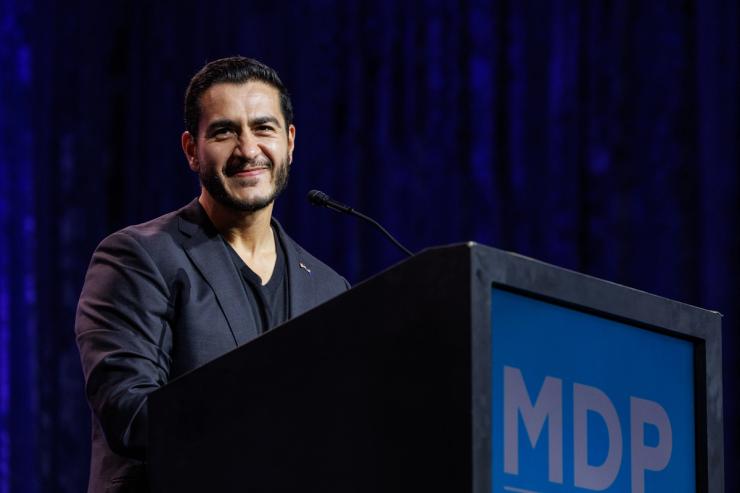
Last month, after Abdul El-Sayed and I wrapped up our interview in the Detroit suburbs, I mentioned the ongoing effort by centrist Democrats to link him to Graham Platner.
The candidate laughed. El-Sayed rose on his strength during short TV hits, where he would talk about his issues — “Medicare for All,” no more wars — and the interviewer would ask about newsy topics like Platner, who used some of the same consultants as him. El-Sayed liked to joke that he was already running for Senate as a Muslim with the middle name Muhammad, “and now I have to carry that guy?”
If centrists have their way: Yes, he does. They want the debacle in Maine, where the left got its candidate and tumbled face-first into disaster, to be front of mind for Democratic primary voters. Centrists warned that a bizarro left-leaning tea party would, like its right-wing antecedent, throw away winnable seats. This feels like their moment.
But so far, the moment has revealed how hard it is for the party to fight an insurgency without a clear leader. Ten years after some Bernie Sanders delegates marched out of the Democratic National Convention, the party is still cautious about using its resources to beat the left. And the centrist groups that want to take that on haven’t gotten as far as they hoped.
Maine is a prime example here; as disastrous as the fall of Platner’s Senate campaign was, it did nothing for Democratic centrists. Pro-Platner groups like Our Revolution and the Progressive Change Campaign Committee charged in after his departure, amplifying the left’s message that Maine Democrats had given the nomination to their movement.
“The people of Maine voted overwhelmingly for a bold, working-class, progressive agenda,” Our Revolution’s Joe Geevarghese said on a Monday night stream with other progressive candidates, including El-Sayed. “That mandate should not be erased behind closed doors.”
The truth is, no centrist is even threatening that mandate. The field to replace Platner at a convention next week is set. Two candidates, Troy Jackson and Shenna Bellows, were on Platner’s ranked-choice ballot for governor and are seen as part of his movement.
Another candidate, Nirav Shah, agrees with the most contested points of the Platner agenda — that America should move to government-run healthcare and that Israel carried out a genocide in Gaza.
The real battle for centrist advantage is being waged in Michigan. PACs supporting Rep. Haley Stevens for Senate are massively out-spending El-Sayed, tying her to former President Barack Obama (whom she worked for, on the 2009 auto industry bailout).
El-Sayed and his allies are bristling at that tactic, since Obama has remained neutral in the Senate primary. The left would definitely prefer to keep the most popular Democratic establishment figure on the bench, where he’s sat during most congressional primaries since he left office.
But the entire argument about Obama’s ties to Stevens is one that centrists relish. El-Sayed is rooted in the Sanders faction, which has always portrayed Obama as a missed opportunity — a vessel for progressive energy who, while in office, left the door open for Trump by failing to channel it into lasting change.
Obama “was someone who was, at the end of the day, not able to inspire the people on the other side of the aisle to see things his way,” El-Sayed told Vox during his 2018 campaign for governor. “He and I were very different people. Obama was a very cool, cautious, collected person.”
The big question, after the Platner saga, is whether center-left Democrats like Stevens become more aggressive about confronting left-wing candidates and stop worrying about being accused of foul play. When retiring Michigan Sen. Gary Peters surprised most Democrats by endorsing Stevens to succeed him, he explained that the congresswoman was “fully vetted,” a safer choice.
Sanders will head to Michigan this week to rally with his candidates up and down the ballot, while Schumer is not even involving himself in the Maine do-over primary. If there’s an effective centrist counterattack, it will be funded by groups that the Democratic base doesn’t trust, and tacitly endorsed by a Senate minority leader they consider a loser.
It’s no wonder that the party’s mainstream wants to talk about Platner.
In this article:

Room for Disagreement
One advantage that Stevens and the establishment can indisputably claim in Michigan: campaign cash.
In the final stretch of the Democratic primary, pro-Stevens PACs, mostly connected to AIPAC, are running ads that portray El-Sayed as dangerously unelectable, sexist, and anti-American. One piece of mail from the United Democracy Project quotes comments from Twitch streamer and El-Sayed fan Hasan Piker, such as a dark joke about 9/11, that Third Way tried to use months ago to hurt the progressive.
The left anticipated the spending onslaught and is framing the outside money as a desperate play to stop a populist candidate — which isn’t wrong. But a money flood can work in close races.

Notable
- David M. Drucker spent some more time in Michigan for The Dispatch, where El-Sayed, like Sanders, didn’t engage on a question about how much taxes might increase to pay for universal healthcare. “I’m not going to give you that number because it’s going to be used against me.”