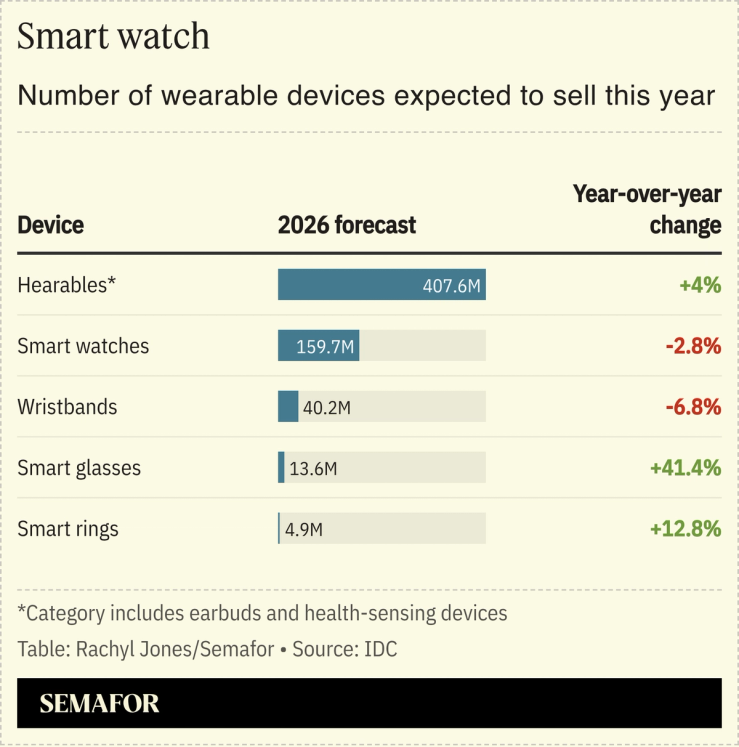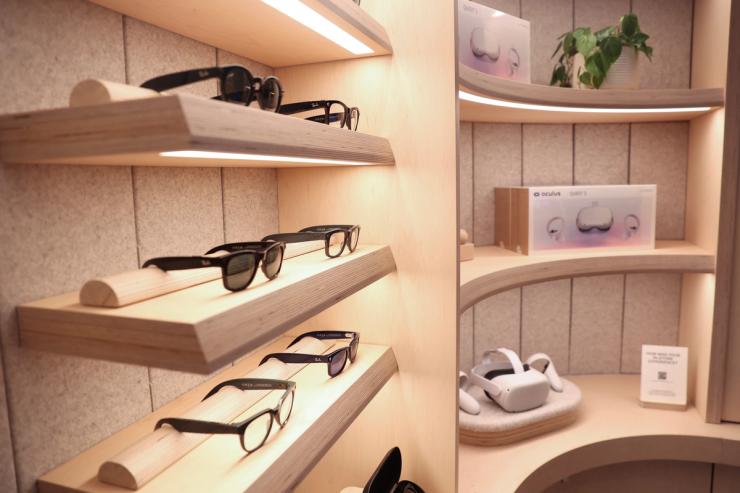
Wearable-makers want a smartphone-adoption moment. Chipmaker Qualcomm is working on up to 40 different kinds of devices with its customers, helping them design things like digital watches, rings, and glasses in a way that delivers consumer data back to the companies creating the products, Ziad Asghar, senior vice president and general manager of XR and wearables, told Semafor. “Pretty much every company that has massive or big AI investments” is jumping in, he said, declining to name his clients. Meta recently came out with a new, cheaper version of its AI-enabled smart glasses, and Google is set to release eyewear this fall.
For hardware developers, collecting data means consumers can better personalize their devices, said Asghar, adding that their data can live on local hardware, which might also ease some users’ concerns over privacy. By controlling the data, companies can also keep users locked into their systems and away from their competitors, said tech analyst Carolina Milanesi.