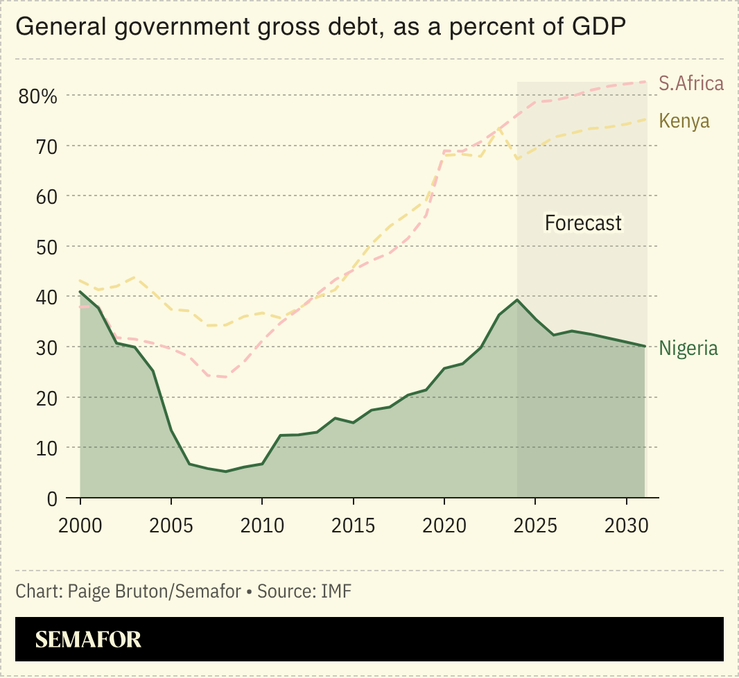
Nigeria rejected the International Monetary Fund’s finding that the country has engaged in extra-budgetary public spending that distorts its deficit levels, blaming poor interpretation of its financial reporting method for the misunderstanding.
Even as it broadly praised Nigeria’s macroeconomic reforms of recent years, the IMF, in a June assessment, faulted “off‑budget spending and complex financing instruments” equivalent to about 2% of GDP that needed to be addressed through better transparency and accountability frameworks. Nigeria’s Finance Minister Taiwo Oyedele dismissed suggestions of impropriety, describing a practice in which some capital projects may be funded over multiple years by drawing from different sources of already appropriated funds, which he said “should not be misrepresented as evidence of unlawful expenditure.”
Nigeria approved a $50 billion budget for the 2026 fiscal year. But its appropriation process has come under more intense scrutiny in recent weeks after a supposedly fake investment promotion agency was found to have received allocations from the budget. Anti-corruption agencies have begun investigating the incident.