



The News
Firms moving goods across the border from the UAE into Saudi Arabia are complaining of delays lasting up to several days in some instances, in a sign of the simmering tensions between the Gulf’s largest economies.
Delays at the border have been getting worse in recent months, according to people familiar with the matter. While the crossing has often been a chokepoint, transit times have grown with goods now frequently held up without explanation, forcing some truck drivers to sleep under their trailers as they wait at the border for over a week, the people said.
Trade between the Middle East’s two largest economies is worth over $20 billion annually, but in recent years their relationship has begun to fray as they vie for regional dominance. Saudi Arabia has been trying to limit what officials describe as “leakage” from the Saudi economy into neighboring countries from businesses serving the kingdom from other Gulf hubs like Dubai.
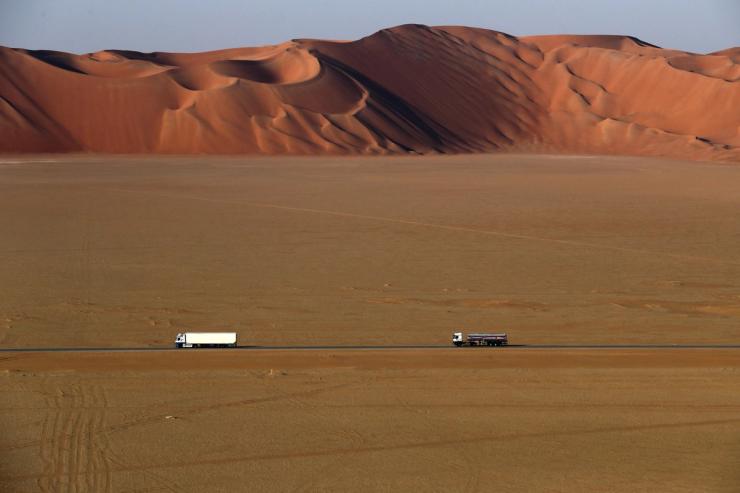
Trade flows from Saudi Arabia into the UAE at the Al Batha border crossing have picked up since the start of the Iran war, with the closure of the Strait of Hormuz leading to more land crossings. This is creating bottlenecks along land corridors. Some trucks crossing the border have had to wait anything from a few hours to several days in the wake of the war, the people said, adding that those delays have worsened in the past month.
Goods that have been snarled in the delays have included building equipment, furniture, spare parts, and even fresh flowers.
In recent weeks, companies and individuals have also started to report issues with financial transfers from Saudi into the UAE, forcing some businesses to route payments through third countries and some people to travel between the two Gulf states with large amounts of cash.
While it is difficult to directly link the delays for money transfers and border trade with the worsening diplomatic ties between the countries, it has coincided with a new low in relations.
“Trade exchange remains within the normal range of customs operations, reflecting the continued smooth movement of goods through customs ports,” Saudi Arabia’s Zakat, Tax and Customs Authority said in a statement. “No complaints have been received, and there have been no indications of delays in customs procedures affecting trucks or the movement of goods at customs ports.” Authorities have been introducing new measures to ensure the smooth flow of goods across all customs ports.
Spokespeople for the UAE did not respond to requests for comment.

Know More
Delays at the UAE-Saudi border have not been uncommon in the past. Trucks were held up in hours of queues in 2021 when Saudi Arabia imposed new restrictions on imports from the UAE, as relations between the leaders of the two countries deteriorated over a dispute about oil production and rising economic rivalry.
Things had improved since then, before spilling out into the open late last year when Saudi Arabia bombed a port in Yemen targeting a weapons shipment from the UAE.
Relations between Abu Dhabi and Riyadh have also been strained by differing approaches to the wars in Sudan and Yemen, relations with Israel, and management of oil markets. The UAE left OPEC in May in a blow to Saudi Arabia, the group’s de facto leader. Both countries are also competing to be the region’s primary business hub.
As a result of the border issues, some businesses have had to look for alternative routes to bring goods into Saudi Arabia, one of the people said. That has coincided with Saudi Arabia opening more shipping routes through the Red Sea in order to reduce reliance on the Strait of Hormuz. The kingdom is also looking to boost its role as a regional trade and logistics hub as part of its economic diversification plan, a strategy that could threaten the UAE’s role as the Gulf’s main trading center.

Notable
- Some business executives said requests for visas applied for in the UAE to Saudi Arabia were rejected earlier this year, in another sign of fraying ties, the Financial Times reported.