




The News
DR Congo is set to extend cuts to fuel subsidies after moving mining companies to market prices, its finance minister said, as it seeks to soften the blow from the global energy shock sparked by the Iran war. The International Monetary Fund said in May that global oil price hikes were eating into mineral export profits — which are a key source of income for the DR Congo, a global mining hub — calling for corrective measures to cushion the shock.
DR Congo’s Finance Minister Doudou Fwamba Likunde told Semafor that the government is “rationalizing fuel-related support” by targeting sectors able to absorb market prices, starting with the mining sector, before moving onto telecommunications firms, he said.
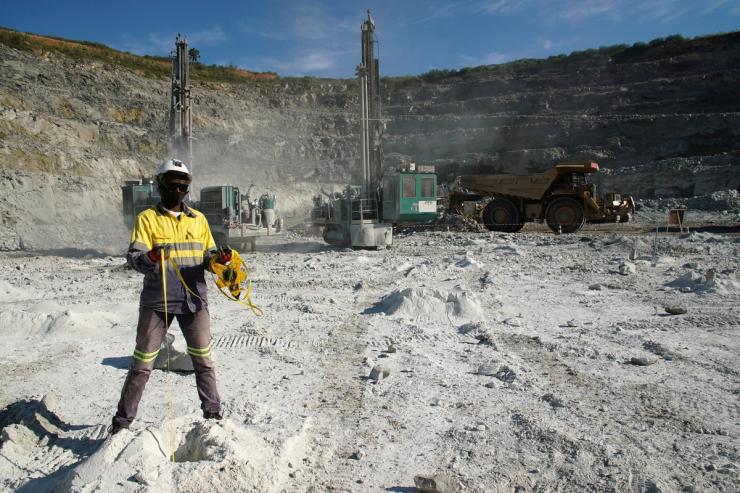
Kinshasa spent more than $300 million in 2024 on fuel subsidies as part of a push to stabilize pump prices in the country, which imports almost all of its refined fuel; many mining companies rely on diesel to power operations in the face of regular electricity shortages. Official fuel price schedules show mining companies in a separate pricing category — initially used as an incentive to attract foreign investments in the sector — but the government has started to move those costs closer to market prices.
The move will raise miners’ costs and could reduce corporate tax payments, Bob David Nzoimbengene, Deloitte’s managing partner in DR Congo, told Semafor. Still, he said it was “abnormal” for the state to subsidize fuel for commercial companies such as miners, and that Fwamba was right to “pull back a bit.”

Know More
The IMF unlocked about $348.5 million for DR Congo last month, about $193.9 million of which would go directly to budget support, according to Fwamba. Lawmakers last week adopted a supplementary budget of 50.496 trillion Congolese francs, or about $22 billion at the government’s budget exchange rate. The parliamentary finance committee had said the revision took account of the economic impact of Middle East conflict impact and higher copper and cobalt price assumptions. Fuel price hikes have hammered countries on the continent, many of which overwhelmingly rely on imports to power their economies.
DR Congo’s annual budget has grown from about $4 billion in 2021 to around $22 billion this year. The country is the world’s biggest source of mined cobalt, key for producing batteries used for renewable energy technology, and produced 3.2 million tons of copper last year, behind only Chile. The IMF’s April outlook put DR Congo’s 2026 GDP at about $123 billion, slightly above Ethiopia’s, placing it on track to become sub-Saharan Africa’s fifth-largest economy. The extractive sector accounts for about 14% of GDP; mining generated about $28.7 billion in exports in 2023, roughly 97% of DR Congo’s total export earnings.

Step Back
DR Congo, Africa’s second-largest country by area, is facing several simultaneous crises. In the east, an ongoing conflict between Rwanda-backed M23 rebels and government forces show no signs of letting up, while authorities are also battling a fast-moving Ebola outbreak declared in May that has already killed more than 500 people. In April, the government raised $1.25 billion in its first Eurobond, and investors Semafor spoke to at the time pointed to Congo’s low public debt and mining-led growth, and did not see the conflict alone as defining its sovereign credit.

Notable
- Minerals are not the only sector that have been squeezed as result of the fuel crunch stemming from the Iran war; regular consumers are seeing prices at the petrol pump and supermarkets rise as well.