




The News
One essential facet of US President Donald Trump’s overseas energy dominance strategy is proving slow to materialize.
At a major Ukraine recovery conference today in Poland, Kyiv’s allies announced more than €10 billion in new business deals and aid packages. But notably absent were any new project investments stemming from the “mineral deal” struck by the Trump administration nearly a year and a half ago, an indication that the US’ flagship initiative in support of Ukraine is losing time to produce results before the president leaves office.
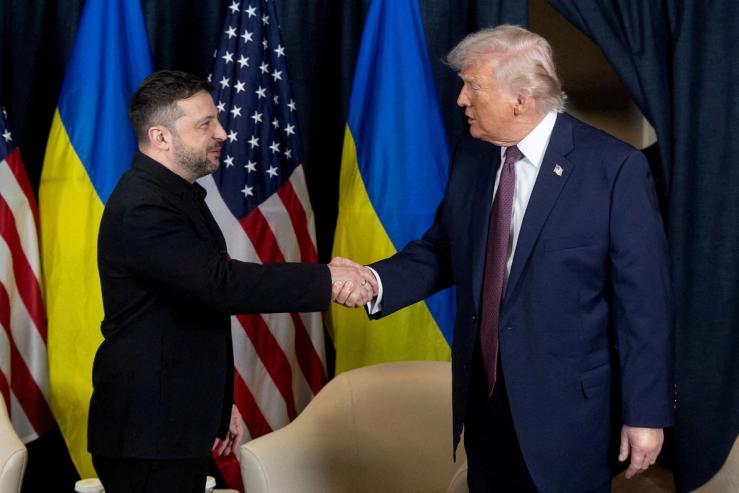
The concept behind the deal, which was one of Trump’s first big foreign policy forays after returning to the White House, was to sidestep thorny intra-Republican debates about whether and how the US should support Ukraine’s military effort against Russia, and instead create a new platform for government-backed business deals.
Ukraine has a lot of critical minerals the US wants for batteries, chips, and other tech, and President Volodymyr Zelenskyy wanted new methods to keep Trump personally interested in Ukraine’s victory. Facilitating investment in Ukraine’s natural resources sector would put more minerals and gas under US influence, and leverage them to achieve the broader foreign policy objective of undermining Russia.
The deal also represented an innovative use of the US International Development Finance Corporation, which invests taxpayer money in private-sector projects that serve US interests but need help to be financially viable. Trump has made the DFC a centerpiece of other energy dominance objectives, including to provide war-risk insurance for tankers passing the Strait of Hormuz. And under Trump, the DFC has expanded its mandate to cover activities that previous administrations, and equivalent institutions in Europe, have been unwilling to touch, such as military tech and fossil fuel production, Daniel Runde, a senior advisor at the Center for Strategic and International Studies who was one of the DFC’s original architects, told me.
But the challenge with focusing on minerals is that mining projects are notoriously time-consuming to put together. Ukrainian officials said this year that at least three major initiatives should be due to receive the first tranche of funding from the deal in 2026. The first, and so far only, project was announced in March, and had nothing to do with minerals. Many observers were expecting more mining-related announcements this week in Poland. But spokespeople for the DFC and the fund confirmed to me that nothing like that is forthcoming for now.
To the extent that a central purpose of the fund is to keep Trump engaged in Ukraine, it needs to deliver results while he remains in office, Runde said. That’s still within reach, for projects in areas like gas drilling and titanium mining that aren’t starting from scratch. But time is running short.
Bigger-picture, it is unclear whether Trump’s transactional, DFC-centric approach toward supporting Ukraine can actually contribute to the country’s economic strength and success on the battlefield. And given the degree to which leaders in both Kyiv and Washington are prone to self-dealing, it also remains to be seen if the fund can support projects that are genuinely commercially viable — or it will become a backdoor for deals that mainly benefit investors close to either side’s inner circle.

Notable
- Ukraine’s president will skip the two-day “Ukraine Recovery Conference” in Gdansk amid a “deepening rift with Warsaw over the naming of a military unit after the World War II-era Ukrainian Insurgent Army.”