



The News
Maryland’s 5th Congressional District — based in the Washington suburbs, one of the most populous areas in the country for sub-Saharan African immigrants — is home to a Democratic primary unlike any other this cycle: Three candidates with direct African roots are among the leading candidates competing for a single seat.
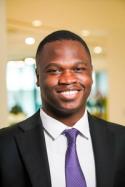
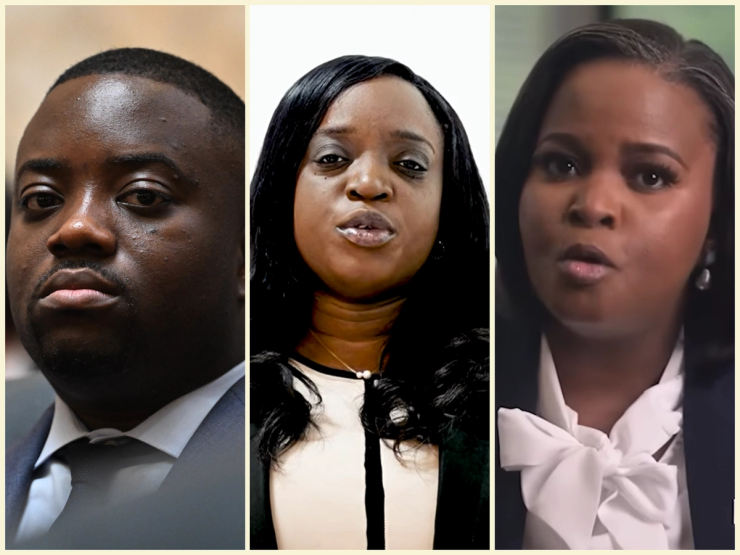
The candidates — Adrian Boafo, the son of Ghanaian immigrants; Quincy Bareebe, a Ugandan-American healthcare executive; and Wala Blegay, a county councilmember and daughter of Liberian and Nigerian parents — each bring distinct profiles to the race. They are among a field of two-dozen other Democrats.
Boafo, a state legislator, is viewed as the race’s frontrunner. He has the backing of retiring Democratic Rep. Steny Hoyer, other prominent Maryland Democratic elected officials, and powerful lobbying groups. Boafo touts the endorsement of the Ghana Diaspora Public Affairs Collective — one of a handful of diaspora national political organizations, some of which are linked to political action committees — and has hosted events with African communities in the district.
“From calls with church leaders to meet-and-greets across the district, I’ve focused on embracing my identity and my lived experiences that come with being Ghanaian,” Boafo told Semafor in a statement ahead of Tuesday’s primary elections.
Blegay, backed by various progressive groups, said her outreach has been at the grassroots level. “I’ve gone to malls, churches, baby showers, weddings, community association meetings — where [African community members] gather,” she told Semafor. For her part, Blegay has received backing from the DC-area branch of the Nigerian American Public Affairs Committee, another national organization.
When it comes to issues, Blegay said African community members are most animated by economic issues and opposition to President Donald Trump. Many who she hears from are newly engaged politically, she said. “I think the [second] Trump election woke the African community up,” she said.
Bareebe, seen as Boafo’s foremost challenger, is self-funding her candidacy with the backing of several prominent African church leaders. Her campaign did not respond to requests for comment.

Know More
The race reflects a broader national trend of rising political engagement of the African diaspora — and a shift in how campaigns engage these communities.
Roxy Ndebumadu, a Nigerian-American local elected official in the DC area, said campaigns have moved “from cultural recognition to institutional recognition” of the African community.
“In earlier cycles, African communities were often engaged through symbolic visibility — attending a cultural event, showing up during an election season,” she told Semafor. “Today, serious campaigns are beginning to understand that African diaspora communities have their own civic architecture.”
Candidates, she added, are now responding to power the diaspora has spent decades quietly building. “I think political attention is catching up to that infrastructure,” Ndebumadu said.
In New York City’s 2025 mayoral race, the campaign of Uganda-born Zohran Mamdani — who drew considerable support from immigrant communities across the city — made targeted outreach to African communities in Upper Manhattan and the Bronx a part of its coalition-building strategy.
Nationally, African-born residents in the US now number around 2.4 million — more than four times the figure in 2000 — and have sent growing numbers to local, state, and federal offices, including Eritrean-American Rep. Joe Neguse, D-Colo.
Blegay spoke of a clear shift in Maryland. “There’s now a concerted effort by a lot of elected officials to get to know the African community,” she said. “I’ve gone to events that I never used to see elected officials at and [now] they are showing up to engage with African voters.”

Notable
- Pro-Israel and pro-crypto political committees have spent big on supporting Boafo, The Washington Post reported.