


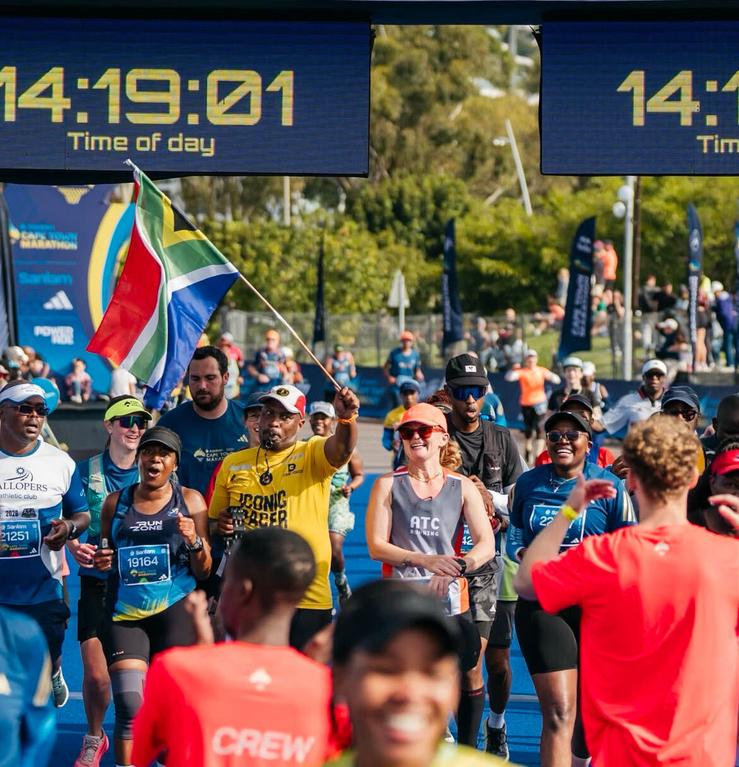
More than 20,000 runners took part in the world’s oldest and largest ultramarathon earlier this month, a nearly 55-mile (89 kilometers) race between the South African cities of Durban and Pietermaritzburg.
The Comrades race has been held every year since 1921, pausing only during World War II and the COVID-19 pandemic. It is unusual due to the fact that it changes direction every year, meaning that on an “up-run” year, runners must climb 5,905 feet (1,800 meters) to Pietermaritzburg, which is 650 meters higher than coastal Durban.
The race’s long history means it has also become symbolic of South Africa’s desegregation process following the end of apartheid: “You would have these scenes in the 1980s of a white runner sharing a bottle of water with a black runner, which was such a small gesture, but such a huge thing in that society that was so divided,” one South African sports journalist told The Guardian.
South African long-distance running also recently enjoyed another significant milestone when Cape Town became the eighth city to be granted the status as a World Marathon Major and the first in Africa.