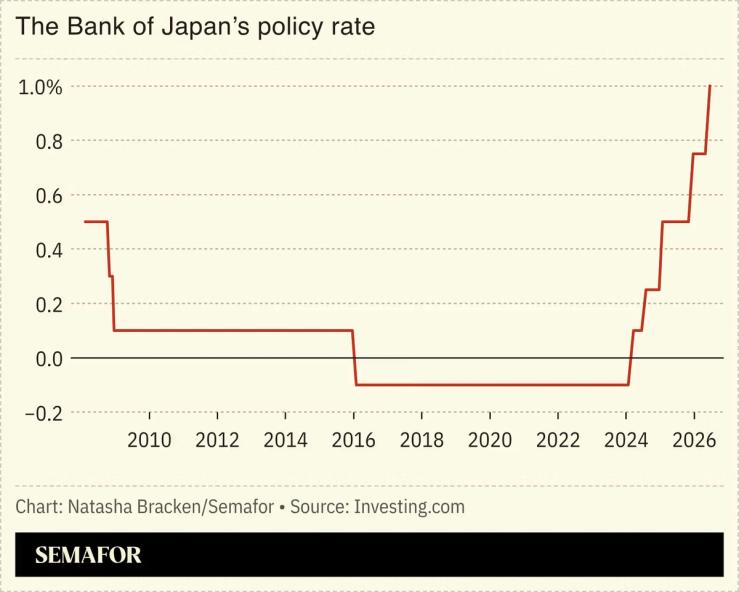
The Bank of Japan raised rates to their highest level in more than 30 years, one of a string of major central banks tightening monetary policy in part because the Iran war is fueling inflation risks worldwide.
The decision comes ahead of Federal Reserve and Bank of England meetings this week, and follows the European Central Bank’s decision to increase borrowing costs.
Japan’s benchmark stock index hit a record after the announcement. Yet new research suggests that rate hikes take several years to impact inflation, and ultimately affect economies in uneven ways: ECB increases in 2022 are still “working their way through,” ING argued, while in the US rate hikes have had the unintended effect of boosting housebuilding.