




Ben’s view
After someone blew a hole in the Nord Stream Pipeline deep under the Baltic Sea in September 2022, the global media debated a geopolitical whodunnit.
The American media, bolstered by official statements from unnamed officials, suggested Russia was behind the attack.
“US and Europe condemn ‘sabotage’ as suspicion mounts that Russia was behind pipeline leaks,” read a representative CNN headline. Russia, meanwhile, blamed the CIA — and soon found support from the legendary American journalist Seymour Hersh, who published a detailed, single-source Substack post claiming that US Navy Divers placed C4 charges to be set off later by the Norwegian Navy.
One thing everyone seemed to agree on: Given “the complexity of the attacks and how difficult it is to carry out such an act of sabotage, then it’s most likely that a state actor is involved,” said one expert whose quote ricocheted around social media. He added that the evidence pointed one way: “Obviously Russia.”
The actual attackers were “overjoyed by the proliferation of fake news,” reveals The Wall Street Journal’s chief European political correspondent, Bojan Pancevski, in his cinematic new book, The Nord Stream Conspiracy.
The fingers pointed at Moscow and Washington meant “the Russians were less likely to send assassins after us,” the hulking former general in the Ukrainian intelligence service who oversaw the operation with some $300,000 in private funding told Pancevski. (This is, if you’re looking for a Father’s Day gift, a classic dad book.)
The episode is a revealing moment in a story that Pancevski broke large parts of in the Journal in 2023, and a useful glimpse at Washington’s — and the world’s — disorienting fog of war in a broken information environment. At the time, Kremlin spokesman Dmitry Peskov got it right: The idea that Russia had blown up its own pipeline, and its leverage over Europe, was “predictably stupid.”
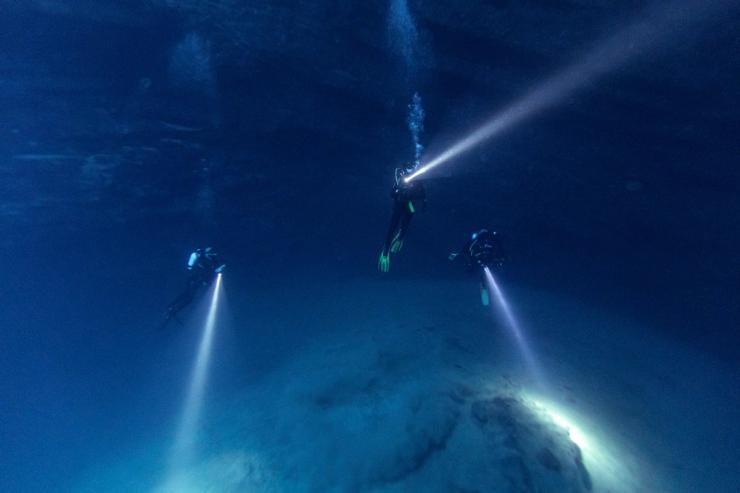
The story turns out to have been crazier than anyone could have guessed. For all the early speculation that only a high-tech military could have pulled it off, Pancevski reveals that the Ukrainians recruited a team of thrill-seeking amateur divers who had trained to go far deeper than military professionals would risk. Their leader, whom he calls Freya, had been a party girl and nude model (the German tabloid Bild, naturally, dug up the cover with her in a captain’s coat and nothing else). In Pancevski’s telling, she was the first into the freezing, choppy Baltic waters.
The American media look here like fools, as does the conspiratorial mirror image imagining a vast secret US operation. The CIA and other Western intelligence agencies knew about the Ukrainian plot and actively or passively misled the press and the public. The US agency appears to have misled its own allies too, describing the operation as “rogue” in a memo to its European counterparts. “German officials would try hard to pin down the origin of the added adjective,” Pancevski writes.
But the Russians and Ukrainians have similar problems understanding Washington, and could be similarly misled. Pancevski describes their intelligence leaders as chess masters who studied in the same academy, skilled at predicting one another’s moves — and hilariously attempting to apply that logic to allies and rivals who prefer Candy Crush.
At one point, Pancevski writes, he and a senior Ukrainian discussed a recent Donald Trump press conference. The Ukrainian drew a schematic chart: “He’s conditioning the populace for the effects of his policy.”
“’Actually, I said, ‘I think Trump is just riffing about what he saw on TV last night,’” Pancevski writes. His interlocutor was confused.
The truth in this case — as is often true — is specific, chaotic, at times just dumb. How did Washington, like Moscow, allow the government to lead it into fantasy? It’s a question that hovers over the recent Iran conflict too, of course. Part of the answer is the fog of war. Part is Washington’s wishful thinking. And part is the media itself, increasingly shaped by corporate interests, political campaigns, intelligence agencies, and anyone else who has the time and money — simply because it’s grown so easy.
In this article:

Room for Disagreement
My colleague (OK, editor) Laura McGann notes that US coverage of the Iran war has been less credulous of the official government line. The New York Times shattered the White House image of a crippled Iran in May. The Post revealed in March the US was burning through Tomahawks at an astonishing rate, as the Pentagon boasted of an easy victory. And just last week, CNN cut a highlight reel of the 38 times Trump swore a deal to end the war was “close.” The stakes are high, and the press corps is standing up to meet the moment.
Correction: A previous version of this story misidentified Kremlin spokesman Dmitry Peskov.

Notable
- Three months after the explosion, The Washington Post walked back the Russia theory.