




Alexis’s view
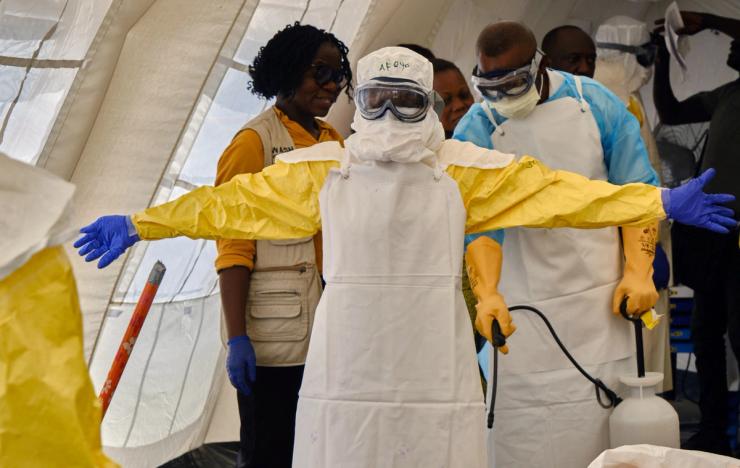
The Ebola outbreak unfolding in Central Africa is the 17th to hit the country since the virus was discovered in 1976 — but it’s the first since the artificial intelligence boom, and the technology is already showing its potential value.
The biggest challenge posed by the latest outbreak is the lack of a vaccine. But there are many others: The epidemic cuts across a conflict zone and mining hub that sit beside porous borders. AI is helping epidemiologists make data-driven comparisons with previous outbreaks. Richard Hatchett, CEO of the Coalition for Epidemic Preparedness Innovations, told me that AI tools are being used to identify “where the cases are actually occurring and how that maps to different conflict areas,” which is crucial in a region where contact tracers could be at risk from armed groups.
Much has been written about AI tools making it easier to create biological weapons, but their use in the fight against Ebola points to their value in combating public health emergencies. In March, the World Health Organization’s regional office in Africa announced the launch of an AI-driven early warning system for health threats. As well as compiling a risk profile of an area, the WHO said the platform includes a chatbot for health officials to question data in plain language.
Of course, AI isn’t a silver bullet and there are many potential pitfalls. The danger of hallucinations means health officials must tread with caution, given the outsized impact that errors could have in the response to a public emergency. Use of the technology also raises potential privacy issues about the type of personal health data recorded and how the information is used.
But AI does offer a cost-effective tool to augment healthcare across the continent in a way that could cushion the blow of deep cuts to Western aid budgets, and the closure of USAID in particular. That’s true of epidemics, but also applies to the day-to-day management of government-run health services.
The technology is still in its infancy — “we’re kind of learning in real time,” Hatchett confessed — but it offers genuine hope.

Notable
- Scientists are racing to develop four Ebola vaccines to tackle the outbreak in DR Congo, two of which could be ready for clinical trials in two months, the head of a global vaccine coalition told Semafor.
- Meanwhile, the US State Department circulated a memo internally making the case that the US response to the Ebola crisis in Africa has been better than China’s, according to a copy of the document shared with Semafor.