




Ben’s view
At the National Governors Association meeting in Colorado Springs last July, the investor Mark Cuban rhapsodized about the power of artificial intelligence to revolutionize education.
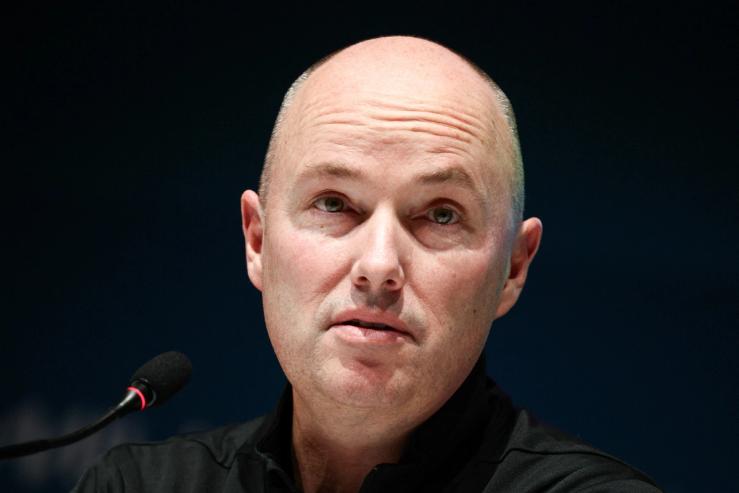
“You could kind of feel the look of terror on the faces of teachers and parents in the room, myself included,” Utah’s Republican governor, Spencer Cox, recalled in an interview last week.
As Silicon Valley’s artificial intelligence boom powers America’s economy, rattles its job market, and shapes its national security priorities, political leaders are struggling for traction on how the government should seek to engage the technology, if at all.
The answer, increasingly, is a set of rules restricting how children can interact with AI.
“We made this mistake with social media companies who we thought were going to change the world and told us to trust them, and did the exact opposite — destroy a generation of kids,” Cox said. “It’s the one place where there seems to be some pretty strong bipartisan agreement.”
Even as some of the research around technology and children remains contested, America’s political class is nearly unanimous in agreement with Cox’s view: Social media was a scourge, and the total political failure to channel a ripple of popular “techlash” into regulation was a signal triumph of corporate power.
Learning their lesson, leaders of both parties in Washington and in state capitals — some likely to stand on 2028 presidential debate stages — are confronting AI before it becomes as omnipresent as vertical video.
Many of these voices are on the right, ranging from the Trump-skeptical Cox, who signed a law last year requiring companies like Google and Apple to verify users’ ages, to Missouri’s populist Sen. Josh Hawley, who told me that parenting “is where the AI revolution is most real to people.”
“Parents are apoplectic about it,” said Hawley, who is leading an effort with Connecticut Democrat Sen. Chris Murphy to impose tough age restrictions and impose criminal penalties on companies whose AI products have sexual interactions with minors or steer minors towards hurting themselves.
Democrats, quicker to regulate in general, mostly led the attempts to crack down on social media.
“You have to reframe the issue away from speech and toward public health,” says Rep. Jake Auchincloss of Massachusetts, who has proposed device-level age restrictions. “This is a modern temperance movement — digital dopamine is a vice in the same way online gambling is a vice.”
Donald Trump’s accelerationist White House — which correctly saw the economic potential of an AI boom in the fall of 2024, and leaned in — has started to tap the brakes too. After a failed attempt to block state-level regulation last year, the White House this March recommended Congress consider “commercially reasonable, privacy protective, age-assurance requirements.”
The industry is reading the same polls, and keeping an eye on a new wave of lawsuits against social media companies over the technology’s effects on young people. “Kids’ safety is the issue the public most cares about. It is the lens in which many people process AI generally as it really gets at the angst about the world kids will be living in — both the opportunities and the challenges,” said Chris Lehane, the most visible political strategist in the industry and chief global affairs officer at OpenAI, which recently released a policy paper backing some age restrictions while pressing for training young people to use the technology. “Parents, policymakers and the general public inherently get that kids need to learn to use AI to participate in the future and are concerned about it being safe to use.”
A central question is how the issue will play in the noisy American presidential campaign that begins next year and in which figures including Murphy, Hawley, and Cox (who has denied he’s running) are sometimes mentioned. Democrats and Republicans alike will be engaged in the tricky practice of trying to guess what voters’ views on data centers will be next summer. The industry, meanwhile, is racing to persuade them it’s fixing its image, while threatening its enemies and rewarding its friends.
How Vice President JD Vance approaches the issue will be particularly instructive: He has deep ties to the tech industry, and also has political roots in the wing of the party that’s at least nominally skeptical of corporate power to shape Americans’ values.
Vance, one tech company critic says, has been “doing a lot of work behind the scenes” to moderate the White House’s reflexive antipathy to regulation. The question is whether his likely presidential campaign will embrace the industry-friendly regulation currently proposed by the White House, or go further.

Notable
- For American Affairs, Brad Littlejohn outlines an AI regulatory scheme that eschews “safetyism.”
- The cybersecurity vulnerabilities posed by AI systems like Anthropic’s Mythos model scrambled the White House’s AI strategy, as The Wall Street Journal reported.