




Andy’s view
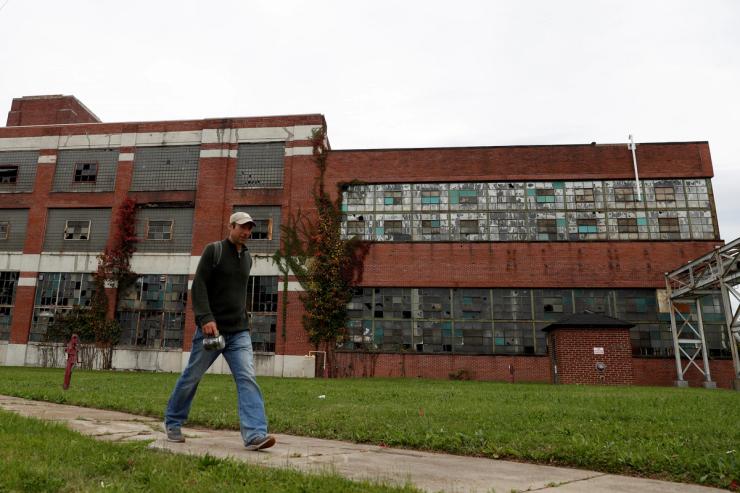
Beijing often gets blamed for the devastation of US factory towns that spawned an opioid epidemic and a populist revolt, but the “China Shock” was largely a Made-in-America phenomenon — one led by US multinationals.
After Washington ushered China into the World Trade Organization in 2001, US Fortune 500 companies shifted supply chains to the country to take advantage of cheap Chinese labor. Many of the Chinese factories churning out goods for export to the US at the time were American-owned or invested. Indeed, one of the lessons of the original China Shock was that private capital has no patriotism.
American business groups lobbied for China’s WTO membership and then acted as cheerleaders, their members pouring investment and know-how into China. Initially, the thinking both in Washington and across corporate boardrooms was that China’s emergence would be a win-win for everybody: Western multinationals would specialize in high-value services at home, China would do the manual labor.
In the process, however, global companies ended up training several generations of Chinese engineers and managers who went on to establish enterprises that now outcompete the rest of the world. “The textbook was written in the West,” explains Shane Tedjarati, who built Honeywell’s China operations. “The students were Chinese. The exam results are arriving now.”
Today, as Western economies scramble to defend themselves against “China Shock 2.0″ — a tsunami of heavily subsidized Chinese exports targeting high-tech sectors from EVs to batteries — their corporate and national interests are again radically at odds. That’s especially the case in Europe.
Brussels is readying a package of measures to protect EU markets. A proposed Industrial Accelerator Act would set “Made in EU” sourcing requirements, stricter foreign investment reviews, and faster permitting to boost the bloc’s manufacturing capacity. Beijing has threatened retaliation if these measures are implemented, setting the stage for a potential trade war later this year.
Germany, however, is conflicted. Even as Europe’s largest economy is threatened with wholesale deindustrialization, its companies are going all-in on the China market, some keen to use their operations there as an export platform.
Brand names like BASF and Mercedes Benz are hiring in China and firing in Germany — 10,000 German jobs each month are disappearing; adding Chinese suppliers and abandoning German networks; paying more taxes in China and fewer at home. The resulting pain has spread across the German industrial heartland. Stuttgart, the center of the auto industry, has been forced to implement an austerity budget.
For Germany — and Europe writ large — the unfolding crisis is potentially far more damaging than anything the US experienced during the initial stages of the China Shock. American firms transferred mainly low-end work to China, creating pockets of hardship in single-factory towns in the Midwest while generating high-paid jobs elsewhere. The iPhone was famously “Designed by Apple in California, Assembled in China.” Arguably, the US economy as a whole came out ahead.
The industrial titans that led Germany’s Wirtschaftswunder, the post-war economic miracle, are, by contrast, transferring their very national identities. In effect, they’re becoming Chinese. Mercedes designs its latest luxury models in China to incorporate Chinese tastes and cultural idioms, debuting them exclusively at Chinese auto shows. The company’s largest single shareholder is a Chinese state-owned enterprise. “Looking ahead,” says Ola Källenius, the German firm’s chair, Mercedes will deepen localization in its largest market while “increasingly leveraging China as a source of innovation for Mercedes Benz worldwide.”
In China Shock 2.0, everything is moving out. Not just assembly-line jobs but R&D and software — as well as the very brands that defined the economies at risk.

Notable
- “A US-China trade truce frees Beijing to concentrate its pressure on the largest remaining open market: Europe,” the German Marshall Fund’s Etienne Soula writes, but Brussels has no quick fix for the pain.
- Nowhere is the new China shock reverberating globally “more consequential than in Germany,” Sander Tordoir and Brad Setser argued in a Center for European Reform report in May, but it is a problem of Berlin’s own making.