




Alexis’s view
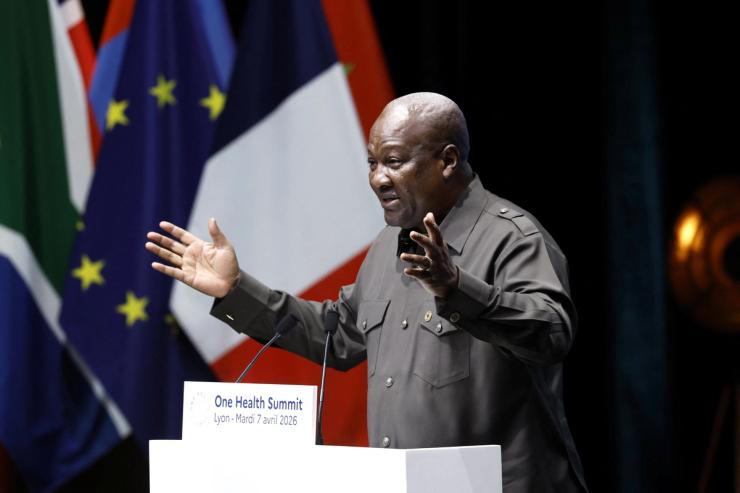
Ghana’s president gave a rare insight this week into what it is like to lead an African government hit by the shuttering of Washington’s international aid agency.
Accra factored an average of $154 million a year from USAID into government budgets, of which nearly half went into “critical areas” of its health system, President John Dramani Mahama revealed at London’s Chatham House think tank. He tapped a government health fund to release $300 million but pointed out that other nations have been left reeling.
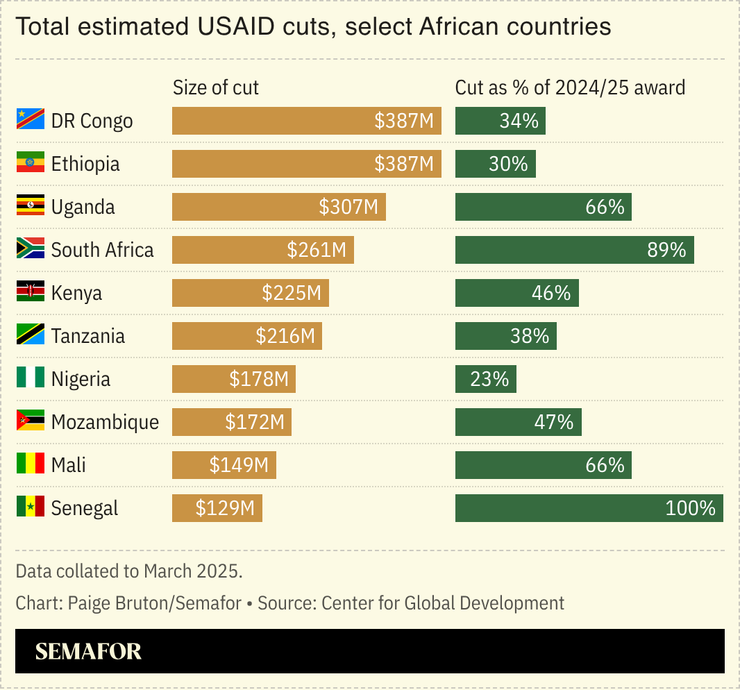
That glimpse into policymaking in an increasingly turbulent world highlights the challenges faced by smaller nations and so-called middle powers in an era of dwindling multilateralism.
Washington’s transactional approach to foreign policy is probably clearest in its global health policies, where the Trump administration’s America First Global Health Strategy asks countries to share health data about their citizens as a condition of receiving funding. Some African nations — including Ghana, Zambia, and Zimbabwe — have rejected the agreements. But US Secretary of State Marco Rubio, addressing a Senate committee this week, said 32 countries had signed the health compacts, including a number of African nations.
Rubio said the strategy was an improvement on traditional donor-NGO relationships that created dependency and weakened local capacity. But critics warn the impact of US development cuts is already playing out through the Ebola outbreak in DR Congo, where the US was reportedly the largest donor, financing around 70% of humanitarian work. Nicholas Kristof of The New York Times recounted how health experts told him the sudden withdrawal of aid workers removed early warning systems that meant the Bundibugyo strain of Ebola, for which there is no vaccine yet, may have circulated, undetected, for weeks.
At a time of shrinking aid budgets across Western countries and the shift to increased defense spending, it’s clear that African countries need to adapt to a new world. Mahama stressed the need for African governments to cut waste and improve governance as a buttress against increasingly frequent international shocks because a return to the old system of global support is very unlikely. His message was simple: “We must take our destinies into our own hands.”

Notable
- Beyond health, research found that in Africa’s most unstable nations, there was a significant uptick in violence in the months following the shuttering of the aid agency.