


Voice capabilities are the future of AI, but customer service is still proving a difficult test case. That’s not because the voices don’t work, but because the broader experience often doesn’t.
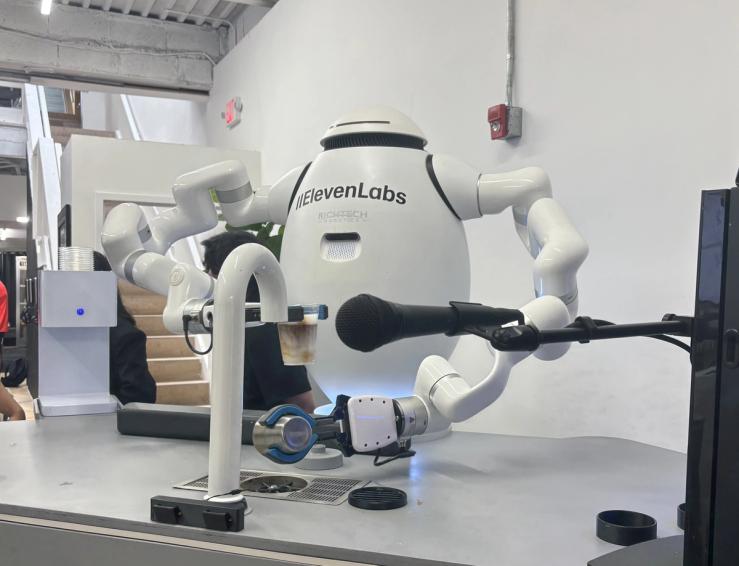
I went to an ElevenLabs pop-up in New York, where a robot powered by the company’s voice models took coffee orders and prepared the drinks with minimal human involvement (only to refill the coffee beans and milk). The voice was eerily human — when I first heard it, I assumed it was one.
But it struggled to recognize my voice and lagged significantly — due to network issues, the ElevenLabs team told me. When talking to a voice model to order merchandise, it had trouble finding my account under “Rachyl,” as it recognized me verbalizing my name as the more typical spelling of “Rachel.”
For several years, customer service chatbots have been touted as a key use case for AI. While the technology behind them will get better, they haven’t gained the trust of the average user who hears an AI voice and immediately requests a human agent, even if it means waiting longer for assistance. To be sure, ElevenLabs, worth $11 billion, is placing bets across many industries, from becoming the voice of the Czech government to generating the voiceovers for creators’ sponsored posts.