




Andy’s view
China and Japan weren’t fated to become 21st century enemies. Mao Zedong once joked to a Japanese visitor that without the imperial army, the Chinese people wouldn’t have rallied around the Communist Party, and so “there is nothing to be sorry about.” Deng Xiaoping saw Japan as a model for his flagship “Four Modernizations” project and brought in Japanese experts to advise on everything from forestry to steelmaking.
But more recently, Japan-bashing has become the core of a strident Chinese nationalism, with disastrous consequences. Indeed, Beijing’s nonstop demonization, economic coercion, and regular harassment of Japan, its people, and its institutions have created the monster it most fears.
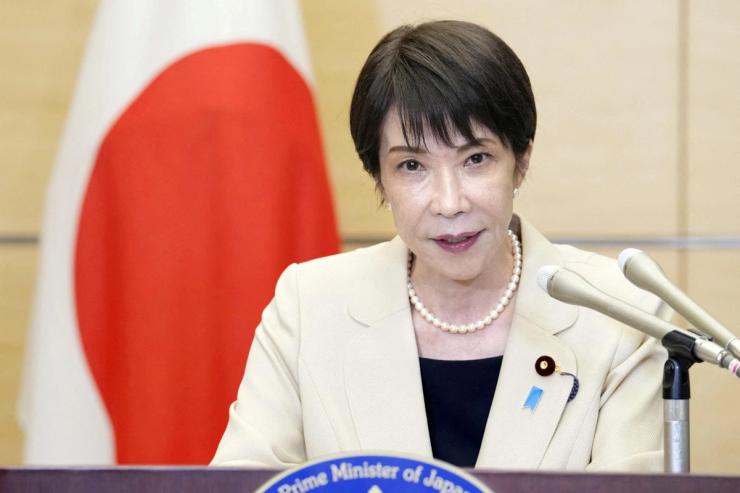
During his recent summit with US President Donald Trump, Chinese leader Xi Jinping railed against Japanese Prime Minister Sanae Takaichi and the threat of Japanese “remilitarization,” according to the Financial Times, catching the US side off guard with his vehemence. Takaichi, who won a snap election thanks in large part to her constituents rallying around her in the face of crude threats from Beijing — a Chinese diplomat threatened to “slice off her filthy neck” — is driving an ambitious program of military rearmament while shedding the last vestiges of her country’s post-war pacifist identity.
At a time when American allies are starting to question Washington’s reliability and staying power — US Defense Secretary Pete Hegseth added to doubts last week with a speech to Asian allies in Singapore that failed to mention Taiwan, the most dangerous regional hotspot, and trod lightly on other Chinese sensitivities — Japan is acting with new swagger.
Tokyo has advanced technology, a deep industrial base, and a powerful navy. Although Japan has been constitutionally constrained from projecting force, it operates the functional equivalent of aircraft carriers equipped with US-made vertical takeoff jets. Mitsubishi Heavy Industries, one of the country’s largest defense contractors, is building a hypersonic glide vehicle.
This lethal capacity fueled Beijing’s alarm after Takaichi last year asserted that a Chinese invasion of Taiwan would constitute a “survival-threatening situation” for Japan that would trigger a military intervention.
Few countries around Asia buy China’s narrative that casts Japan as a “neo-militarist” power, unashamed and unrepentant of its wartime past. In Southeast Asia, Japan ranks as the most trusted global power, well ahead of the EU and US, with China trailing far behind, according to the latest survey by a Singapore-based think tank. The Philippines recently hosted Japanese combat troops at a military exercise, the first such deployment since World War II. Indonesia and Japan have forged a quasi-alliance. And Takaichi wowed students in Vietnam with a speech that took a dig at China by appealing for an international order based on “freedom, openness, diversity, inclusiveness, and the rule of law.”
If anything, smaller nations see China’s military buildup — the largest by any country in peacetime — as the threat to regional security, not Japan’s. And they’re lining up to do arms deals with Tokyo. Australia has placed an order for a fleet of 11 Japanese stealth warships. The Philippines is getting six used Japanese escort destroyers armed with anti-submarine and anti-ship missiles, torpedoes, and naval guns. Farther afield, Japan is working with the UK and Italy to develop a sixth-generation stealth fighter.
Takaichi is just getting started. She has public opinion behind her: In a country with widespread anti-war sentiment, Chinese pressure has driven a more hawkish consensus. Japan’s defense spending is on track to double to 2% of GDP in a few years, which could give it the world’s third largest military budget, after the US and China.
Mao saw Japan in a very different light. After all, his People’s Liberation Army troops helped vanquish Japanese invaders; after the war he was keen to promote a victory narrative to his own country and the world.
In Beijing’s contemporary narrative on Japan, China plays the victim. And in one sense, perhaps, that’s true: The real threat to Xi’s China is “Japanification” — deep economic malaise, a legacy of a real estate collapse that crippled investment, crimped spending, and dragged down prices.
Takaichi’s Japan is now headed in the opposite direction, with Xi’s campaign of vilification a vital spur.

Notable
- China’s propaganda mouthpiece, Xinhua, lambasted Tokyo-Manila military tie-ups for casting a “long shadow over regional peace and security.”
- Japanese industries fear Beijing could enact a broader ban on rare earth exports, posing a “major economic security concern” for Tokyo, an expert told The South China Morning Post.