



The News
With the Supreme Court shattering the district lines that created majority-Black seats in the American South and legislators scrambling to stay in office, the Congressional Black Caucus is wrestling over its identity.
The Supreme Court’s evisceration of the Voting Rights Act in its Louisiana v. Callais decision leaves the Black Caucus, the most powerful House Democratic bloc, preparing to lose as many as one-third of its 60 members to southern-state redistricting. Up to a half-dozen Black Democrats are expecting to get pushed out this year, with more facing Republican redistricting ahead of 2028.
For a group that’s relied on its strength in numbers, the high court ruling is an existential crisis. And the Black Caucus’ continued openness to endorsements and spending on behalf of non-Black candidates is intensifying what was already a scramble for a shrinking map.
It’s also spiking anxiety and stoking tension among Black Democrats, as some question whether Callais will inevitably shrink the Democratic Party’s tent — or shift the group’s balance towards lawmakers who are not representing majority-Black districts.
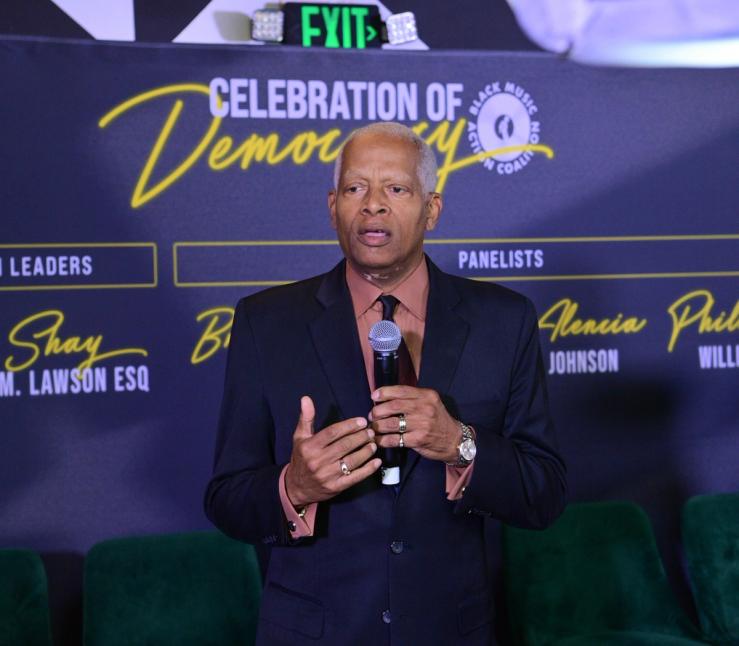
“We may get to a point in this country where you have only Black representatives who represent white areas. And that then impacts the ability of Black representatives to speak to the concerns of Black people at large,” said Rep. Hank Johnson, D-Ga.
The Black Caucus has always left itself the option to get involved in races even where a Black candidate isn’t on the ballot. But its reluctance to automatically endorse every Black candidate is already facing painful scrutiny in South Florida, where a white Democrat, Rep. Debbie Wasserman Schultz, is competing for a historically Black part of Broward County.
Wasserman Schultz infuriated Black Democrats in Broward by announcing that she’d seek the seat formerly held by Sheila Cherfilus-McCormick. The ex-congresswoman, who resigned amid corruption charges, is running again this year — along with five other Black Democrats.
The crowded field of Black candidates vying for the seat, and the clamors from local Democrats for backup from their national allies, puts a potential endorsement in play, though it’s not clear that the Black Caucus will pick a side.
“It’s unnecessary division in a time where we’re fighting against Jim Crow Republicans for literally carving up our seats and stealing representation, from both the party and from Black voices across the South. She’s literally helping them,” Elijah Manley, a leading Black candidate for the redrawn district, told Semafor.
Complicating things further, Wasserman Schultz is viewed as a potential future House Appropriations chair; that gives all Democrats incentive to stay on her good side.
The Black Caucus political arm declined to comment on the South Florida race.

Know More
The Black Caucus’ current strength is a legacy of the 1986 Thornburg v. Gingles Supreme Court decision, which compelled states to draw majority-minority districts. New maps reflecting that decision created 13 new majority-minority seats in 1992, mostly for Black legislators who were able to build seniority.
But since those rules were thrown out by the high court’s conservative majority, Republicans in southern states they now control have raced to erase the safe Democratic seats.
Democrats looking for a redistricting counterpunch of their own are now considering the dilution of majority-minority districts even in blue states, including those with Voting Rights Act-like laws on the books — posing a separate threat to the Black Caucus’ future after it held holding major sway in the Democratic Party for decades.
Only a handful of the group’s current members represent battleground districts. Among them is Rep. Janelle Bynum, D-Ore., whose district’s population is also less than 1% Black.
Bynum said the Black Caucus may have to get a “little more aggressive about finding diverse voices throughout the country and places that we may not have looked at before.”
And the consequences of the Callais decision aren’t limited to Congress. The 2028 presidential primary, and South Carolina’s pivotal role in empowering Black voters to sway the Democratic nomination, is also on their minds.
Consider that South Carolina Republicans tried to eliminate the House seat held by Rep. James Clyburn, falling short just before the annual fish fry that he hosts that introduces Democratic presidential contenders to local activists.
With Black Democrats under such widespread threat, some of them argue that the solution involves making the loudest possible case that Black lawmakers are being targeted.
“We also have to make sure that everybody understands that there is, with great intentionality, a move to reduce our numbers,” said Rep. Emanuel Cleaver, D-Mo., whose Kansas City-based district went from a safely Democratic seat to a red one when Missouri redrew its maps.
He said he was still running, though he seemed to sense the challenge he’ll face holding his seat.
“I’m not, at this point, going to be a frontliner. I’m going to just run with the organizations I’ve had,” Cleaver said.

Room for Disagreement
Some in the Black Caucus aren’t resigned to the elimination of many of their members.
“It’s not fair, but we’re not conceding defeat in advance,” said Rep. Jahana Hayes, D-Conn.
For now Black Democrats are using unorthodox techniques, pressuring the private sector to push back against GOP-led redistricting. They forced a college sports bill off the House floor last month and launched a broader campaign with the NAACP for university boycotts in states — mostly in the South — that want to limit Black representation.
Their political arm is also making a push for a Black candidate, Lauren Babb Tomlinson, in a newly gerrymandered Sacramento-area California district.
Yet that has led to separate friction with Emily’s List, which boosts Democratic women and is backing the same candidate; a Black Caucus strategist told Semafor they were “extremely frustrated and questioning” the level of help provided to Babb Tomlinson ahead of the Tuesday primary.

Nicholas and David’s View
There’s no doubt that potentially losing some senior members and rising stars like Rep. Shomari Figures, D-Ala., will diminish the stature of the Black Caucus in Congress. At the same time, the turnover will force generational change in a bloc and in a party that has at times resisted efforts to do so.
Even if the Black Caucus survives, the bruising fights emerging in the party and the awkward political alignments emerging are likely to have longer-term ramifications. The progressive left still grouses about the Black Caucus’ endorsement of then-Rep. Eliot Engel in 2020 against Jamaal Bowman’s primary challenge.
Now Democrats might need to find another way to show that Black voters still matter to the party.

Notable
- The Washington Post charted the history of Black representation in Congress.
- Puck reported on some of the angst in the Democratic Caucus over committee leaders from the Black Caucus lagging their colleagues in contributions to the party’s campaign arm.