




Andy’s view
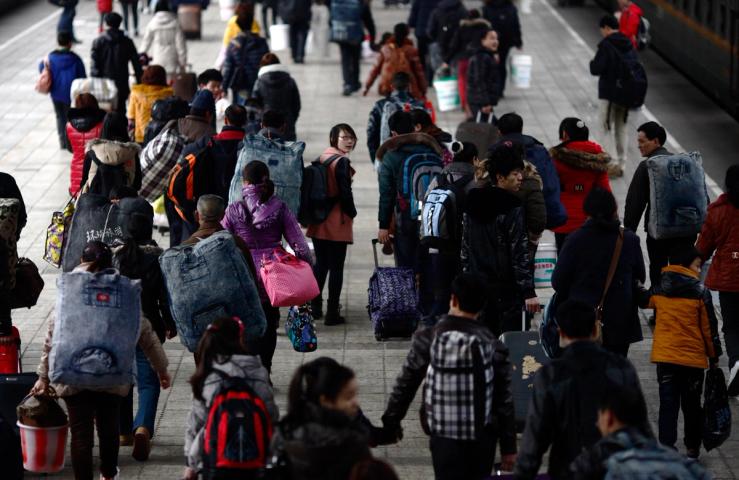
China’s migrant armies built modern Beijing and other megacities, working as scaffolders and welders, carpenters and plumbers, plasterers and painters.
Later, others arrived to sweep the streets, deliver packages, and nanny the children of the rising middle classes.
But this population of rural laborers, now 350 million-strong, is largely excluded from settling with their families in the gleaming urban centers they constructed, and that they now keep clean, safe, and comfortable. That may be about to change, not because the Chinese Communist Party regrets the social injustice — tens of millions of children fend for themselves in villages while their parents travel to cities to find work — but because Chinese leaders are desperate to find a new engine of growth as the economy sputters.
Last week’s move by the State Council, the country’s cabinet, to ease residency restrictions that prevent migrant workers from accessing social insurance where they work is potentially an economic game-changer. It will enable rural families to leave their farms and head to large cities where the best jobs can be found.
In doing so, temporary workers, now big savers, will become permanent urban residents, who will spend.
That, at least, is the theory behind a long-overdue reform of the “hukou” household registration system, a Mao-era holdover that ties rural residents to their native villages. Dexter Roberts, the author of The Myth of Chinese Capitalism told me that “This is exactly what they need to do.” But he added “I don’t see it as a heartfelt policy.”
Daunting challenges stand in the way of the government’s plan to turn China’s armies of migrants into swarms of consumers, not least the fact that urban elites don’t want migrants and their kids filling up classrooms, adding to hospital queues, and tapping into retirement funds.
Internal security forces that oversee the “hukou” system won’t be keen to fast-track the necessary administrative changes: Population controls make for easier policing. That’s an important consideration at a time when urban unrest is simmering amid spiraling rates of youth unemployment and a growing sense that the country’s best days of growth are over.
Then there’s the question of who will pay for all the additional urban infrastructure and services. A multi-year property collapse has choked off local government revenues. If this reform initiative is to work, the central government will have to foot a large portion of the bill.
Still, cautious optimism is in order. Years ago, I spent time in a dirt poor village in Guizhou province getting to know Yang Hailian, then a 10-year-old girl whose parents had moved away to find work in coastal factories, entrusting her to look after her seven year-old sister, do the laundry, feed the pigs, and tend the family’s vegetable patch. She put on a brave face. “It’s not hard,” she told me. “The more you work, the easier it gets.”
Hers is a story common among China’s almost 70 million-strong population of “left behind children” — and the scars run deep. Scott Rozelle, now a professor emeritus at Stanford University, told me that 70% of children in rural China show signs of anxiety and depression. Poor nutrition stunts their physical and mental health, and many drop out of school.
Belatedly, the Communist Party has discovered that this neglected demographic — for a long time, city officials contemptuously referred to internal migrants as a “low-end population” — is now needed to secure the country’s economic future.

Notable
- The “hukou” reform plan holds promise, but officials “stopped short of promising major new funding support,” Trivium China analysts noted.