




The News
Kenya’s proposed new taxes risk hampering the growth of fintechs and mobile money services, with Safaricom’s M-Pesa likely to be the worst hit, experts told Semafor.
Kenya President William Ruto’s administration is seeking to impose a new 16% value-added tax on services by payment service providers including M-Pesa and Airtel Money under a new finance bill. It also proposes a 25% excise duty on mobile phones, and withholding tax on card payments.
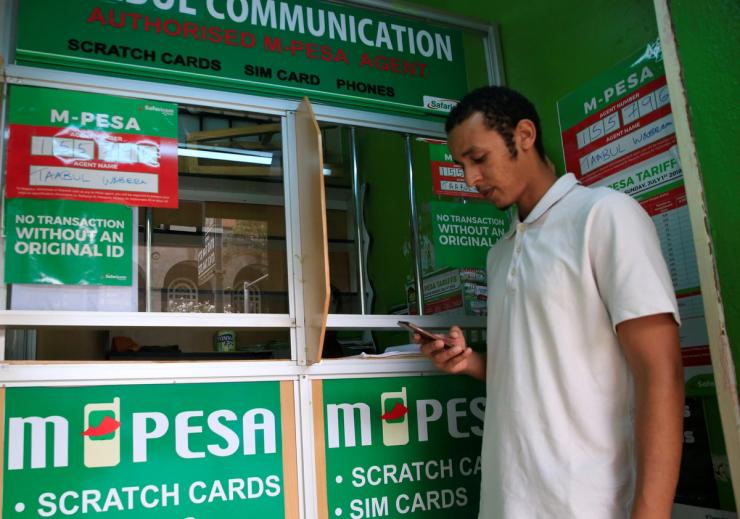
The National Treasury’s plan could impact both the market share and usage of M-Pesa — Kenya’s biggest fintech platform, economists and policy analysts told Semafor. They pointed out that the platform, used by around 90% of Kenyans, already faces widespread criticism over its high transaction fees. The Central Bank of Kenya (CBK) last year began a push to cap mobile money costs to drive financial inclusion, a goal that the new taxes would threaten.
Analysts said the move to impose VAT would drive a significant number of consumers back to cash transactions to avoid costly charges, and risked hurting the country’s position as a leader on the continent in mobile money and fintech in addition to impacting diaspora remittances.
Ken Gichinga, chief executive of Nairobi-based Mentoria Economics, told Semafor that the high costs of mobile money transactions resulting from the introduction of the proposed VAT would likely disincentivize the use of M-Pesa and other mobile money services.
High transaction fees are a significant obstacle to the use of digital services despite over 80% of Kenyans having a mobile money account: Millions prefer cash as mobile money costs can rise up to 7% of the transfer value, according to the CBK.
Safaricom did not immediately respond to a request for comment from Semafor.

Know More
Mbui Wagacha, an economic analyst and former CBK chairman, said that gains made in the growth of Kenya’s leading fintech and mobile money sectors could be threatened by the tax proposals. He also argued that the proposed taxes would affect the volume and impact of diaspora remittances, saying that “low income households will become even poorer.”
Remittances are Kenya’s biggest source of foreign exchange. With a significant chunk of Kenya’s remittance inflows sent through mobile money services and fintechs, past introduction of taxes on mobile money has led to a decline in remittances to households with lower incomes. Kenya’s diaspora remittances last year crossed a record $5 billion, a slight increase from $4.95 billion in 2024.

Step Back
With over 80% of Kenya’s tax revenues going toward debt servicing costs, the government has been under pressure to raise funds for development projects and social programs with Ruto eyeing reelection next year. Attempts to introduce a raft of new tax hikes in 2024 sparked massive youth-led protests: More than 100 people were killed by police and the plans were ultimately scrapped.
Last year, the government took a different approach, avoiding introducing any new taxes through the Finance Bill or hiking existing taxes, and instead pushing the sale of government assets and public-private partnerships. This year’s bill represents a marked shift in approach back toward tax hikes and is bound to attract significant public backlash.
The exclusion of a promised tax relief for all workers earning below $230 (30,000 Kenyan shillings) a month has also been met with frustration. “An explanation is owed to every employed Kenyan who was waiting for it,” said Faith Odhiambo of the Law Society of Kenya, warning in a statement that the country “cannot afford a repeat of 2024.”
The 2026 Finance Bill comes against the backdrop of mounting public anger over the cost of living, driven by rising fuel prices as a result of the war in Iran.

Martin’s view
Mobile money costs are becoming an increasingly important factor for Kenyan consumers, creating an opening for competition to chip away at M-Pesa’s dominance. While Safaricom’s platform still overwhelmingly leads the market, M-Pesa’s share has fallen steadily to 89% in September 2025 from a peak of 97% in 2023. The gains have come largely from the distant number two player, Airtel Money, which has positioned itself as a lower-cost alternative as criticism of M-Pesa’s higher transaction fees has grown. The shift shows how pricing competition is already influencing how Kenya’s mobile money market evolves.
If the proposed taxes become law, with the cost ultimately passed down to consumers, many small businesses and financially-conscious individuals would actively seek out alternatives or look to reduce their use of M-Pesa to avoid costly transaction charges.
For Ruto, the tax hike proposals in the finance bill represent a significant gamble on his administration’s popularity. With the legislation still requiring parliamentary approval, MPs will be under pressure to oppose unpopular proposals as general elections loom next year.

Room for Disagreement
The bill also includes a proposal to officially recognize cryptocurrency and virtual asset service providers in the tax and reporting framework, a move that could help broaden participation in digital finance while driving tax revenues from the crypto sector.
It also includes several proposals meant to incentivize new investment, jobs, and infrastructure for the digital economy. Among them is an idea to reduce the corporate tax rate for nonresident companies to 30% from 37.5%. The bill also proposes a tax amnesty extension to cover liabilities up to Dec 31. 2025, and VAT exemptions on electric buses, bicycles, dialysers, raw materials for animal feed, and infrastructure for public-private partnerships.

Notable
- Kenya Commercial Bank has become the country’s latest bank to lower its digital transfer charges as part of a larger campaign by Kenyan banks to compete with M-Pesa.