




Alexis’s view
Senegal’s President Bassirou Diomaye Faye set off a political avalanche by firing his popular prime minister, Ousmane Sonko. Faye probably calculated that the move, announced late on Friday, could bury his own political career but was worth the risk to break an impasse that has prevented the country plotting a path out of its debilitating debt crisis.
The pair have disagreed over the handling of public debt that the International Monetary Fund estimates reached 132% of GDP at the end of 2024 after the government said it had discovered undisclosed debts worth around $13 billion. The revelation prompted the IMF to suspend a $1.8 billion loan facility.
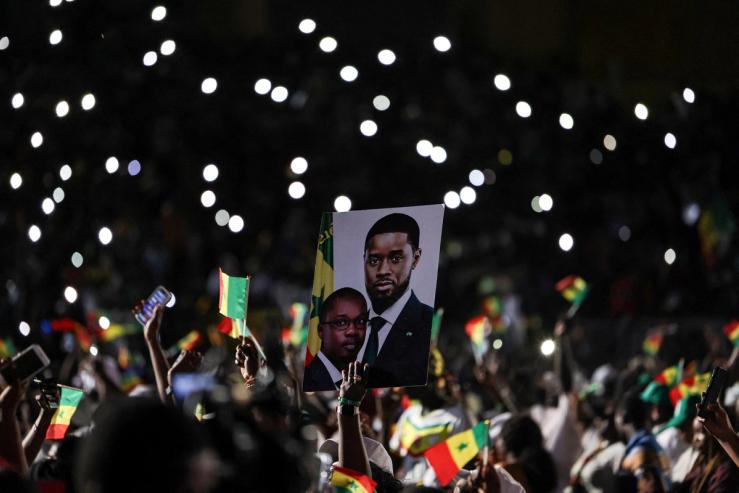
The drama unfolding in Senegal highlights the challenges of transitioning from being a populist, personality-driven political movement into government. When Faye won Senegal’s 2024 presidential election, it was widely understood as a victory engineered by Sonko, his political mentor who had been barred from contesting the election himself after a defamation conviction. Sonko won the mandate but Faye took office.
The alliance between the two men was always based on a delicate understanding: Faye would occupy the presidency while Sonko remained the movement’s dominant political force and strategist. That arrangement led to them running what were in effect parallel administrations at the helm of a $40 billion economy. The divergence in their views was clearest — and most damaging — on the IMF’s recommendation for Senegal to restructure its debt. Sonko rejected the idea of a formal program; Faye has signalled a more flexible approach.
To govern effectively, an administration needs a sense of direction and an understanding of who calls the shots. Faye has tried to bring clarity. Having dissolved his government, he will hope to build an administration in his image.
But the avalanche is gathering pace: The parliament speaker resigned on Sunday, clearing the way for Sonko, his ally, to run for the position — an ideal vantage point from which to challenge Faye’s authority. As the head of the largest party in parliament, Sonko could frustrate Faye’s legislative agenda. And if they contest the next election, the smart money is on Sonko winning. After all, he created the Faye presidency and is best placed to end it.

Notable
- Senegal’s fuel subsidy bill could exceed its 2026 budget allocation by as much as $2 billion if oil prices rise to $115 per barrel as a result of the Iran war, the then finance minister said on Friday.