


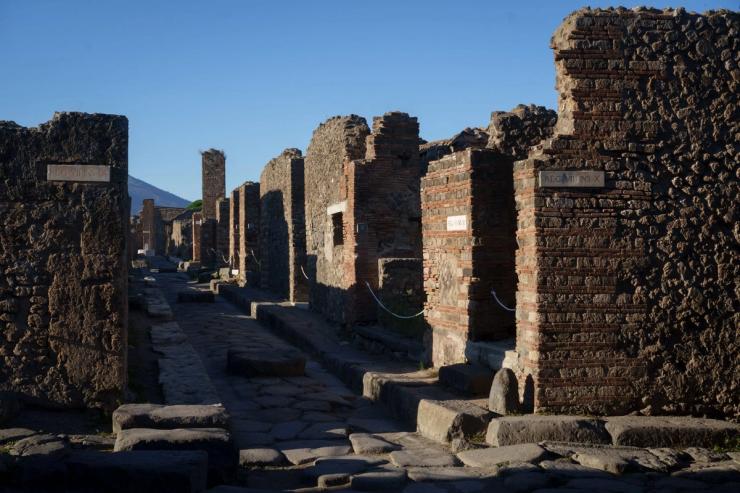
An analysis of incense burners found in Pompeii suggested new potential trade links between the ancient Roman city and sub-Saharan Africa.
Archeologists first discovered the remnants of the burnt offerings at a household shrine in the 1980s. Now, for the first time, researchers have published their analysis of the residue inside: They identified a type of resin native to tropical regions in Africa and Asia that points to Pompeii’s “links to civilizations far beyond its borders,” Smithsonian magazine reported.
Resins from African rainforests were likely traded alongside other commodities from sub-Saharan Africa via the Red Sea from at least the first century BC, noted the researchers.
Even after hundreds of years of excavations, around a third of Pompeii still lies buried beneath volcanic ash from the eruption of Mount Vesuvius in AD 79.