




The Scoop
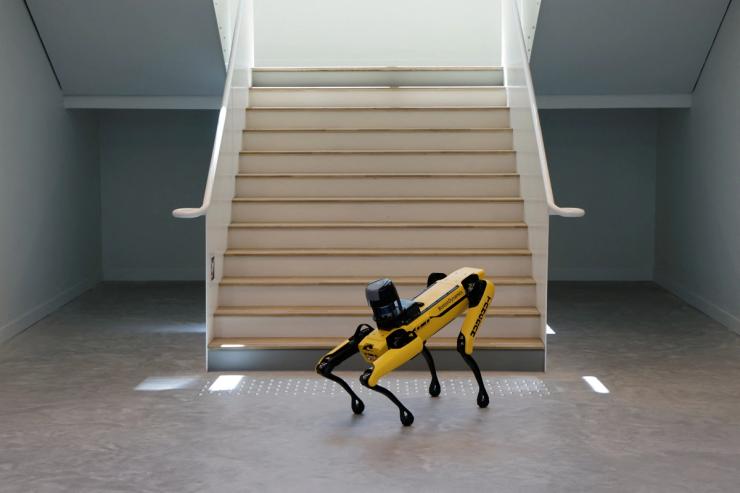
Boston Dynamics, the humanoid-maker owned by Hyundai, reversed course on selling its four-legged robot Spot to a firm that supplies equipment to police departments after employees pushed back on how the robots could be used.
Employees protested the idea of fastening “flash bang” grenades — a device that produces a flash of light and loud bang — to Boston Dynamics’ Spot robots, which they feared would be used as a form of protest control, according to former employees familiar with the worker backlash.
A spokesperson for Boston Dynamics confirmed that the sale didn’t go through, but said the company scuttled the deal because it risked “undermining our anti-weaponization pledge.”
The spokesperson declined to name the other party to the deal.
The company has a strict stance against the weaponization of its robots, which includes the prohibition of customers attaching weapons to its devices. She said that using Spot in protest control was barred by Boston Dynamics’ terms of sale in that deal and that the device would have exclusively been used “in situations involving armed or barricaded suspects or hostages. It could deploy non-lethal technology, such as noise-flash distraction devices, smoke or aerosolized mist.”
One of the former employees said the sale initially passed the robot-maker’s internal ethics committee, which considered how the technology could also make situations safer for law enforcement.
Executives announced the deal internally and shared the ethics committee’s decision, sparking backlash from employees who said they were concerned with the committee’s reasoning and Boston Dynamics’ inability to control situations in which the dog-like bot could be used by police, the people said. One cited a case unrelated to Boston Dynamics that occurred a decade ago when a toddler was critically injured after a flash bang device landed in his crib during a no-knock raid.
At a companywide meeting held within a few days of the announcement, several employees voiced their concerns. Shortly after, Boston Dynamics backed out of the sale.
The decision cut off a new stream of revenue for the company, which relies, in part, on income from Spot to fund its more ambitious humanoid venture. Several executives have been pushed out of the company in recent months, as it prepares to mass manufacture human-like robots, Semafor previously reported.

Know More
The example of employee activism at Boston Dynamics is one of the few cases in which tech workers have been able to change the direction of management when they disagree with a decision on moral grounds.
Employees at Google have long campaigned against actions taken by their employer, often without producing meaningful results. In one case in 2024, the protests over a cloud computing contract with Israel led to mass firings by Google. Just this month, hundreds of Google DeepMind workers in the UK voted to unionize, in part over the company’s dealings with the US military.
Microsoft, Salesforce, and Amazon have all also maintained contracts with the US government and law enforcement following employee pushback. According to one of the former Boston Dynamics employees, the event reflects an internal culture that has allowed workers to speak their minds without fear of retaliation.