




The Scoop
A new bipartisan bill would direct President Donald Trump’s administration to undertake a dramatic overhaul of the US relationship with Tanzania in response to the African nation’s violent crackdown following last year’s disputed presidential election.
The bill from Sens. Jeanne Shaheen, D-N.H., and Ted Cruz, R-Texas, details of which were shared first with Semafor, would authorize new sanctions on Tanzanian officials and freeze security assistance to the country amid the ongoing political crisis.
“Tanzania has long been an important partner in East Africa, but the country’s recent democratic backsliding, political violence and repression cannot be ignored,” Shaheen said in a statement, adding that her bill “makes clear that the United States must stand firmly for democratic principles, human rights and the rule of law.”
For his part, Cruz emphasized reports of Christian persecution specifically, accusing the Tanzanian government of carrying out “a campaign of political repression and religious persecution.” He referred to instances of ballot manipulation, abduction of religious leaders, and restrictions on Christian worship at the hand of the Tanzanian government.
“This bill will help counter that political repression and the persecution of Tanzanian Christians, and I am proud to lead it with Senator Shaheen,” Cruz said in a statement.
Specifically, the legislation introduced this week would direct Secretary of State Marco Rubio to submit a full review of the US relationship with Tanzania within 90 days, to include assessments of “democratic priorities” in Tanzania, the totality of US security assistance to Tanzania, and the African nation’s relationship with China.
It would also require the Trump administration to identify Tanzanian government, ruling party, and security officials responsible for abductions, extrajudicial killings, and the suppression of opposition figures. It authorizes the executive branch to impose asset freezes and visa bans on those individuals.
Security assistance and financing from US development institutions would be cut off under the bill until Tanzania meets a series of benchmarks, including releasing political prisoners and enacting electoral reforms.

Know More
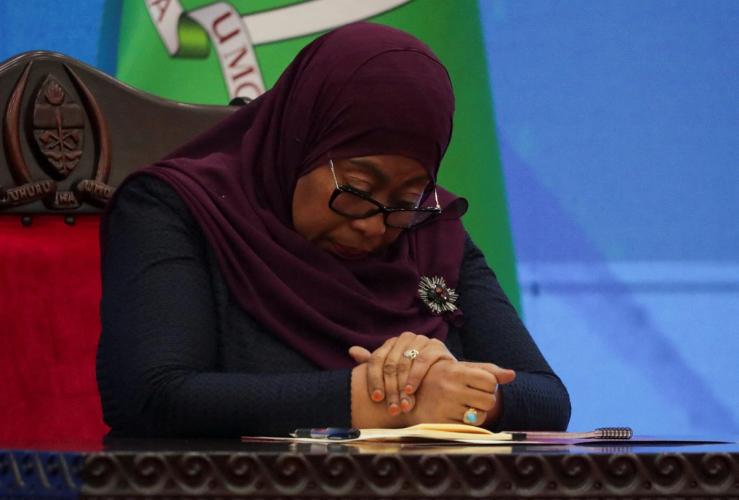
According to civil society and media reports, Tanzanian police and defense forces killed hundreds of civilians during protests against last October’s election, which the bill describes as “fraudulent and illegitimate.” The electoral commission ultimately declared incumbent President Samia Suluhu Hassan the winner with about 98% of the vote, though it remains heavily disputed.
Central to the legislation is the case of Tundu Lissu, an opposition leader whose ongoing treason trial the bill characterizes as politically motivated. Lissu’s party was barred from contesting last year’s election and he has been imprisoned since April of last year despite a UN body ruling that his detention was arbitrary.
“The [UN] Working Group’s conclusion is unequivocal: Tanzania is a state actively breaking international law,” Robert Amsterdam, Lissu’s international legal counsel, told Semafor. Amsterdam also warned Tanzanian officials “complicit” in the continued detention that they risked “facing personal consequences, including targeted sanctions.”
With Ethiopia heading into national elections next month and Kenya — a major non-NATO US ally — facing elections next year, the legislation is designed to serve as a message to the entire continent.
The US “cannot afford to remain silent as democratic space closes and instability grows in a strategically important region,” Shaheen warned.
The bill also signals frustration on Capitol Hill with the State Department’s own bilateral review of Tanzania, which congressional staff characterized as “insufficient.” The bill sets a higher bar, explicitly requiring the release of opposition detainees, accountability for security forces, and an end to media censorship before restrictions on assistance are lifted.

The View From Tanzania
Tanzania’s government said in a statement to Semafor that it “continues to be actively engaged with the US administration on the Review of Bilateral Cooperation and is committed to strengthen its bilateral relations with the US.”
The View From the state department
When reached for comment, the State Department response did not address specific claims leveled by the senators but signaled it would not take an aggressive approach to forcing Tanzania’s hand.
“The Trump administration has been clear it does not seek to lecture other countries but encourages sovereign states to respect the human rights and fundamental freedoms of their citizens,” a State Department spokesperson said.

Notable
- Tanzania is among the African nations subject to travel restrictions under the Trump administration.
Yinka Adegoke contributed reporting.