




The News
The Trump administration is set to start paying the president’s political allies up to $1.8 billion in taxpayer money, and critics have no clear path yet to contest the deal in court.
The biggest hurdle standing in their way: A lawsuit has no obvious plaintiff.
“It’s ordinarily hard to get standing in a case like this where the government has generally violated the law — but there’s not, at least for most people, a specific harm,” said Brendan Ballou, a former federal prosecutor who helms the Public Integrity Project, said. “Every taxpayer in America, to a certain degree, is getting harmed because it’s their money — but the federal government essentially does not recognize taxpayer standing.”
That’s not the only legal hurdle facing the “anti-weaponization fund” that the Justice Department said Monday it would set up in exchange for Trump and his family members dropping their suit against the Internal Revenue Service over leaked tax returns. But the politically perilous settlement is poised to move forward, half a dozen legal experts told Semafor — and once the payments are made, they’ll be extremely difficult to claw back.
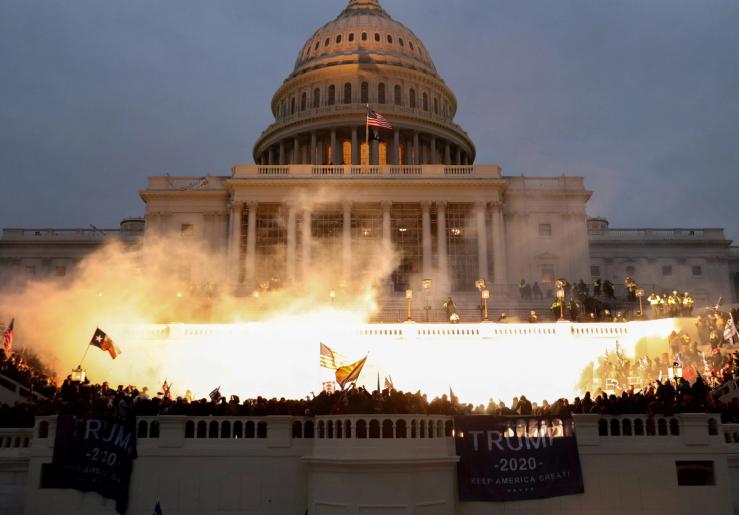
Administration officials were given 60 days to move $1.776 billion into an account that’s expected to pay out claims to Trump backers claiming victimization by the government, including participants in the Jan. 6 attack on the Capitol. Democratic lawmakers slammed the settlement as “corrupt self-dealing,” and the federal judge who’d heard the now-settled case had already questioned whether Trump could sue a government that he controlled.
But absent an injunction that keeps cash from changing hands, it would likely fall to future administrations to litigate any potential violations. Experts said the most viable grounds for a suit would be violation of the Constitution’s domestic emoluments clause, which would only apply to public money given to Trump’s family or businesses, or the False Claims Act, which would require a whistleblower to come forward.
“Once the government’s contractually agreed to pay someone who did not deserve to be paid, it’s very hard to unwind that,” said Richard Painter, former President George W. Bush’s top ethics lawyer. “There’s no constitutional provision saying the government can’t basically throw its money at other people.”
As a result, critics are hoping to coax clients into coming forward who might be able to argue they are specifically affected by the Trump administration fund. That could include people who are harmed by the fund’s eventual beneficiaries or who are expecting payment from the DOJ’s preexisting judgment fund, which will feed the new fund.
“A lot of those people have been calling me, and we’re going to take a very hard look,” said Norm Eisen, the former top ethics lawyer to then-President Barack Obama who helped House Democrats file an amicus brief in Trump’s case on Monday.
“It’s not an easy standing problem,” acknowledged Eisen. “But justice demands rigorous scrutiny, and a lot of people are potentially affected by this — whether it’s taking money out of their pockets that they would have otherwise been entitled to, or putting money in the pockets of other people not entitled to it.”
In this article:

Know More
US District Judge Kathleen Williams could elect to probe the settlement — as could District Judge Lydia Griggsby, who recently shut down an effort to settle a connected lawsuit. What they find might open the door for the courts to intervene.
In theory, Congress could also pass a bill targeting the anti-weaponization fund — or include language restricting the DOJ’s judgment fund in legislation funding the government. But such an effort is unlikely to garner enough GOP support to override the inevitable presidential veto.
“As with much else in the Trump administration, the ideal solution would be for Congress to get involved rather than relying on the courts,” William & Mary law professor Aaron-Andrew Bruhl said. “It is hard to imagine the current congressional majority doing such things.”
The DOJ did not specify who it expected to benefit from the anti-weaponization fund, only that it hoped to “make right the wrongs that were previously done.” But some of the approximately 1,600 people charged in connection with Jan. 6 have already sought payouts from the federal government.
“It’s a breathtaking abuse of the tax and legal system,” said Brandon DeBot, policy director at New York University’s Tax Law Center. The former Obama official called for any payouts to be “taxable as income to the president and other plaintiffs since it is settling their claims.”
As part of Monday’s settlement, Trump also told DOJ he would scrap claims related to his 2016 campaign’s Russian ties as well as his handling of classified documents. It’s so far unclear whether the IRS, too, made any commitments to the Trumps before they dropped their lawsuit.
Beneficiaries of the new fund would be identified under the settlement in quarterly reports to the attorney general, though it’s also unclear whether those reports would ever be made public. The DOJ said Monday that the Trumps “will receive a formal apology but no monetary payment or damages of any kind” under the settlement.

Room for Disagreement
The DOJ said Monday that the Obama administration provided legal precedent for its new fund for Trump allies when it created a $760 million fund for victims of past racial discrimination by the federal government.
If critics are able to identify viable plaintiffs for a court challenge, acting Attorney General Todd Blanche’s team could lean into that argument.

Eleanor’s view
While it’s challenging now, before a single claim has been paid out, the odds are that critics eventually find plaintiffs who can seek injunctions against the fund.
But judges move at their own speed and may not grant any injunctions before DOJ starts making payments — especially since those injunctions could hinge on the identities of beneficiaries.

Notable
- The details of the settlement released on Monday were first reported by ABC News.