




The News
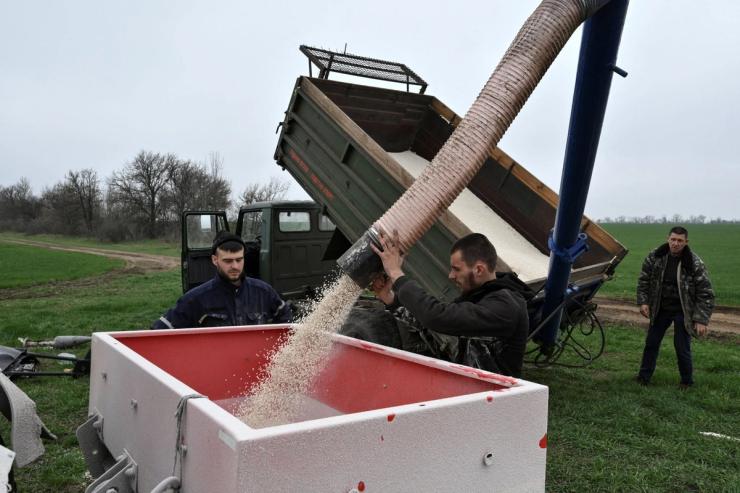
Fertilizer prices could remain elevated even after the Strait of Hormuz reopens, according to the chief executive of Abu Dhabi-based Fertiglobe, as supply disruptions ripple through global agriculture markets and threaten to drive food inflation later this year.
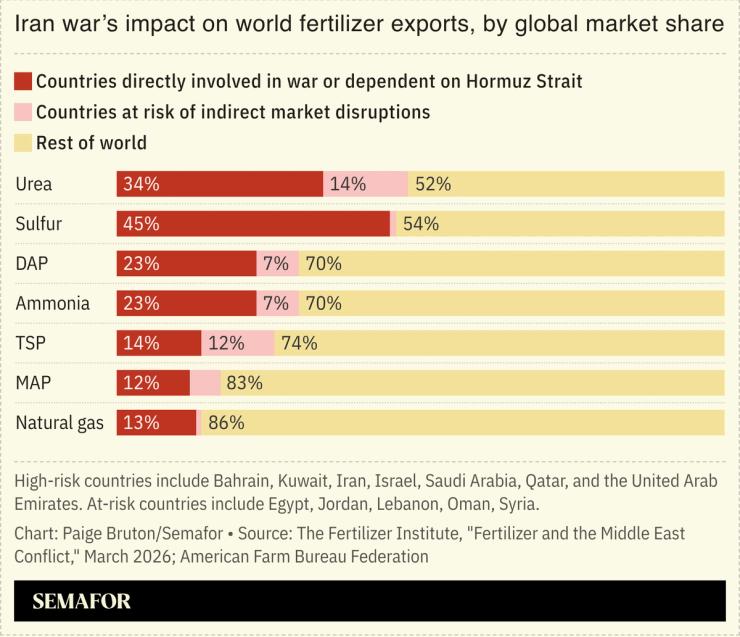
Ahmed El-Hoshy, CEO of one of the world’s largest exporters of urea and ammonia, said nitrogen fertilizer prices surged by as much as 80% to more than $900 a ton after the war disrupted Gulf exports. About one-third of global urea and one-fifth of ammonia supplies move through the strait. Fertiglobe exports fertilizer from facilities in Algeria, Egypt, as well as the UAE, giving it an advantage over some Gulf peers and meaning it is able to reap some benefit from higher prices.
Many farmers “are trying to delay purchases until the last possible moment” in the hope that Gulf supplies will be restored, El-Hoshy said in an interview. But for some markets, especially the US, they don’t have the luxury of waiting, he added.
Many American farmers rely on fertilizer moving by barge up the Mississippi River ahead of the planting season, limiting their ability to defer purchases. But while fertilizer prices are now far higher, crop prices have risen only modestly so far, leaving growers exposed, El-Hoshy said.
“We could see less [use of fertilizers]. We could see what we call demand destruction,” he said. “If you get lower yields and then have a weather event, you could have much less of a harvest later this year.”

Know More
Fertiglobe, which is listed in Abu Dhabi and majority-owned by national energy company ADNOC, has continued producing fertilizer in the UAE during the conflict, with short outages of between five and 10 days at its two production lines. Urea is relatively easy to store compared to other commodities, and the company has resorted to trucking its output to ports beyond the Strait of Hormuz.
But going by road is much less efficient: A single ship can move 50,000 tons of product, compared with 25 tons per truck, meaning thousands of journeys are needed. “The market is telling us to get it out this way,” El-Hoshy said, adding that higher transport costs are being recouped thanks to the spike in prices.
Fertiglobe’s warning is an example of the Gulf’s outsize role in global commodities. Nitrogen fertilizers are essential to global food production, with El-Hoshy saying they are responsible for feeding roughly half the world’s population by boosting crop yields. The company’s revenue rose 32% to $915 million in the first quarter, and El-Hoshy said much of those sales weren’t booked at the higher prices.
If shipping through Hormuz resumes, El-Hoshy said prices could ease but uncertainty over security in the waterway will be a persistent concern, with buyers wary of renewed attacks on vessels. The question of an open strait will be: “how sustainable is it?”

Notable
- Trucks are taking over from ships as Gulf countries adjust to the closure of Hormuz. Saudi miner Maaden now has 3,500 trucks moving phosphate to the Red Sea, traffic at a UAE port on the Gulf of Oman is70-times the prewar level, and supermarket chain Spinneys drove snacks and baby food overland from the UK to the UAE, The Wall Street Journal reported.