




what’s at stake
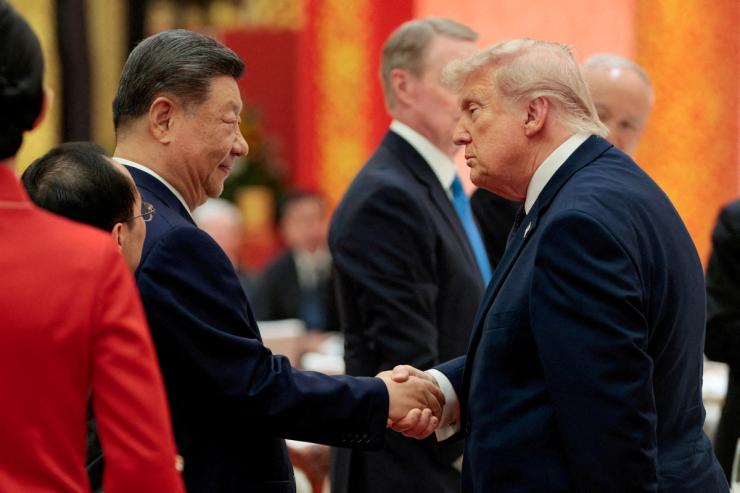
Fresh off President Donald Trump’s visit to China, the US plans to begin talks with the Chinese about how to enact guardrails around artificial intelligence given risks associated with the fast-evolving technology.
Specifically, Treasury Secretary Scott Bessent said on CNBC that the discussions would focus on how to formulate “best practices for AI to make sure nonstate actors don’t get a hold of these models.” He called the US and China the “AI superpowers” but insisted America remains “the undisputed leader in the world” on the technology.
Some see value in a channel like this, though even they are wary of trusting China. Others are purely skeptical and believe a dialogue could backfire. It’s a debate that doesn’t cut cleanly along partisan lines.
In this article:
who’s making the case
Sen. Andy Kim, D-N.J., a former foreign affairs officer at the State Department, said he is open to the idea but would need to see the details:
“I am a former diplomat so I always think that there needs to be some baseline relationship, especially between the two most powerful countries in the world. And I do have a lot of concerns about the use of AI and what comes next. So if there’s any space for that type of dialogue, I am not opposed to it but I would have to get a sense of what further is detailed about this.”
Sen. James Lankford, R-Okla., said he supports the administration’s approach:
“We need to have some dialogue there to be able to talk about what are going to be the parameters, just so there is some kind of international agreement. Obviously the United States and China are the two innovators there. They’re going to have threats on their culture, if I can say it that way, just the same as we would on ours.”
Sen. Richard Blumenthal, D-Conn., cautioned against such a channel, doubting Beijing’s trustworthiness:
“There’s always the possibility but I don’t see the path right now. I think we’re more competing than cooperating and I’m not sure that China is a trustworthy partner. I think there’s the likelihood that it would involve intellectual property theft. So I’d be very wary of it.”

Notable
- The Wall Street Journal was first to report plans to set up the AI dialogue.
- Anthropic refused to give a Chinese think tank access to its new AI model, Mythos, The New York Times reported.