



The News
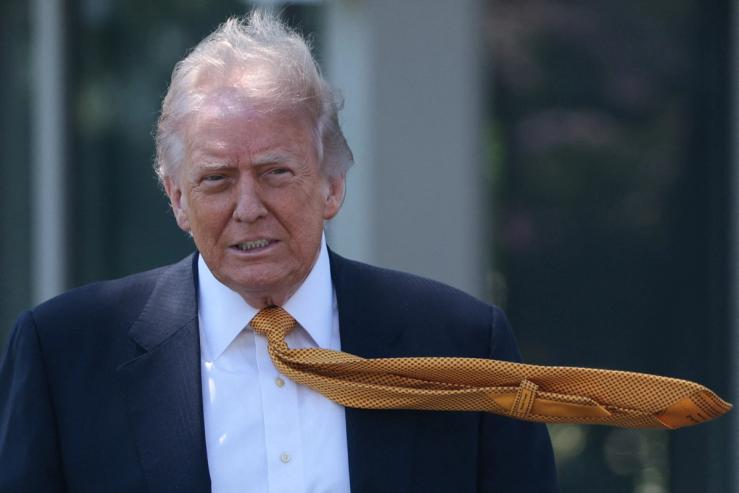
President Donald Trump is increasingly engaged in the midterms. His choices won’t always align with congressional Republicans’ calculations.
After spending much of the year focused on foreign entanglements and trade deals, Trump is now juggling those efforts while keeping an eye on the campaign trail, according to more than a dozen interviews with lawmakers and Republican operatives. But Trump is picking his battles — endorsing some candidates while steering clear of other GOP primaries where his nod might end otherwise divisive intraparty conflicts.
It’s a blurrier picture than the endorsement sprees he’s embarked on in the past. And to some in his party, the pattern looks more like Trump trying to shape his legacy than anything else.
“He covets his influence and uses it however he feels compelled to do. I don’t know if there’s a strategy to it,” said Sen. Kevin Cramer, R-N.D. “But there’s no question he’s persuasive. It matters.”
The biggest shift, some sources told Semafor, is Trump’s recent reinvestment in helping the GOP hold onto the House majority. After a Supreme Court ruling that weakened the Voting Rights Act, empowering Southern states to aggressively redistrict, a state Supreme Court decision to scrap Virginia’s new Democrat-friendly map caught Trump’s attention.
“He’s reevaluating as we speak, because I think the conventional wisdom was, historically, we lose” the House in a midterm year, one person close to the White House said. “And I think he came to terms with that. … That all changed after Virginia.”
Trump also edged into Kentucky’s Senate race this month, defusing a tough primary by luring businessman Nate Morris into his administration and endorsing Rep. Andy Barr, R-Ky. But he stayed out of Republican contests in Texas and Georgia, where Democratic candidates could gain an advantage from the party’s infighting.
One factor behind Trump’s selective endorsement strategy this midterm election — which plenty of Republicans acknowledge privately — is that he wants to support candidates who will win. Which means not jumping into races where his candidate risks losing.
“The fact is, the [Trump] endorsement doesn’t always clear the field, and so he has to be far more judicious about where he does it,” said a second person close to the president.
Trump is still under immense pressure from GOP senators to endorse Sen. John Cornyn, R-Texas, over state Attorney General Ken Paxton in the May 26 runoff. Republicans worry nominating the scandal-plagued Paxton could potentially lose them the seat — or, at a minimum, cost the party tens of millions of dollars it could use elsewhere.
Three senators allied with Trump told Semafor on Tuesday they are still pulling for a last-minute Cornyn endorsement.
“I would like to see him support John Cornyn in Texas. I’ve made that clear. I would hope he would do that,” said Sen. Steve Daines, R-Mont., a former National Republican Senatorial Committee chair.
But Cornyn himself said he thinks Trump has decided to stay neutral: “He could change his mind, but I don’t expect him to make an endorsement.”
Trump has similarly declined to arbitrate the confusing Senate Republican field in Georgia, where Reps. Mike Collins and Buddy Carter are running against Derek Dooley, a former football coach backed by Gov. Brian Kemp. Sen. Jon Ossoff, D-Ga., is sitting on $31 million as he waits to take on the winner.
NRSC Chair Tim Scott told Semafor that “I believe we’re going to win in Georgia,” but he added: “The sooner we get to one candidate in Georgia, the better off we will be.” The primary is May 19.
In a statement, White House spokeswoman Olivia Wales said Trump “is committed to maintaining Republicans’ majorities in Congress to continue delivering wins for the American people.”

Know More
Trump’s collaboration with Scott and National Republican Congressional Committee Chair Richard Hudson has showcased his iron grip on the party. Hudson, Trump, and Speaker Mike Johnson frequently announce their endorsements in quick succession.
The president has helped clear Senate fields for Michael Whatley in North Carolina, Rep. Ashley Hinson in Iowa, former Rep. Mike Rogers in Michigan, and former US Attorney Kurt Alme in Montana. Those moves saved his party millions of dollars and avoided the kind of intraparty fighting that’s long dominated Republican politics. His backing of former Sen. John Sununu in New Hampshire has not moved former Sen. Scott Brown out of the race.
And some of Trump’s recent slew of endorsements are mostly about grudges: Trump endorsed Rep. Julia Letlow, R-La., over incumbent Sen. Bill Cassidy, R-La., in this weekend’s primary and wants to knock off Rep. Thomas Massie, R-Ky., next week.
But he’s also plugged into House battlegrounds, endorsing Eric Flores over former Rep. Mayra Flores in Texas and Eric Conroy in Ohio. He’s backing former Stockton Mayor Kevin Lincoln in California and successfully dissuaded Rep. Zach Nunn, R-Iowa, from running for governor.
It’s a notably more effective approach than in past cycles, when Trump sometimes went his own way in key races.
NRCC spokesman Mike Marinella said Trump’s “endorsement power” shows “everyone is rowing in the same direction with one shared goal: growing our Republican majority.”

Room for Disagreement
Trump is still facing questions from within the GOP about how determined he is to keep control of Congress, as he seeks longer-term, legacy-defining foreign policy achievements amid declining approval ratings.
He is “certainly not” motivated when it comes to the midterms “in the same way the rest of the party” is, a third person close to the White House argued. “His mission goes so far beyond one election cycle or one midterm.”
The president’s overseas focus this year has sometimes complicated domestic politics for his party, too. Asked on Tuesday whether he’s considering the financial situation of US voters as he continues negotiations with Iran, Trump provided a blunt answer: “Not even a little bit.”

Shelby and Burgess’ View
Republicans might bristle at Trump choosing to stay out of certain races, but while the US president has a strong hold over his party, he’s not infallible. And he has his reasons for being so selective.
In Texas or Georgia, it’s not clear he can orchestrate a result like he pulled off in Kentucky. And the calculus is even more challenging in bluer states.
Take Maine, where Vice President JD Vance is being deployed to this week. Trump has said he wants Sen. Susan Collins, R-Maine, to win reelection, but hasn’t explicitly endorsed her. Her path to reelection, of course, requires plenty of distance from Trump.

Notable
- Trump said last week he’ll “make a decision” about the Texas race, according to Nexstar.