




Yinka’s view
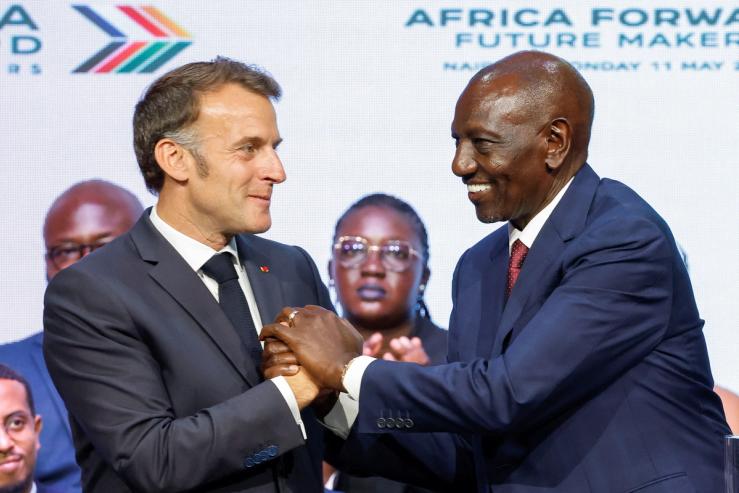
I’m in Nairobi for the highly anticipated Africa Forward Summit, cohosted by France and Kenya. I’m already finding the conversation is less about the French reclaiming influence in Africa, like many headlines have insisted, than about African countries widening their options. The summit has brought together some 30 African heads of state and hundreds of business leaders, including Nigerian industrialist Aliko Dangote and TotalEnergies CEO Patrick Pouyanné. The talks are focused on AI, renewable energy, infrastructure, and investment rather than the security partnerships and patronage that long defined France’s post-colonial engagement on the continent.
For many African governments, France under President Emmanuel Macron has become a more pragmatic partner than it was a decade ago. Since taking office in 2017, Macron has deliberately expanded France’s focus beyond its traditional Francophone sphere toward larger Anglophone economies. Nigeria is a notable example. President Bola Tinubu has built unusually warm ties with Paris, visiting France multiple times in a private and official capacity since taking office in 2023, as both governments deepen cooperation in energy and finance. Kenya’s President William Ruto has also worked more closely with France’s leadership than any of his predecessors. For African heads-of-state, the attraction is not necessarily France itself, but the ability to diversify partnerships at a moment when global powers are competing more aggressively for influence across the continent.
Still, Africans know the limits of what France can offer. China remains embedded across the continent through infrastructure projects, mining developments, and state-backed financing. Gulf states can deploy capital quickly and at enormous scale. France’s comparative advantage is narrower: business networks, technical expertise, education, culture, and access to European markets.
Part of the backdrop to all this is that France’s influence has sharply declined in West Africa, particularly in the Sahel, where military governments have pushed out French troops and pivoted toward Russia, for better or worse. But from the African perspective, that retrenchment may matter less than whether France can adapt to a continent that increasingly approaches global powers transactionally — weighing partners less by history or ideology than by who can deliver investment, technology, commerce, and developmental partnerships.

Notable
- Days before the summit, France passed a new landmark restitution law that seeks to expedite the return of looted artefacts to Africa, after years of pressure and frustration at the slow pace of returns.