




The Scoop
The Trump administration plans to invite CEOs from Nvidia, Apple, Exxon, Boeing, and other big companies to accompany the president on his trip to China next week, a person familiar with the matter said.
The list also includes executives from Qualcomm, Blackstone, Citigroup, and Visa, and is likely to grow in the coming days as CEOs jockey for invites.
Spokespeople for the White House and the companies didn’t immediately respond to requests for comment.
Treasury Secretary Scott Bessent, US Trade Representative Jamieson Greer, and David Perdue, the US ambassador to China, have been suggesting attendees for the trip, other people familiar with the matter said. The president himself is stoking corporate FOMO with offhand comments to executives he’s met recently, suggesting he’ll see them in Beijing, one of the people said.

Know More
There’s talk of a Chinese order for 500 Boeing MAX planes, as well as sales of American soybeans, but there’s likely to be less commercial fanfare than on Trump’s previous foreign trips, including to the Gulf last year. Likely off the table is the idea of allowing Chinese electric carmakers to set up manufacturing plants in the US.
“I don’t want to think about some big headline with the Chinese where I have really hot rhetoric, I say really tough things, but at the end of the day, do nothing,” Greer told Semafor in an interview last month. “I’d much rather do what we’re doing now, which is we’re going to talk to the Chinese, because we live in this world together.”
Washington has been floating the idea of setting up a Board of Trade to manage two-way flows of non-sensitive products within a tariff structure and a separate Board of Investment. (“These are government-to-government” arrangements, Greer said in the interview. “We’re not going to have CEOs be on these boards, so don’t ask.“)
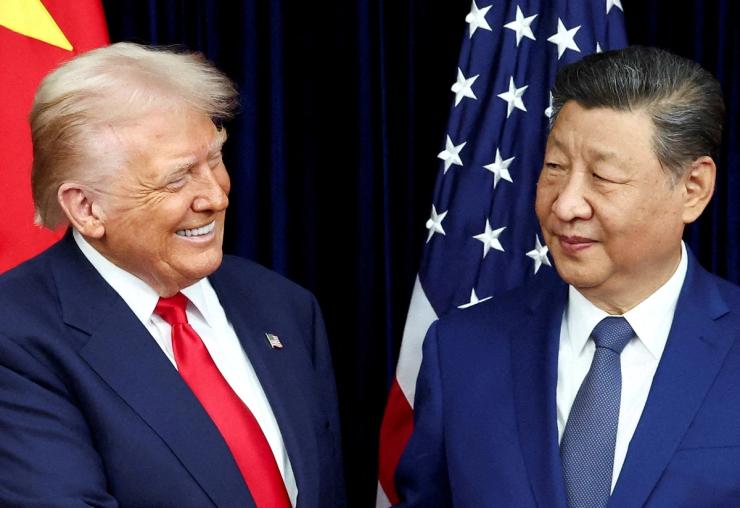
These deliverables reflect the reality that for both Washington and Beijing, the main goal of the summit is to extend a trade truce that Chinese leader Xi Jinping and Trump agreed upon at their October meeting in South Korea. The Wall Street Journal has reported that the two sides are discussing the possibility of launching a dialogue on AI safety, although a previous US effort during the Biden administration to engage in talks with Beijing on the subject fizzled; China tried to condition its participation in the talks on US concessions in unrelated areas, and packed its negotiating team with foreign ministry generalists rather than AI specialists.

Step Back
Trump will arrive in Beijing weakened from the stalemate in the Iran war. China has been mostly sitting out the conflict, at least publicly, viewing it as a spasm of violence emanating from a superpower hard-pressed to assert its hegemony over a weaker opponent. Chinese media have been trying to present China as a force for stability in the world against an increasingly erratic America.
Outside trade, Xi’s main concern will be to persuade Trump to harden US language on Taiwan to indicate that Washington actively opposes independence for the island, which China views as a breakaway province.

Notable
“I really don’t expect a whole lot of dynamic big results,” Milken Institute chairman Curtis Chin said this week of the upcoming summit. “But just that they’re meeting is a very important accomplishment.”
Shelby Talcott and Rohan Goswami contributed to this report.